Showing posts with label Poetry. Show all posts

Saturday, 6 July 2019

Ataullah Ozai-Durrani — An Afghan immigrant in the US who made name & a fortune with the invention of Minute-Rice recipe in the early 1940s, and left half a million dollars to Harvard university for translating poetic works of Mirza Ghaleb and Mir Taqi Mir.

Dr. Nafees Ur Rehman (@NafeesRehmanDr)


Photo of Ataullah Ozai-Durrani, source: Smithsonian Institution Archives, Accession 90-105, Science Service Records, Image #SIA2008-1489


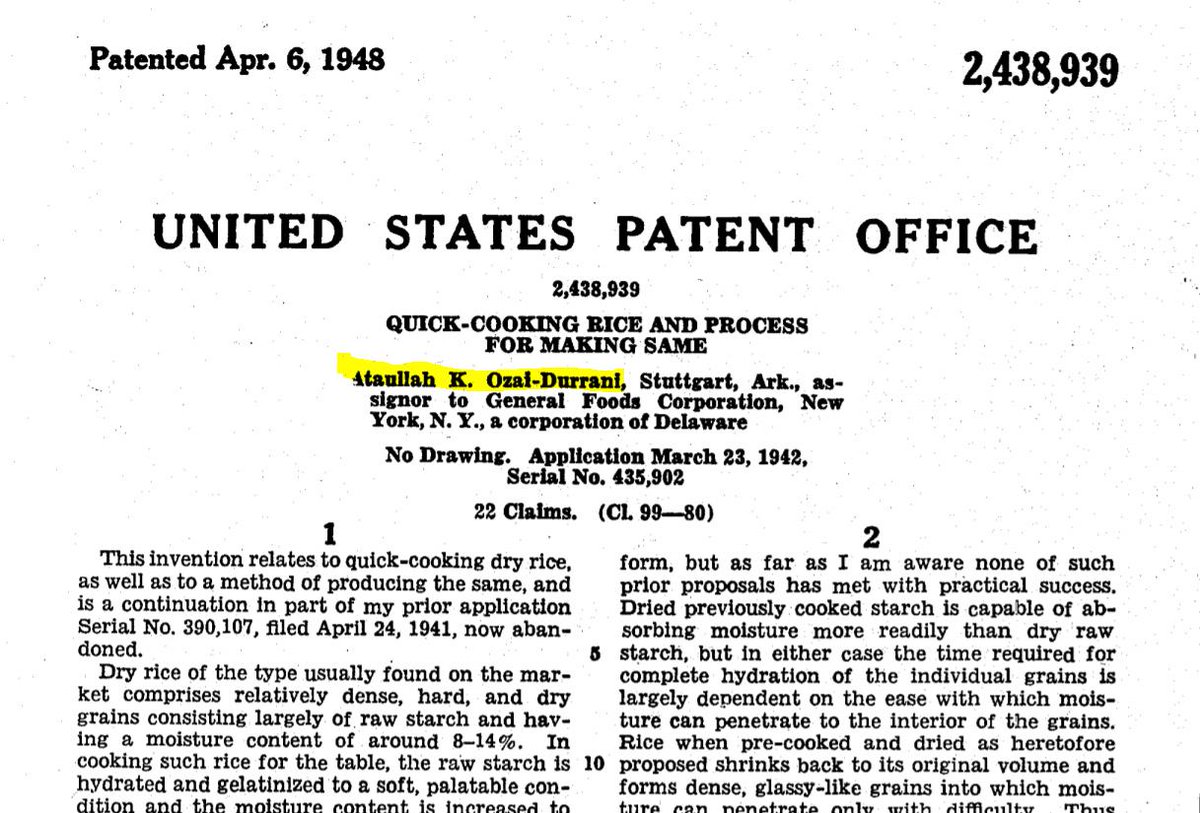
Ataullah Ozai-Durrani was born in Herat, Afghanistan in 1897 and had immigrated to the US in 1923. Though his education was in Petro-Chemistry but he pursued researching in planting, preparing and cooking rice after one of his guests remarked that the chicken-rice, that they were served at dinner, were so good that it needed to be introduced to the public. Ozai-Durrani spent the next 10+ years reading, experimenting and researching on rice. It was around 1939 that he had established his method of preparing rice and it was time to share and sell it.

In 1941, he walked into the office of General Foods Corporation in New York, set up his portable stove and convincingly demonstrated cooking rice in minutes. General Foods were impressed with the significant reduction in cooking time and immediately bought his recipe.


Copy of the Quick-Cooking-Rice Patent: Source https://patents.google.com/patent/US2438939


Thanks to the large-scale marketing of Minute Rice and later mass orders by the US army, the product achieved its success. Ozai-Durrani became a millionaire almost overnight.
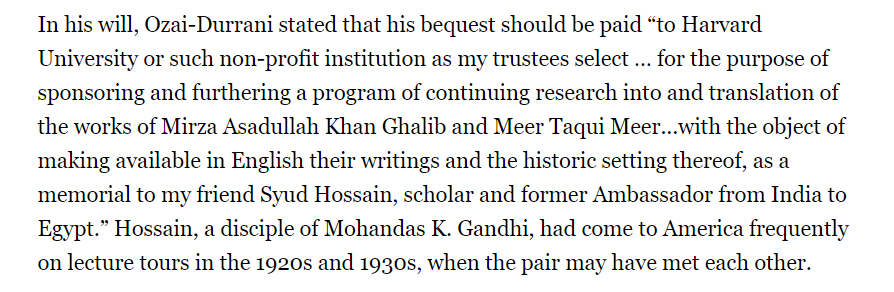
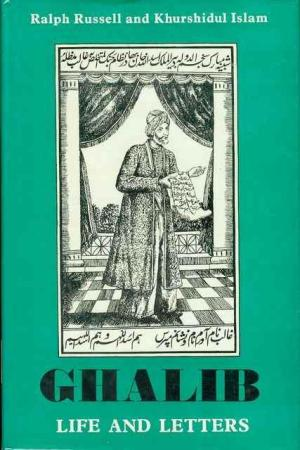
There is another interesting aspect to Ozai-Durrani's life, and that is his interest in the poetry of Mirza Asadullah Khan Ghaleb and Mir Taqi Mir, famous poets of the subcontinent. It is not clear how he developed interest in their poetry. Could it be during the times when he studied at Aligarh Muslim college in India or later when he befriended Syed Hussain, a disciple of Gandhi who had advocated for freedom of India in the US and delivered lectures in 1920s and 1930s.  Ozai-Durrani wanted to translate the works of Mirza Ghaleb and Mir Taqi Mir into English language. For this purpose, he donated about 100 thousand rupees to Aligarh Muslim University in 1950s. The VC of AMU, Dr. Zakir Hussain was also friend of Ozai-Durrani. However, nothing came out of this program and Ozai-Durrani eventually withdrew his support.

Ozai-Durrani died in May 1964 due to lung cancer and bequeathed half a million dollars to Harvard University for the same purpose of translation of Ghalib's Mir's works, and as memorial to Syed Hossain.


You may find it interesting that when more information was sought on the two poets, a librarian at the Indian consulate was contacted, who then suggested that it was really a matter for the Pakistanis as they are not known in India. A professor of Iranian studies at Columbia University also downplayed the value/significance of the 
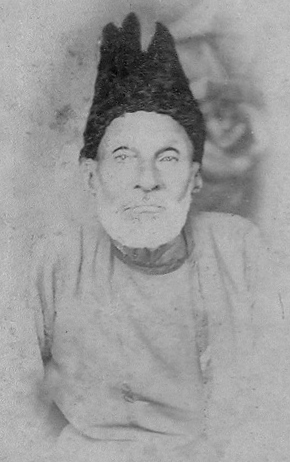
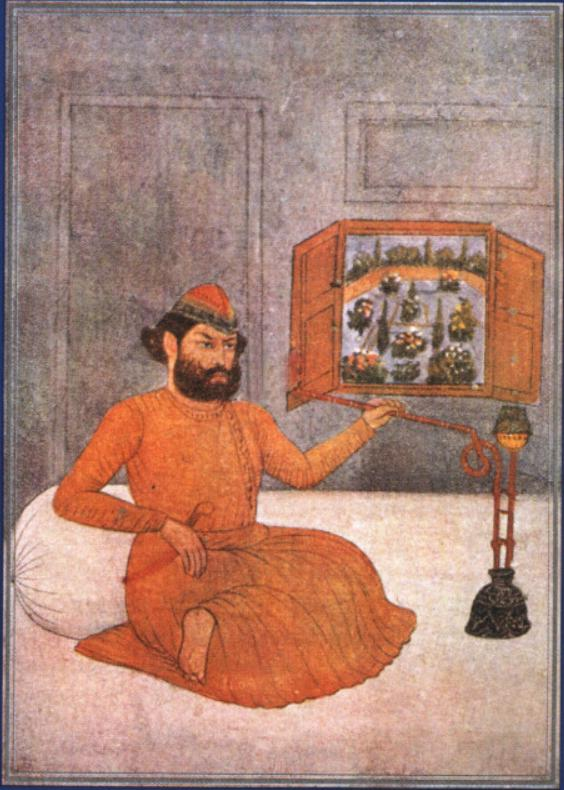
Mirza Asadullah Khan Ghaleb


Mir Taqi Mir 

poets and said "they are not outstanding...in the vast panorama of Persian poetry, but they are very important to Pakistan." Harvard University then persuaded Dr. Annemarie Schimmel for the job and appointed her as Professor of Indo-Muslim Studies.


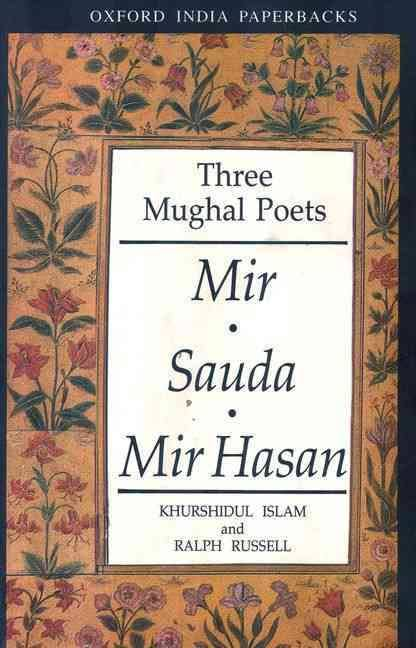
With Ozai-Durrani donation, the chair was able to publish two excellent books, Three Mughal Poets Mir, Sauda, Mir Hasan (Cambridge, 1968) and Ghalib: Life And Letters (Cambridge, 1969), both by Ralph Russell and Khurshidul Islam.


John K. Baden in his PhD thesis, made an interesting observation on why Ozai-Durrani chose two Urdu poets and not any Pashtun poets. He observes:

"Ozai-Durrani’s motives for picking the two poets are unknown. Notably, he did not feel constrained to sponsor a Pashtu or exclusively Dari (Persian) language “Afghan” poet to further the prestige of his native Afghanistan. Perhaps Ozai-Durrani assumed a broader regional or linguistic identity in the United States rather than one exclusive nationality, but he could have simply chosen the two poets because he associated them with the friend he sought to honor in his bequeathal."

Wednesday, 8 August 2012

Amir Hamza Shinwari: The unfinished story


Editors note: this article was written following the attack on the tomb of Amir Hamza Shinwari 

Baheer: three currents of Hamza Shinwari’s poetry 
                                                                                            by  M Taqi

picture via wikipedia


“Insaan yem, da fitrat pa taqazo ke na raazam,                  

Shaheen yem, da karghano pa panjo ke na raazam,

Yaw sind yem da sehba, da perzonay waham josh,

Laikin za da kam-zarfo pa kaaso ke na raazam” 
                                  — Amir Hamza Khan Shinwari.

(I am a human whom even the nature cannot restrain,

Like a falcon I am; the paws of crows cannot reach me,

I am an ocean of wine (of love and knowledge), in high tide of passion,

Of which, a drop cannot the goblets of these upstarts hold.)

Though in vain this time, the crows did try to desecrate the mausoleum of one of the finest Pashtuns that ever lived. Last week, terrorists carried out an attack — fourth in two years — on the final resting place of the greatest Pashto ghazal poet, Amir Hamza Khan Shinwari — known affectionately as Hamza Baba — in Landi Kotal, Khyber Agency. Hats off to the shrine’s caretaker Muhammad Ikram and the khasadar militiamen who refused to vacate the shrine and put up resistance, forcing the militants to flee.

Adherents of the ideology of pure hate have attacked an apostle of pure love yet again, as they have done at the shrines of Sufis like Haji Sahib Turangzai, Rehman Baba, Pir Baba, Baba Farid Ganj-e-Shakar, Abdullah Shah Ghazi and Data Ganj Bakhsh, all over Pakistan. However, there are many who still insist on a dialogue with the peddlers of absolute poison that al Qaeda and its local affiliates are. There is a lot to be said about this dialogue. But today I only wish to remember Hamza Baba for the poised, peaceful, passionate, Pashtun Sufi that he was.

I wondered how the Persians would respond if Hafiz Shirazi’s tomb was vandalised or how the Turks would react to sacrilege of Jalaluddin Rumi’s grave, while reading Hamza Baba’s verses — a work at par with the greats of Persian Sufi poetry. The Persian language, especially its ghazal (love sonnet) form and Sufism have a unique kinship but conceptualising the mystical worldview from a native perspective and formulating it in chaste Pashto had perhaps not been attempted before Hamza Baba.

Sufi orders and indeed Sufi poets like Mirza Khan Ansari of the Roshaniyya order, Kazim Khan Shaida and, of course, Rahman Baba had existed in Pashtun society long before Hamza Baba. In fact, Hamza Baba recognised Ansari and Rahman Baba as his poetic antecedents. However, as Professor Yar Muhammad Maghmoom, has noted in his monograph ‘Hamza’s ghazal and Pashtun mysticism’, Ansari and Shaida had heavy Persian influence on their work. Contrarily, Hamza Baba’s mystic motifs as well as his poetic devices and tools are rooted deeply, yet effortlessly, in the Pashtun lands and Pashtunwali (the Pashtun culture and code of conduct).

Hamza Baba had not made a conscious effort to de-Persianise his work but his thought and creative output are so indigenous that even the use of short poetic meter prevalent in Persian and an occasional Arabic or Persian phrase does not appear to be a transplant. Hamza Baba’s metaphor, allegory and diction are nuanced pointers towards his Pashtun nationalism. Just like his mysticism was not imported, his nationalism too has arisen from the mountains of Khyber and the plains of Peshawar. Unlike the progressive poetry of Pashtun nationalists like Ghani Khan and Ajmal Khattak, and even Allama Iqbal and Faiz, Hamza Baba’s verse is free of Marxist or other European influences. It is perhaps this originality of thought and language that puts him in the league of Hafiz, Saadi, Rumi and Jami.

Three intertwined key currents — or ‘Baheer’, as he has titled one of his books — stand out in Hamza Baba’s poetry, i.e. devotion to ghazal, Pashtunwali and mysticism. He developed his dialectic around the romanticism, figures, forms and norms of Pashtun society, which he deploys to resolve the dichotomy faced by a mystic in pursuit of wahdat-al-wajud (Unity of Being). He says:

“Ta ka kha Pashtun shuay no insan ba shay,

Biya ka kha insaan shuay, Musalman ba shay.”


(First be a good Pashtun and you shall become a good human being,

And only when you become a good human being, will you become a good Muslim.)

Interestingly, these currents flow from and merge back into the person of his Chishti Sufi master, Syed Sattar Shah, known in Peshawar as Badshah Jan. Syed Sattar Shah was the son of Syed Burhan Shah and had moved to Peshawar from Hazara and lived inside the Dabgari Gate of the old walled-city. Hamza Baba was born and raised in Lawargi (Landi Kotal) but his family owned a house in Mohallah Sakhi Shah-e-Mardan (named after a shrine dedicated to Hazrat Ali Murtaza RA) inside Barizqan (popularly but inaccurately called Bayriskay) Gate, a short walk away from Badshah Jan’s residence.

Hamza Baba used to write poetry in Urdu but Badshah Jan, who himself composed poetry under pen-name ‘bay-nawa’ (voiceless), instructed him to write his verse in Pashto and ordered another of his disciples, Rafiq Shinwari — a musician — to compose and sing this verse. Hamza Baba was not really happy with the marching orders but complied and there was no looking back for him. He came to be known as the father of the Pashto ghazal (baba-e-ghazal) a title in which he took great pride and his verses to this effect are well known. Perhaps less known is his humility as a Chishti who was devoted to his Sheikh and attributed this success to Badshah Jan. In a ghazal written at the shrine of his master, he says:

“Pardah-pokh wo cheh “Sattar” wo da aiboono,

Cheh da zarroono Badshah Jan wo, haghah da wo,

Da Hamza da gado-wado wainagano

Pa rishtia cheh qadardan wo, hagha da wo.”

(Sattar — he who covers up one’s lapses — was he,

If there was a Badshah (king) of hearts — it was he,

Who could understand my gibberish?

But one who appreciated it, was he.)

Hamza Baba was a polymath: a poet, writer, dramatist, humorist, lyricist, musician, film-writer, broadcaster, translator but above all a humanist. If Khushal Khan Khattak was the warrior poet (sahib-e-saif-o-qalam), Hamza Baba carried pen in one hand and the candle of love in the other, and that too in a manner befitting of an unassuming Chishti saint with prowess over both knowledge and modesty (sahib-e-ilm-o-hilm).

A column cannot begin to define even one facet of this multidimensional Pashtun prodigy and in Hamza Baba’s words:

“Maa Hamza neemah ke khabarah prekhwa,

Neema ba biya sta pa ratlah wayamah.”

(I will leave my talk unfinished; we shall conclude upon your return.)


The writer can be reached at mazdaki@me.com. He tweets at http://twitter.com/mazdaki
The original version of this article was published by the Daily Times of Pakistan on Thursday, July 28, 2011

Friday, 22 June 2012

Peshawar: The land of my childhood

By Musafar

Land of my childhood, how I yearn for you
Your children so fair, maids as pretty as flowers
Handsome, stalwart sons brandishing guns as adornment
With gazes averted from our mothers and sisters
And your men courteous and true to their word
Your cities were the praise and envy of people from lands afar
Yea, they were called the Cities of Flowers
O where, O where, have you gone

Land of my childhood, how I yearn for you
The kehwa-khanas of Qissa-Khwani in Kabalae Darwaza
The seekh kababs of Sabiri astride the ganda nallah
The aroma of tikkae mingling with the dust and smoke
Roganae, kulchae, amrasae and zalobae to make you drool
Ucha mewa, sheer chai, and the chugha besides a winter log fire
The sitar to draw a chord and mangae with accompanying beat
O where, O where, have you gone

Land of my childhood, how I yearn for you
The citadel of Bala Hissar of my distant memory
With crumbling walls yet majestic and intimidating
The Chauk Yadgar, a confluence spot of yore for the mazdur
The Ghanta Ghar clad in its brick elegance striking the hour
The glory of Sethi Mohalla, a pearl set in an oyster
The masjids of Qasim Ali Khan and Mahabat Khan
The Samdo ki Gali of Kohati Darwaza
O where, O where, have you gone

Land of my childhood, how I yearn for you
The plaintive cry of the mashki filling mangee door to door
Sprinkling the parched earth on a hot torrid afternoon
The rich age of craftsmen priding themselves in their wares
A rich time when there was respect between the old and young
A rich time when one’s word was an irrevocable bond
The reverence and awe of the passing Moharram procession
The human sound of the azaan floating over the air waves
The clip clop of a horse drawn tonga a melodious beat
O where, O where, have you gone

Land of my childhood, how I yearn for you
But nay, tarry a while and ponder
How could you go away, it was I who abandoned you
Why didn’t you beckon me to stay and grow in your shade
Why didn’t you enfold me to your bosom from distant places
Why didn’t you reach out to me then, as I reach out to you now
Why didn’t you plead with me, not to forsake you to the wolves
O why, O why, did I go and forsake you my beloved

Land of my childhood, how I yearn for you
I berate myself for returning so late in the day
But I perceive a silver lining in the resilience of your being
May the Almighty cleanse your soul and restore your dignity
I shall cherish the day when, by His will, you shall rise from the ashes like the Pheonix

Land of my childhood, how I yearn for you