Tuesday, 11 February 2014

The 1930 Civil Disobedience Movement in Peshawar Valley from the Pashtoon Perspective: Part I


By Syed Wiqar Ali Shah

This is the first of a three part series adapted from Syed Wiqar Ali Shah's article "The 1930 Civil Disobedience Movement in Peshawar Valley from the Pashtoon Perspective", published in the journal: Studies in History. The original article can be accessed here.

In 1930, the Indian National Congress under the leadership of Mahatma Gandhi launched its civil disobedience movement against the British Indian government demanding ‘Complete Independence’. Responding to the call of Gandhi, like other parts of India, the North–West Frontier Province’s (N–WFP, renamed as Khyber–Pashtoonkhwa) Congressmen also embarked on the civil disobedience but in view of their small number the local authorities ignored it. To give a boost to their movement, the local Congress leaders requested Abdul Ghaffar Khan, the prominent social worker of the Province, famous for his altruism, to support them in the next round of the intended civil disobedience in Peshawar to which he agreed. The colonial administration had no further tolerance for such activities. They decided not to allow the scheduled activities of the local political workers which might cause disturbance to the peace and tranquility of the province. On the selected day, that is, 23 April 1930, brutal force was used to disperse the demonstrators. The tragic firing on the peaceful mob in the Qissa Khani Bazaar, Peshawar, resulted in the killing of more than two hundred people in one single day and can be ranked at par with the massacre at the Jallianwala Bagh, Amritsar, in April 1919. It was followed by a reign of terror in the whole Frontier Province. The Khudai Khidmatgars and their supporters were subjected to the worst kind of humiliation. After Peshawar, similar atrocities were committed at Takkar, Utmanzai and Bannu. Despite the worst kind of repression by the government, the Pashtoons remained non-violent. Under the circumstances they were compelled to join INC, a friendship which continued till the partition of India in August 1947.

While lot of research has been done on the civil disobedience movement in other parts of India, the Frontier Province and in particular the Peshawar Valley have been neglected hitherto for unknown reasons. Very little research has been conducted on this particular region. The absence of written record on this area and subject has meant that the social scientists, historians, analysts and other scholars belonging to various disciplines who have special interest in South Asia, have been deprived of crucial information on a very important phase of twentieth-century history. The only available information is the official record, written from the colonial perspective which is not entirely reliable. According to the official estimate, about thirty nine people lost their lives on 23 April, a highly contestable figure provided by the Frontier administration and unfortunately quoted by many historians writing on the civil disobedience movement, without further checking its authenticity. The present research will focus on this neglected aspect of the civil disobedience movement, relying upon the primary sources including the personal interviews, conducted by the author in various parts of Pashtoonkhwa and unpublished memoirs and autobiographies. While details will be provided of the civil disobedience movement in the Frontier province in general, special attention will be given to the Peshawar Valley. Why 1930 is an important year in Pashtoon history and how it is reflected in the local poetry will be evaluated. The present research will also analyze the Pashtoon perspective of the whole civil disobedience movement. Despite admonition from various circles, what motivated them to join the movement? What kind of mobilization techniques were adopted by the leaders to attract the common man to join in and with what results? What was their thinking? How were they treated by the Frontier authorities? What kind of methods of torture were used against them, so that rather than abandoning the struggle, they showed pertinacity and instead flocked into the Khudai Khidmatgar movement? These and similar questions will come under discussion in the present research article. How the Pashtoons interpreted the whole scenario, why did they not retaliate, were complacent in difficult situations and despite suffering the worst kind of humiliation were able to avenge repeated insults are some of the questions I am concerned with. The present article will also investigate the Pashtoons’ adoption of non-violence as a creed and their commitment to it which earned them a good reputation at an all-India level. Whether Abdul Ghaffar Khan emulated the non-violence preached by Gandhi in other parts of India or developed his own particular variety will also come under discussion. Why the Pashtoons were inclined to join the Congress rather than the Muslim League, their coreligionists in the freedom struggle, will be thoroughly investigated. What was the role of the pro-British landed aristocracy, title holders and other loyalists during the whole imbroglio and what were its repercussions? What was the impact of the civil disobedience movement on the region and how it influenced the future course of South Asian politics will also be analyzed.

In its historic forty-fourth session, held in Lahore in December 1929, the INC demanded complete independence—‘Swaraj’, instead of ‘Dominion Status’ for India. Jawaharlal Nehru, the Congress President, made it absolutely clear that they wanted ‘fullest freedom of India’ and ‘will not acknowledge the right of the British Parliament to dictate to us in any way’.1 It empowered Gandhi to plan and decide on the nature and timings of the civil disobedience against the Empire to achieve the desired goals’.2 Gandhi was fully convinced of the peaceful and non- violent mass movement’.3 In the Lahore Congress he was absolutely convinced of the attainment of independence by non-violent means. He expressed his views to the participants in the most daring manner and stated that ‘Let me however tell you my conviction that if the nation carried out the non-violent programme loyally, there need not be any doubt about the attainment of our goal….’4 He elaborated further and said that ‘I admit and believe that cool courage is mightier than the sword. Cool courage can very well implement civil disobedience. If one thinks that complete independence cannot be achieved through peaceful means, it implies that he has no faith in cool courage. The moment we acquire cool courage, complete independence will be ours’.5 Gandhi started preparing people for the intended civil disobedience campaign.

While formally inviting his countrymen to join them in the great struggle for the liberation of the country from the foreign yoke, the Congress President, Jawaharlal Nehru, made it clear from the beginning that they should be prepared for ‘the rewards that are in store for you are suffering and prison and it might be death. But you shall also have the satisfaction that you have done your little bit for India…’6

Direct confrontation between the Congress and Government seemed inevitable. Gandhi decided that he would himself perform the first act of civil disobedience and would lead selected satyagrahis from Ahmedabad to Dandi in Bombay to breach the Salt Law’.7 On 2 March 1930, Gandhi informed Lord Irwin, the Viceroy, of his views by terming the British rule in India as a curse. Because, according to Gandhi, ‘It has impoverished the dumb millions by a system of progressive exploitation and by a ruinously expensive military and civil administration which the country can never afford’.8 He elaborated on the miseries of the tenants and considered it beneficial for a few big zamindars and not the tenants. He demanded a full revision of the whole revenue system, which, according to Gandhi, was designed to crush the poor. He showed indignation over the salt tax which he regarded as an extra burden upon the poor. He informed the Viceroy that on 11 March he would be proceeding along with the inmates of the Ashram to break the Salt Law. He regarded the salt tax to be the ‘most iniquitous of all from the poor man’s standpoint’.9

On 12 March 1930, Gandhi along with seventy eight satyagrahis set out from Sabarmati Ashram, Ahmedabad, towards Dandi, a Bombay coastline about 240 miles away, which they covered in about four weeks. The group of seventy nine satyagrahis, including Gandhi, comprised people from various social back- grounds including scholars, journalists, untouchables, Muslims and weavers and belonged to different age groups. The oldest one was a 61-year-old leader and the youngest one was a boy of sixteen. The historic march to Dandi was a unique experiment, which attracted many people. Throughout the way Gandhi preached non-violence and informed the curious villagers of the meaning of Swaraj’.10 On 6 April they reached Dandi and immediately broke the Salt Law ‘by picking up a lump of salt mixed with mud’.11 On this occasion in an interview to the Free Press of India, Gandhi announced that
Now that a technical or ceremonial breach of the salt law has been committed, it is now open to anyone who would take the risk of prosecution under the salt law to manufacture salt wherever he wishes and wherever it is convenient. My advice is that a worker should everywhere manufacture salt and where he knows how to prepare clean salt should make use of it and instruct villagers to do likewise, telling the villagers at the same time that he runs the risk of being prosecuted…’12
Speaking on their future course of action, he remarked that
Those who are now engaged in this sacred work should devote themselves to vigorous propaganda for boycott of foreign cloth and use of khaddar. They should also endeavor to manufacture as much khaddar as possible. As to this and prohibition of liquor I am preparing a message for the women of India who, I am becoming more and more convinced, can make a larger contribution than the men towards the attainment of independence’.13
He further advised the Congress workers the following:
Let every village fetch or manufacture contraband salt. Sisters should picket liquor shops, opium dens and foreign cloth dealers’ shops. Young and old in every home should ply the takli and spin, and get woven, heaps of yarn every day. Foreign cloth should be burnt. Hindus should eschew untouchability. Hindus, Mussalmans, Sikhs, Parsis, and Christians should all achieve heart unity. Let the majority rest content with what remains after the minorities have been satisfied. Let students leave Government schools and colleges, and Government servants resign their service and devote themselves to service of the people, and we shall find that Purna Swaraj will come knocking at our door’.14
The British Indian Government tried to belittle the impact of the civil dis- obedience movement. The District Administration was given the responsibility of touring the villages through which the Salt March Satyagrahis had passed ‘to repair the damage and to improve the morale of the loyalists’.15 In the last week of March, reported Nanda, the biographer of Gandhi, the Central Government issued the instructions to the provincial governments to show maximum restraint and to avoid wholesale arrests. They were further advised not to enter into direct confrontation with the protesting Congress workers and to arrest the leaders only. This will surely discourage the Congress workers and will also disorganize the movement. In some cases if the Government was compelled under the circumstances to use force, they should use the minimum possible force because the use of brutal force will create sympathy among the general public for the Congress organization and the demonstrators’.16

But the attitude of the Government did not remain the same. With the growth of the movement, it changed its policy. In March and April, the prominent leaders of Congress including Jawaharlal Nehru, Sardar Vallabhbhai Patel, C. Rajagopalachari, Pandit Madan Mohan Malaviya, J.M. Sen Gupta, B.G. Kher, K.M. Munshi, Devadas Gandhi, Mahadev Desai and Vithalbhai Patel were arrested and put into various prisons. Finally, Gandhi was also arrested on the night of 4/5 May under the Bombay Regulations XXV of 1827 and put into Yeravda prison in Poona’.17

Unlike the previous occasions the Muslims’ response to the call of civil disobedience movement was lukewarm. Gandhi did not attract the same number of Muslims to follow him which he did previously. He failed to mobilize a big number of Muslims to join him against the British government. The participation of the Muslims was insignificant. Except in the N–WFP, an overwhelming Muslim majority province, which would be discussed later on separately, the Indian Muslims as a whole seemed to be unmoved by the Gandhian call. Gandhi did not succeed in mobilizing the Muslims in Bengal and the Punjab, the two Muslim majority provinces, to join him against the British Indian government. According to Brown, by middle of November (1930) out of a total of 29,000 prisoners only 1,000 were Muslims’.18 But it is not clear whether this number also includes the Muslims belonging to the N–WFP or whether this is the overall number of the Muslims who were imprisoned by the colonial administration for taking part in the civil disobedience movement.

Since the adoption of the Nehru Report (August 1928), many prominent Muslims developed distrust of the Congress policies.19 The situation further aggravated when the Congress leadership announced that the issue of communal settlement would be suspended until the attainment of Purna Swaraj. Swaraj, according to the prominent Congress leaders was to be achieved by the civil disobedience movement, ‘a movement in which the Muslims were not likely to figure prominently, and even if it were achieved by that method, it was unlikely that it would result in a communal settlement to their advantage’.20 This resulted eventually in the resignations of prominent Muslims from various positions in the Congress. Those who tendered resignations from their positions included M.A. Ansari, Choudhri Khaliquzzaman and Tassaduq Ahmad Khan Sherwani. Ansari warned Gandhi a couple of months before the launching of the intended civil disobedience movement that he was taking a ‘great responsibility’ on himself by declaring war against the government. He compared the situation with the Hindu–Muslim unity in 1920 and termed it the ‘Lowest watermark’ in the Hindu-Muslim relations.21 He informed the Mahatma that
...it is my conviction that the country is not at least ready for starting a campaign of civil disobedience in any shape or form, and it would do an incalculable damage should you decide to embark on such a campaign now or in the near future.22
Gandhi responded immediately and stated that:
I agree that the Hindu–Muslim problem is the problem of problems. But I feel that it has to be approached in a different manner from the one we have hitherto adopted—not at present by adjustments of the political powers but by one or the other acting on the square under all circumstances. Give and take is possible only when there is some trust between the respective communities and their representatives. If the Congress can command such trust the matter can proceed further, not before. The Congress can do so only by becoming fearless and strictly just. But meanwhile the third party—the evil British power—has got to be sterilized. There will be no charter of independence before the Hindus and the Muslims have met but there can be virtual independence before the charter is received. Hence must civil disobedience be forged from day to day by those who believe that there is no escape from non-violence and that violence will never bring freedom to India.23
Ch. Khaliquzzaman, another prominent Muslim from UP, showed indignation over Gandhi’s reply and termed it ‘disappointing’. According to him,
Uptil now we thought Hindu–Muslim unity was the pillar over which the superstructure of the constitution of free India was to be laid, but from Mahatmaji’s letter one can infer that while recognizing the utility of such a unity he does not consider it sine qua non for a fight for independence. If we accept the formula, laid down therein we indirectly proclaim to the Muslim community to find its champions in people who believe that communalism in India is a fact. No one can deny that in time to come nationalism would grow and envelop every one of its sons—Hindus and Muslims, but that would certainly require ages.24
On the forthcoming civil disobedience movement, he commented that
As for Mahatmaji’s civil disobedience programme, to tell you the truth, I have not been able to understand it, much less appreciate it. I am very glad you have made your position clear in the matter. No one can now say that you forsake them when the time came… Let us hope we are false prophets, but to all intents and purposes the course adopted is doomed to failure.25
After going through the views, expressed by Ansari and Khaliquzzaman, one can easily deduce why the Muslims in general and their prominent leaders in particular stayed away and showed a lukewarm attitude to the civil disobedience movement launched by Gandhi. During the course of the movement, Maulana Shaukat Ali, elder of the famous Ali Brothers, termed it a movement not for Swaraj but for Hindu Raj and against the Mussalmans26 and advised them to stay away from it. He complained why he was not consulted by Gandhi before embarking on the civil disobedience movement. Gandhi replied that there was no sense in consultation with him because he knew that they had different views on such issues. He also pointed out to Shaukat Ali that
Can you not see that, although I may act independently of you, it might not amount to desertion? My conscience is clear. I have deserted neither you nor the Mussalmans. Where is the desertion in fighting against the salt tax and other inequities and fighting for independence?27
Gandhi reiterated it time and again that the repeal of salt tax will benefit every Indian irrespective of their belonging to any caste, community or religion. Gandhi made an emotional appeal to the Muslims to support the Congress in eradication of salt tax, boycott of foreign cloth and picketing the liquor shops. He made it abundantly clear that ‘this movement of self-purification is not a monopoly of any community, and wish that all people should heartily join it’.28

Following the historic decision taken at the Lahore Congress, 26 January 1930 was observed as the ‘Independence Day’ throughout India. In conformity with other parts of India, despite having limited number of registered Congress workers, the Frontier Provincial Congress Committee also decided to observe it in Peshawar. However, little interest was shown by the local people and because of the small number of the Congress workers, the provincial authorities took no action against them.29 The next step was non-payment of taxes. The local chapters were authorized by the Central organization to do in an appropriate and organized manner ‘where ever and whenever it considers desirable’.30

The prominent leaders of the provincial Congress and the recently formed Naujawan Bharat Sabha, Agha Syed Lal Badshah, Maulana Abdur Rahim Popalzai, Khan Mir Hilali, Dr. C.C. Ghosh, Ghulam Rabbani Sethi, Rahim Bakhsh Ghaznavi, Sanobar Hussain, Abdur Rahman Riya, Roshan Lal and Lala Paira Khan, met in Peshawar to devise the strategy for the next round of civil disobedience movement. It was resolved to start the boycott of the foreign cloth and picketing of liquor shops simultaneously.31 It was also discussed how to attract more people to their intended civil disobedience. They decided to invite Abdul Ghaffar Khan and the Khudai Khidmatgars to support their movement. Meanwhile, on 5 April, a delegation of the local traders dealing with the liquor business met the Congress leaders and requested them to grant them fifteen days to dispose of the existing stock. They promised that in future they would not trade in liquor. On 7 April, the local Congress Committee informed the liquor contractors that their request has been accepted and the picketing has been postponed till 23 April.32

Before proceeding further it is pertinent to provide some details of the local Congress leadership. Unlike other parts of the country, in the Frontier Province the centre of power politics remained the rural areas. The traditional kinship ties served as the best tool for the popularity of a certain individual in a particular locality. Like many other tribal societies of the world, the traditional Pashtoon society focused on the leadership qualities of the individuals keeping in view their support base and their belonging to well-established tribes. The strength of the leader mostly depended upon the number of his supporters. Although no one can deny the role of charisma of an individual, the tribal links served as the most important factor in the whole process. Hence the failure of the Peshawar-based urban Congress politicians to attract large crowds to their political gatherings. Despite their excellent leadership qualities, even the best of the urban leaders could not convince the majority rural population to support them in the intended Congress civil disobedience movement and hence they depended upon Abdul Ghaffar Khan to provide them the required strength and support for the forthcoming civil disobedience to be launched in Peshawar.


Footnotes and References

1 Jawaharlal Nehru’s Presidential Address, 29 December 1929, Lahore, Congress Presidential Addresses From the Silver to the Golden Jubilee (Madras: G. A. Natesan & Co., 1934), 893.
2 Judith M. Brown, Gandhi Prisoner of Hope (New Havens: Yale University Press, 1989), 234.
3 ‘...In a place like India’, remarked Gandhi, ‘where the mightiest organisation is pledged to [non-] violence, if you really believe in your own creed, that is to say, if you believe in yourselves, if you believe in your nation, then it is civil disobedience that is wanted;’. Speech at the 44th Session of Congress, Lahore, 31 December 1929, The Collected Works of Mahatma Gandhi XLII (October 1929– February 1930), (Ahmedabad: Navajivan Trust, 1970), 355.
4 Lahore, 29 December 1929, Collected Works of Mahatma Gandhi, XLII, 332.
5 Ibid., 351.
6 Nehru’s Presidential Address, Congress Presidential Addresses, 902.
7 B.R. Nanda, Mahatma Gandhi: A Biography (Delhi: Oxford University Press, 1958), 291.
8 Gandhi to Lord Irwin, 2 March 1930, Collected Works of Mahatma Gandhi, XLIII, 3.
9 Ibid., 7.
10 Judith M. Brown, Gandhi—Prisoner of Hope, 237. More details can be seen in Thomas Weber, On the Salt March: The Historiography of Mahatma Gandhi’s March to Dandi (New Delhi: Rupa & Co., 2009).
11 Collected Works of Mahatma Gandhi, XLIII, 199.
12 Interview to the Free Press of India, 6 April 1930, Ibid.
13 Ibid.
14 Message to the Nation, 9 April 1930, ibid., 215.
15 Nanda, Mahatma Gandhi: A Biography, 296.
16 Ibid.
17 Brown, Gandhi: Prisoner of Hope, 238; Nanda, Mahatma Gandhi: A Biography, 297; Weber, On the Salt March, 476–84.
18 Brown, Gandhi Prisoner of Hope, 243.
19 For details, see David Page, Prelude to Partition: The Indian Muslims and the Imperial System of Control 1920–1932 (Delhi: Oxford University Press, 1982), 168–94.
20 Ibid, 237.
21 M.A. Ansari to M.K. Gandhi, 13 February 1930, in Mushirul Hasan, ed., Muslims and the Congress: Select Correspondence of Dr. M. A. Ansari 1912–1935 (New Delhi: Manohar Publications, 1979), 99.
22 Ibid., 100.
23 M.K. Gandhi to M. A. Ansari, 16 February 1930, Ibid., 101.
24 Choudhry Khaliquzzaman to M. A. Ansari, 1 March 1930, Ibid.
25 Ibid., 111–12.
26 ‘What It is Not’, M.K. Gandhi, Young India, 12 March 1930; Collected Works of Mahatma Gandhi, XLIII, 55.
27 Gandhi to Shaukat Ali, 17 April 1930, Gandhi Collected Works, XLIII, 281.
28 Gandhi’s Speech at Rander, 1 May 1930, Collected Works of Mahatma Gandhi, XLIII, 373. Gandhi made the following compassionate appeal to the Muslims: "I appeal to Muslim friends to realize that at present we have embarked upon a movement of self-purification. The time has not yet come to divide the gains among ourselves. When that time comes, we shall decide the share of each. If it is our misfortune to fight then, we shall fight it out. But personally I believe that when that day comes, there will be no need for us to fight. There will be no cause then for mutual distrust or fear. At present our fight is directed mainly against the salt tax. Such a tax is forbidden in Islam. Salt is a necessity for all. The majority of Hindus and Muslims are poor people and the burden of the tax falls on them. In Rander, however, we have mil- lionaires and multi-millionaires. They can see the facts if only they go with me into villages. Our second task is to banish foreign cloth. Everyone can see from the accounts of the Spinners’ Association that because of this movement we pay thousands of rupees to Muslim women and weavers. The large numbers of women in Vijaypur who earn a living through this work and bless me are all Muslims. These poor women have often wept when my workers could not supply them enough slivers. The third task is eradication of the drink evil. In which religion is drinking not forbidden? In the course of my life I have mixed a great deal with Muslims and attended many dinners given by Muslim hosts. Muslims cannot but join the movement for banishing liquor and other intoxicants from the country. Are those mill workers not Muslims who picket liquor booths in Ahmedabad and plead with proprietors and drink-addicts, patiently submit- ting to assaults and abuses? This is a God’s work. He alone can do it who is ready to sacrifice his life for it. Only he who is ready to dive into the sea can bring up pearls from it. I only beg my Muslim clients and other Muslims to realize that this movement for self-purification is not a monopoly of any community, and wish that all people should heartily join it. We will see afterwards how to share the gains when the Government asks us what we want. My prophecy about that day, however, is that we shall then no longer think it necessary to fight, that one brother will invite another to take anything he wants. We shall then have nobility among us and the bargaining spirit will have disappeared. We have to do this work in God’s name, in the name of the poor. Let all the communities help in it and let the town of Rander, too, give all the help it can and bring glory to its fair name." (Ibid., 373–74)
29 ‘Summary of Political Situation in the N-WFP’, CID Reports, Special Branch Peshawar, 1 February 1930, 153.
30 Congress Presidential Addresses, 900.
31 Abdul Khaliq Khaleeq, Da Azadi Jang sa Auradeli sa Leedali (Pashto) (Peshawar: Idara Ishaat i Sarhad, 1972), 67.
32 Report (With Evidence) of the Peshawar Enquiry Committee (Allahabad: 1930), 6–7.

Thursday, 6 February 2014

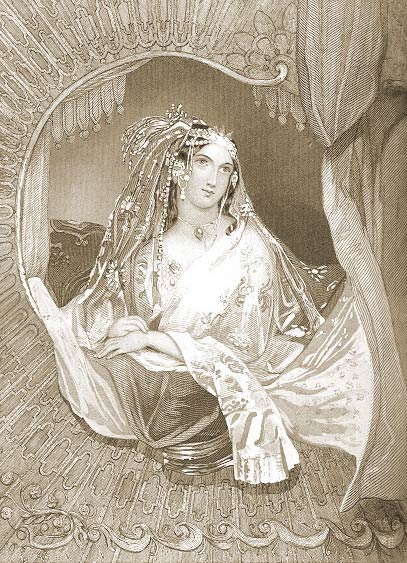
Lalarukh: Where two lovers rest

by Zeenath Jahan

I really cannot remember how many years it has taken me to visit Lalarukh's tomb. Many years ago I had heard an intriguing though vague story about her. It is very similar to Saima Waheed's story; except, her end was much more brutal.

In 1817 Thomas Moore had immortalized `Lallarookh' in his poem of the same name Before writing `Lallarookh', Moore had shut himself away for two years, reading oriental literature translated into English or French.

Moore's `Lallarookh' was Emperor Aurangzaib's daughter, engaged to the Prince of Bukhara. Since the marriage was to be celebrated in Kashmir, the Princess set out from Delhi in a magnificent cavalcade. During the journey, `Feramorz', a young Kashmiri poet, entertained the ladies with his ballads. By the time the Royal procession reached `Hussun Abdaul' the Princess was deeply in love with him.

In Kashmir a golden carpet was laid out for the Princess who, dragging her feet, went to meet her fiance. Her joy knew no bounds when she discovered that the Prince was none other than her Feramorz.

The real Lalarukh was not as fortunate. The lovers' nameless graves bear mute testimony to their tragedy. The story I pieced together was of a Royal Mughal Princess who committed the cardinal sin of falling in love with a common soldier. Leaping social boundaries, their love flourished. They met in secret until, unable to bear a moment's separation, they decided to elope.

I tried to imagine the turmoil in the Royal House-hold when it was discovered that the Princess had eloped with a common soldier. Some of the courtiers must have known about the affaire; others may even have helped the star-crossed lovers escape. Trackers must have been set on Lalarukh's trail, searching high and low, day and night; until the lovers were finally tracked down.

We know that retribution was swift and severe. The anonymous soldier was beheaded for his temerity. The Princess was bricked into a nameless grave in the middle of the compound, alive. A wall was built around the site, with sentry boxes at the four corners. The graves had to be guarded round the clock, to keep the curious and the sympathetic away; while the Princess slowly choked to death.

Today, only the stump remains of a tree that had witnessed the tragedy. It is dead, but for the rampant creepers covering it, which give it a semblance of life. Lalarukh too is dead, but her story lives on in a culture that continues to deny women their rights.

The guide at the tomb told us that before she had been bricked in, no one had dared to divest the Princess of her jewels. In 1902, archaeologists uncovered the Princess's corpse, still in all its finery and they built a grave over the hole they had made in the large square tomb, to make up for the desecration. The story of Lalarukh and her soldier was eventually pieced together from local folk-lore.
picture

To arrive at Lalarukh's tomb, we had followed a well marked route from main Hassanabdal Bazaar, off the G.T Road. The guide, Sajjid Mehmood was already unlocking the gates, even before my three-year old grandson and I had stepped out of the car. Although he said groups of tourists frequently visited the tomb, the locals do not seem to be used to having strangers amongst them. They dropped everything they were doing to get a good eyeful of us!

Before reaching Lalarukh's tomb we crossed another tomb facing an artificial fish pool. In 1589, Khwaja Shamsuddin Khwani, the Governor of Punjab, had built it for himself. He could not be buried in it when he died in 1599; because, by orders of Emperor Akbar, Hakim Abdul Fateh Gilani (d. 1589) and later his brother Hakim Humayun (1595), known as Hakim Hamam, were buried there.I wondered whether the change of plans had anything to do with Lalarukh's capture, but the guide could not say. He did tell us though, that the 1902 Archaeological team had discovered a vast treasure in the Hakim Brothers' tomb;which they removed to their own country.

Descendants of the original Goldfish and Rahu (fish) still inhabit the pool, which is fed by fresh spring waters from the bowels of the hill beside it. The original fish had worn golden rings. Their descendants are desperately trying to exist in a pool that the local populace treats like a trash can. Sajjid Mehmood was most apologetic, earnestly declaring that he had cleaned the pool that very morning!

A board near the tomb gives 1589 as the date when the fish pool and the Hakim brothers' tomb were built. The only information about Lalarukh's tomb is a board stating that it belongs to the seventeenth century.

No matter when she died, no matter how she died; today Lalarukh and her soldier rest in peace in a quiet garden. Who can tell who won in the end, the Emperor or the Lovers? They are together for eternity.

Sunday, 26 January 2014

Peshawar remembered 1940s

By Walter Reeve

Walter Reeve in 2005

Walter Reeve was born in September 1934 in Catterick Garrison, England. His father served in the Indian Army’s IASC and later in Pakistan Army. He arrived in Peshawar before partition with his family in December 1935 and finally left Pakistan in November 1949. In those fourteen years he travelled all over the sub-continent.
Mr. Reeve contacted Sarhad Conservation Network (SCN in 2005). At nearly 80 years of age, he is retired and settled in Australia with his wife and two children. His hobbies include family research, playing golf, woodwork and photography.
He fondly remembers his days spent in Peshawar. The following is a personal narrative of events around partition time. It records the impressions of an English schoolboy growing up in Peshawar at a very tumultuous juncture. He lived through events that now appear in history books. He provides first-hand insight into the lives of the Europeans living in Peshawar in those days. It mentions places and people that have long since gone. - Ali Jan for Qissa Khwani


I arrived in Peshawar with my parents in the early months of 1947. This, however, was not the first time I had been to Peshawar. When we first went out to India in December 1935, Peshawar was my father’s first posting. He was a Warrant Officer in the Army Educational Corps. I was only an infant and have no recollection of the place as it was then. Within only a few months he was posted to Wana and my mother and I went to Kasauli in the Simla Hills.

Just prior to our arrival in Peshawar in 1947 my father had been on operations in the Oghi area in Hazara while my mother and I were living in Pachmarhi in Central India. With the imminence of Independence my mother and I travelled to Nowshera where we met up with my father. We stayed in Nowshera for only a matter of weeks before my father was posted to Peshawar.

Peshawar had, for decades, been the base for the British army in its operations into tribal areas and the Afghan border area. British fears of the tribesmen and Russians coming through Afghanistan, challenging Britain's interests in India had haunted governments for over a century. The remote areas over which Peshawar presided were barren, arid and extremely dangerous; the danger coming mainly from the tribesmen who did not acknowledge British authority and resented any intrusion. Infringements did occur from time to time which very often necessitated a very large force to be sent to hand out a lesson to the recalcitrant tribesmen. Although outnumbered and outgunned, the tribesmen, because of their remarkable ability to operate in harsh conditions and their adeptness in using the rugged terrain to their advantage, were able to confront large forces and inflict considerable damage. The N.W.F.P. was used by the British and Indian armies as a training ground, it was the nearest to being on active service in peacetime. Thus Peshawar became a large cantonment catering for the needs of troops, families and a large local population. Even though, at the time of my return to Peshawar, the British army had ceased to dominate the cantonment there was still a lot of military activity with the Indian units stationed there.

Our new home was the Services Hotel on Fort Road. The hotel would have been the biggest and most well appointed in Peshawar. It was located in a pleasant district fairly close to Government House and opposite a large recreational ground or maidan. Our apartment was on the second floor of the two-storey hotel. It was very comfortable with a sitting room, two bedrooms, bathroom and toilet. A veranda ran along the front of the apartments from which one got a grandstand view of the hotel gardens, Fort Road and the playing field beyond. My schooling became a matter of urgency. Since leaving Pachmarhi in the Central Provinces, I had not had any schooling; and the little I had received in Pachmarhi was paltry and certainly was not of the standard my age and ability demanded. With the British army schools now closed, my parents elected to send me to a private tutor- her name was Miss Birch. She was a kindly and gentle mannered lady of about 40 years, an Anglo - Indian and unmarried. She was totally dedicated to the furtherance and improvement of the charges under her tutelage. Her school was run from her home. The inside of the bungalow was dark and gloomy mainly due to the lack of windows and the surrounding trees. To compound the gloominess the furnishings were Victorian in the best Anglo-Indian tradition; with heavy drapes, dark carpets, dark wooden furniture and a velvet pelmet along the mantelpiece above the open fire. The house had a huge garden where most of our lessons were conducted. We would sit at tables under the shade of a tree and do our lessons. If the heat got too intense we would sit on the veranda. There would be many distractions when we were outside, because opposite the house, on the other side of the road, was Mackeson Park and beyond that The Mall, the former being named after a British Commissioner, Colonel Mackeson, who was assassinated by a disaffected local in September 1853. The subsequent hanging and cremation of the perpetrator, who was a Muslim, created a very tense situation in the cantonment for some time after. The park was a popular thoroughfare and flanked The Mall which was the main artery through Peshawar. Apart from the distraction of the traffic and passing pedestrians, we had to contend with the occasional fight among the cats, of which there were many - from memory about fifteen. The good soul that Miss Birch was saw her taking in all the stray cats, and her kindness and concern for animals ensured a steady flow of unfortunates to her door. She also had five dogs who would liven up a dictation lesson or a dreary Scripture session by fighting among themselves or pursuing some of the cats around the garden who would dash in all directions seeking refuge up the numerous trees that dotted the garden.
Miss Birch belonged to the old school of teachers; teaching us to a strict curriculum that included dictation, Scripture, the three R’s, reading and history. Even though she had Christians, Muslims and Hindus in her class, the latter two were still required to attend morning prayers and the singing of hymns. Her individual attention to each student ensured that we all grasped what was being taught and any who were a bit slower than the others were encouraged with patience and understanding. Every morning the class would start with a reading session; usually from a popular book by a well-known author. Each student read a section until the book was finished. This method maintained our interest in the story and encouraged us all to read. Dictation was another way of getting us to improve our writing skills as well as exposing us to classical literature. Religion, never a strong interest of mine, was also taught but never thrust on us, in deference to the Indians in the class no doubt. She would not allow any book to be placed on the Bible that she kept on her desk, regarding this as some sort of defilement. These were good days, and I was very happy in my new surroundings without the regimental strictness of army schools to contend with and having a teacher who was genuinely interested in my progress.

Looking back on those days I can now appreciate and understand how apprehensive Miss Birch would have been at the departure of the British. Apart from losing her clientele, who were predominantly British; being an Anglo-Indian left her with no place to run. Although born in India she would not have regarded herself as Indian. The presence of the British guaranteed her place in society, which, while not on the same footing as the ‘sahibs’ was undeniably above the indigenous Indians. Now, not only was she going to be subjected to a change of social status, but also a change of nationality with the birth of Pakistan imminent. I wonder how she fared in the later years? Was some sort of marginalisation brought down on those people who fell between two cultures; not having a claim on one and no desire to be part of the other? I hope not. She deserved to end her days in peace and security having devoted her life to enriching the lives of many children and giving succour to any suffering animal who happened by.

The social life in Peshawar was lively and varied. The Sunday ritual was to go to the Peshawar Club for a swim in the large pool that was set in gardens immaculately maintained by an army of malis. Fountains played nearby surrounded by lawns where deck chairs were arranged. In this idyllic setting one was attended to by numerous bearers who brought cordial drinks and potato chips, garnished with tomato sauce, or, in the case of the adults, beer and gin and tonics. Everything was put on a ‘chitthi’ and paid for at the end of the month. Being totally ignorant of the dangers of sunburn, I would, without fail, get burnt every time I went to the pool. I don’t recall there being any lotions for the prevention of sunburn in those days.

Peshawar, being the nearest large cantonment to the frontier, attracted all the army personnel who managed to get leave from the lonely postings in the remote tribal areas. One such group were the Tochi Scouts, an elite arm of the Indian army that operated in small groups in the most desolate and far flung posts of the frontier area, who, when they got into town would party and celebrate for days on end. This behaviour was tolerated provided no damage was done and no injuries were inflicted by their outrageous conduct. One of their more bizarre exploits was to ride off the high diving board on a bicycle at top speed, to the amazed amusement of the more conservative onlookers. A variation of the stunt was attempted by one heavily imbibed scout when he elected to jump off the high board onto the springboard, some 20 feet below, and then, assuming his calculations were correct, end up in the pool. Somewhere in the course of this prank, dynamics, gravity and recoil conspired to affect his trajectory when - almost fatally propelled at high speed and descending from a considerable altitude - he landed on the lawn causing himself severe injury. It was fortunate he didn’t land on one of the aforementioned fountains, which would have proved a far less resilient landing.

My parents, with friends, played golf on a few occasions. They weren’t particularly good or competitive golfers, but it was a social outing that was much enjoyed. The course was quite close to us and I often walked around with them, occasionally having a swing at a ball.

I was one of very few British children left in Peshawar and, as the British families left, I found that my remaining friends were predominantly Indians, or rather Pakistanis, as they were to become. I made a particularly close friend of Qayum Khan, who also attended Miss Birch’s school. He came from a well-off family; I think his father was involved in the local government. Befriending him allowed me to enter areas of Peshawar that one would not normally go to as a European, certainly not on one’s own. We would frequently cycle through the bazaars in the city, which was out of the cantonment area and thus did not come under the close scrutiny of the British authority. We would cycle down the narrow alleys thronging with trades people selling their wares and craftsmen, squatting in their cramped workshops, fashioning brass and copper pots with rhythmical hammering strokes. The gap between the buildings would be festooned with merchandise suspended on lengths of rope or poles high up between the opposing buildings. Parachutes of all colours hung lazily, blowing in the smoky dust filled air. Where these parachutes came from is a mystery; the assorted colours would indicate that they had a military origin; different coloured canopies being used to identify the load, such as ammunition, food, or medical supplies. Peshawar bazaar was notorious for its reputation as a collective ‘fence’ for stolen goods. The “Thieves” or Chor Bazaar was renowned for the place to go to buy back anything that one had had stolen, that was providing it was still in one piece. Qayum and I would buy stamps and coins, the collection of which were hobbies we shared, for 8 annas a handful. One took a chance with the condition and value of the purchase, but to youngsters it appeared marvellous value; with quantity rather than quality being the appeal. Apart from the more mundane everyday requirements that were generally available in the bazaar, there were the exotic imports that came in from Afghanistan; namely carpets. Peshawar was the gateway into India and received all the camel caravans bringing in carpets not only from Afghanistan, but also Persia, Bokhara and Turkestan. The caravans came laden with Qum, Kishan and Tabriz carpets and the more popular and cheaper Bokharas and Turkoman. The shops had a distinctive smell, as one cycled past, emanating from the heaped stacks of carpets. One did not have to go to the bazaar to purchase a carpet; enterprising salesmen cycled around the hotels selling their wares, which they had strapped on the back of their bicycles. The advantage these salesmen had over their bazaar counterparts was that they could display the carpet on your floor and give you, the client, a better idea of how it looked in your surroundings. My parents bought a large Bokhara from one of these itinerant vendors and in the course of the hard bargaining he threw in a carpet saddlebag, which I have to this day. Qayum was an indispensable friend because of his command of languages; apart from Urdu, he also spoke Pushtu, the language of Afghanistan and the Pathan tribesman and, of course, excellent English. I often visited his home where his mother would feed us cakes and milk drinks and those wonderful Indian sweet delicacies, ladhu cakes and jalebis. As good a friend as he was he could not accompany me to the club swimming pool because he was not connected with the army and he was Indian. This anomaly never concerned me; I just accepted it as indeed he did. Even though the British tenure in India was all but over, the arrogance of such discriminatory attitudes still prevailed and was tolerated.

Apart from the Club, the other meeting place was the Masonic Club, which was attached to the Masonic Temple, which from memory was located on the Mall, just past the left turn into the bazaar. My father was a Freemason, which automatically gave him access to this exclusive club. The Masonic Club did not adhere to the strict social rules observed at the other club and was certainly more casual and less concerned with protocol. Lodge Khyber, a lodge founded in 1850, was based here and was essentially a military lodge. One of its most famous members was Field Marshal Lord Roberts V.C., who was Worshipful Master of the Lodge when he was a Lieutenant before the Indian uprising of 1857. I much preferred the Masonic Club because of the billiards room, where I would play billiards and snooker for hours. The room had a wonderful atmosphere about it - with its panelled walls and ornate heavy curtains; the strip of coir matting around the perimeter of the table; the low lights illuminating the flat baize green surface that highlighted the player but plunged everyone else into dark anonymity; and that unusual little accessory to counter sweaty hands and the resultant lack of slide with the cue across the fingers - a small bag of French Chalk, which one patted onto ones’ hand to ensure smooth movement of the cue. The Lodge celebrated its centenary in 1950, and after being granted a sanction to transfer to London, did so after its last meeting in Pakistan on 21st June 1951. Khyber Lodge and its members dominated the social scene in Peshawar in the latter half of the 19th century. Records of the Lodge show that the Masonic Buildings on The Mall were used variously as a place of Divine Worship, Public Library, Public Meeting Place and Hospital. In 1875 the residents of Peshawar gave a Ball in honour of the Lodge and its members “as a mark of their appreciation”.
 

While I was playing billiards, learning algebra and riding through the bazaars of Peshawar, more serious and momentous events were taking place in Delhi. The proposed date for independence was first mooted for June 1948, but the hostility and fanaticism threatened to expand into open conflict between Hindu and Muslim; a situation that would have been impossible to control or stop. Because the British military presence was negligible the first sign of a major inter-religious conflict would have seen the disintegration of the Indian army made up of regiments of mixed religions and loyalties. Not even the strong regimental loyalties would have been sufficient to persuade them to stay together and remain neutral while keeping the Hindus and Muslims separated. An operation was undertaken, code named “Scheme Cross” - which involved the transfer of the Hindu element of the Indian Army, the police, post and telegraph services, civil service and railways to what was to become Hindu India, and their Muslim counterparts were in turn transferred back to what was to become Pakistan. The resulting vacuum created enormous security problems as this transaction was undertaken. The baser elements of both sides were not slow in taking advantage of the changed circumstances.

The N.W.F.P. in particular was close to a state of disintegration, and the danger of hordes of tribesman, Pathans, Afridis and Wazirs, who would come pouring down through the Khyber Pass while confusion and uncertainty reigned, and take possession of land they had laid claim to for decades, was near reality. The division, however, although creating two states, disregarded the fact that each new state would have a significant minority of Hindus and Muslims living in each. This anomaly would prove to be a death sentence for hundreds of thousands of Indians of both persuasions when, even though they had lived peaceably as neighbours for centuries, they turned on each other prompting a mass exodus as refugees heading in both directions for their perceived religious haven in the newly formed countries.

These matters were not much concern to me at the time; with the news of these events filtering through the military grapevine and the clubs. The first sign that the situation was deteriorating was when Indian troops were moved into the hotel grounds who started to set up rifle pits and machine gun posts in the gardens. Guards were posted at points in the hotel to protect the many Hindu residents there, many of whom were government and political officials. My daily cycle to school was diverted along roads protected by army patrols. There were many rumours of disturbances in the bazaar area, but none of these distractions affected our daily routine. The paradox was that here we had a new nation in its embryonic stage yet those from whom freedom was being sought, the hated colonialist, were not the ones being attacked or abused; all the fury was being directed at fellow Indians because of their different religions. We still went to the shops, the Club and I continued to go to school and mixed with my Indian friends. The first visible sign of violence that I witnessed occurred when I was returning from the Club on a Sunday after a morning swimming session. It was my custom to cycle through the bazaar because it was a shorter route; but on this occasion, as I approached the bazaar, I could hear sounds of the mob, that unmistakable buzz of excited voices raised in anger intermingled with shouts of defiance and cheering as shops were being indiscriminately destroyed. Above the horizon formed by the roofs of the buildings a column of smoke could be seen curling upwards. The communal violence that had been widespread in the northern parts of India had finally reached Peshawar. I hurried home with a new urgency taking up a position behind a tonga loaded with passengers in the belief that there would be safety in numbers; what the four of us and a decrepit horse could have done in the face of a mob bent on killing is debatable. The police were powerless; in fact there were tales of the police being actively involved in the resultant looting. The main instigators of the burning and rioting were the Pathan tribesman who had come down from the tribal areas to take advantage of the instability to sate their lust for loot and settle a few scores with Hindus at the same time. During one of their incursions, the Pathans attacked a house adjacent to where my teacher Miss Birch lived. In their attempts to dislodge the occupant they invaded her garden and trampled down flowers and hedges. Miss Birch, with remarkable courage and complete disdain for their fearsome reputation, berated them for their effrontery and, after some argument, they dispersed. Whether her outburst and confrontation ultimately saved the unfortunate occupants was never discovered.
Those of us in the hotel felt as if we were under siege, with the threat of power and water cuts and the possibility of food shortages because of the disturbances in the bazaar. Both these worries were compounded when coupled with the news that the staff at the dairy, who were mainly Sikhs, had been butchered and did nothing to alleviate our anxieties. The small force protecting the hotel suddenly seemed inadequate against the rampaging tribesman and disaffected population. A very small contingent of British troops was called on to assist the local law enforcing agencies in restoring order. Order was eventually restored probably by the combination of the authorities gaining some control and the looters and murderers becoming tired of their bloodletting and destruction.

The situation did eventually quieten down and, with the recent excesses and violence receding, some sort of normalcy returned to the cantonment. The Club was once again sought out at weekends; school returned to its mundane routine of dictation, algebra and Scripture; Miss Birch’s plants and hedge recovered from the recent trampling and it was safe to visit the bazaar; still showing the signs of burning and vandalism after the frenzy of destruction. But still the feeling of fear and concern hung like a pall over the British community, whose numbers were very small with little police or military protection available. My father told me later of contingency plans that had been drawn up to evacuate British families in the event of a total collapse of order. These required that all families would rendezvous at a military airport with only a few belongings and await a mass evacuation by R.A.F. aircraft to some unknown sanctuary. The plan for those in Rawalpindi was to move all families to the Murree Brewery factory on the outskirts of Rawalpindi, which would be defended in the event of hostilities from the local population and then transfer to Chaklala airstrip for evacuation.

The British Government, in their haste to transfer power as quickly as possible to India and Pakistan, had left hundreds of their own subjects at great risk and it was doubtful whether they would have had the will, or the means, to rescue the last remnants of the Imperial presence from the violence that was engulfing the northern half of the sub continent.

The months leading up to independence fell in the summer months, which in this part of India were oppressively hot, Even when the fireball of a sun finally subsided below the horizon, it was no guarantee that relief was certain. Everything had been permeated by the days’ scorching exposure – ground, concrete, roads and walls all acted as efficient storage banks for the now departed sun, which had moved on and was imposing its life giving and strength sapping energy on some other quarter; leaving us to cope with the aftermath. The nights offered a slightly cooler prospect but only a marginal increase in comfort was gained. To get a good night’s sleep many went to extraordinary lengths to achieve this end. Sleeping on the veranda was popular as was sleeping on the flat roof of the house, the latter being fraught with danger should one find it necessary to get out of bed in the night and forget where one was. A more extreme ploy was to sleep with a damp sheet over you under a ceiling fan. This method certainly kept one cool but could result in an attack of pleurisy with the possibility of fatal results. On one particularly hot and sticky night, while my parents were sitting on the lawn in front of our apartment, the idea was born that some relief could be obtained if the beds were brought out on to the lawn and we slept outside under the stars - this, mind you, in a large hotel accommodating many guests. Initial reticence was overcome by the need for a comfortable night of sleep. The servants duly brought the beds out onto the lawn and fitted mosquito nets and with shaking heads and wry smiles, left us to our slumber. It was necessary to ensure that we were up early in the morning, so that we would escape the early morning stares of the curious and disapproving guests as well as the local population; and of course, the beds would have to be returned to the apartment early so that their unsightly presence on the manicured lawns would not cause offence to the hotel management. Like all well conducted and best laid plans something went wrong. Either the alarm did not go off or the bearers did not understand our instructions; either way found us stranded on an island comprising of three beds, complete with ‘mozzie’ nets, in vulnerable isolation in a sea of lawn. The sun had risen as had hundreds of people who were now going about their daily chores. The problem now was to get out of bed and make a dash, in pyjamas, to the apartment, a distance of about 30 metres. I was beside myself with embarrassment and upbraided my parents for having persuaded me to participate in such a ridiculous enterprise. Meanwhile as we considered our position; servants, malis, and assorted tradesmen walked past with amused interest. We finally summoned up the courage to make a dash for it – urged on by the need to remove ourselves from our predicament and to meet the pressing demands of the clock, which indicated that we had slept rather better than we had expected. When a suitable gap appeared in the passing cavalcade of assorted onlookers, we made a dash for it to the security of the apartment. Despite the good night’s sleep the experiment was never repeated.

With the very near prospect of British rule coming to an end, one would have thought that the activities of the bureaucracy would have been curtailed or that civil servants would have felt disinclined to continue in their duties; which could now be seen as futile. But this did not happen. A very small band of dedicated civilian personnel carried on with the running of the country to the last minute. Their dedication was recognised by the Indians – they were the oil that kept the grinding wheels of Indian society moving. The District Commissioners were such a special breed of civil servants. They were responsible for their areas; settling claims, ensuring fair play and adjudicating in disputes on a whole range of matters. They were the face of the Raj that the ordinary people became familiar with. The task of the D.C. in the North West Frontier Province was particularly arduous and required a fine balance of firmness and tact, especially when dealing with the tribesmen. This ability to talk and negotiate with the tribesmen inevitably let to a rapport between the two parties. This was well demonstrated when the D.C. of our area invited my parents and me, together with some other army personnel to attend a tribal tamasha being held in tribal territory. Normally, in circumstances such as existed at the time, such an outing would have been foolhardy. The tribal areas were technically out of bounds and out of the control of the British, even when the latter were at the zenith of their power. But such was the regard that the D.C. was held and the confidence he had in their honour, that the invitation was accepted.

We started off in the late afternoon and were driven some miles into open country over dusty roads until we were met by a Pathan tribesman mounted on a motorbike at an appointed place; he led us over more dusty tracks through a dry and arid landscape for some time until we reached our destination which was a river. The river had virtually dried up save for a trickle that meandered down the middle of a wide bed of stone and gravel. The bed was wide with steep sides and conveyed the illusion of an arena. As we stood on the high bank we could see a gathering of people, and a fire glowing, through the gathering twilight along the rivers’ edge in the middle. Scrambling down the sides we made our way across the stony ground and as we got closer to the gathering we could see charpoys arranged in a crescent around the fire. In the stream, that rippled and sparkled over the smooth pebbles, lay bottles of cordial and soft drinks keeping cool in the icy water. Our host was a Pathan tribal chief who had with him a retinue of subordinates and followers. Apart from my mother, there were no women present. The D.C. was able to converse with him in his native Pashtu. What was discussed was of little interest to me; at twelve years old I had little grasp of the political scene. Once the niceties and greetings were concluded the meal was prepared. The food was traditional tribal fare of curried goat, vegetables and unleavened bread. The latter, which resembled a very large and thick chappatti, was cooked to such large dimensions that one sufficed for all of us and we just tore a piece off as required. One delicacy, and this appellation would depend very much on how adventurous one was, were sheep tail fat cubes. The sheep in the area had enormously fat tails that hung down pendulously, frequently dragging on the ground. The tails were cut off and the fat was cubed and then cooked over an open flame until brown and crisp. When one bit into them the hot fat gushed out in torrents, dripping off ones’ chin and often finding its way to the elbow. All eating was done, inexpertly by the Europeans, with the fingers. The meal was finally brought to a conclusion with sweet meats and tea. Green tea was served from a teapot made of china so fine that the glow of the fire could be seen through it. With the huge meal consumed and teeth raked clean our host saw us off with good humour and best wishes. This tamasha was probably his way of showing his regard and esteem for a representative of an occupying power which he had opposed all his life, yet not letting past differences get in the way of a relationship that obviously existed between them. Who knows? He might have had some regrets that the old enemy was going; at least it was an enemy he knew. The new masters about to assume the mantle of power were an unknown quantity.

We journeyed back the way we came under the guidance of the same motorcyclist; en route we stopped at a water filtration plant where, despite the lateness of the hour, we were given a tour of the plant by the person on duty. From there we headed for Peshawar only to find that the gates to the cantonment were closed. A confused policeman on duty, when confronted by a car load of Europeans in the middle of the night, was reluctant to let us through but was finally persuaded that he was dealing with the District Commissioner and allowed us access. The evening had been a wonderful experience and adventure that had brought me in close contact with the tribes people who had a fearsome reputation and whose fighting qualities, honour and hospitality were legendary. The D.C. would have been well aware of their traditions and their hostility towards Britain; he also knew that a Pathan would not besmirch his honour by harming a guest.

In the course of his military duties my father had occasion to visit the Khyber Pass when on an inspection of facilities at Jamrud and Landikotal - two forts en route to the Afghan border. My mother and I were fortunate to be able to accompany him on this trip. These forts were part of a defensive system guarding this vital artery to the border. The Khyber Pass, subject of many an adventure story and scene of some of the most ferocious fighting between the Pathan tribesmen and the British army, was one of the few openings in this mountainous region that would allow a foreign invader to enter India. Russia was, of course, that enemy and was always regarded as a potential aggressor in this area; so the British presence was always significant and visible. The road is long and tortuous following the gullies and spurs of the old caravan route through very dry and scrubby country; which in summer is insufferably hot and in winter unbearably cold. A posting here was not popular with the troops who, apart from the extremes of climate, endured excruciating boredom that could be punctuated at any time with a very violent and swift death. Where engineers had hacked through the rock to widen the road; the resulting large faces of rock towering above the road were used by different British army regiments to carve their regimental badges and insignia, leaving behind an indelible and permanent reminder of their stay. I hope these poignant remnants of the Raj are still there, for they are a memorial to the thousands of ordinary British troops who, far from home, sweated to keep the empire intact. The discussion as to the rights and wrongs of our presence in India has no place here. The lowly soldier gained nothing from the Empire. He endured the heat, suffered the illnesses and faced the danger for a pittance; and very often died in some remote place for a country that held him in low regard. Not for him the riches of the traders or the high society of the officer class. His home was the barracks, his family the regiment and drink his solace. Hundreds died for their King and Country in minor conflicts that would not even rate a mention in an English newspaper. Their memorial would be these imposing carvings standing out high over the harsh surroundings in this far off corner of the world.

The border itself was a disappointment. Where the road came to the barrier the tarmac ended; beyond the painted pole flanked by a rusty barbed wire fence, both of which offered, at best, a token deterrent to cross, was a dusty stony track that meandered off into the hills. The prospect of crossing into that desolate and uninviting zone would have been reason enough to keep out. A small guard post manned by a group of dishevelled soldiers in tired uniforms and wearing German steel helmets; the latter being the only piece of apparel that endowed them with some martial bearing, stood in incongruous isolation as Afghanistan’s first line of defence. A sign proclaimed that one was crossing into Afghanistan and it was illegal to cross.

To escape the temperatures of summer on the plains - often reaching the 100 F and over - my father took some leave which gave us the opportunity to visit Cherat; a hill station quite close to Peshawar. Cherat was first considered as a refuge from the oppressive plains in the 1850’s when Lt. Roberts, later to become the aforementioned Field Marshal Roberts, did a survey of the rocky ridge with a view to establishing a sanatorium for troops. The road to Cherat first crossed flat scrubby country for some miles and then, on getting to the foothills, started to climb steeply up a twisting and windy road, the affect of which was to bring on car sickness. On arriving at the summit one was immediately taken by the peculiar topography of the hill station. The houses and military establishments were perched precariously along the narrow spine of the ridge. To build a house it was necessary to hack out ledges in the hillside to accommodate a building. The views were spectacular and uninterrupted; looking down on the plains for miles around. Hardly any houses, because of their position on the ridge, would have been deprived of a virtual aerial aspect of the scrubby flat plains. Barracks, roads and parade grounds had to be carved out of the rocky hills. Cherat was not endowed with much natural beauty; very little in the way of trees and vegetation prospered in the rocky and unforgiving ground. Despite its altitude I don’t recall the temperatures being significantly cooler than Peshawar. I recollect watching some members of the Black Watch Regiment returning from a route march along a road that passed directly below our house; the heat had reduced them to a disorderly group of stragglers strung out for some distance with a piper at their head urging them on. We shared our bungalow with another family. The house was large enough for two families to live separately in their own quarters. The other family had two children, both of whom were looked after by an Anglo-Indian nanny, the latter was a delight; she had the wonderful gift of being able to communicate with children without appearing patronising or condescending. We would while away an evening playing board games or cards with her.

This battalion of the Black Watch was the last British regiment to leave Pakistan and was very prominent in Cherat at the time. They provided the transport to get children to school, organised sports days and parties for the children They even supplied the school percussion band with new drum skins. The barracks where the troops were housed were a favoured place for us to visit; talking to soldiers, watching them drill and listening to their tales were the stuff of fantasy. Their drills were interesting to watch because they were done to a drumbeat and shouted commands were kept to a minimum. I have always found the disciplined marching and drilling of soldiers fascinating. There is an aesthetic appeal to witnessing a group of men all marching and manoeuvring in unison to the beat of a drum or a martial band. The pipe band of the regiment would practice their music and marching to a large audience of bystanders. There were occasions when the side drummers would rehearse by tapping their drumsticks on the concrete steps rather than their drums, with a solitary piper accompanying them. There was also a Gurkha regiment stationed in Cherat and it was arranged that the two regiments would march in a farewell parade utilising the massed bands of both regiments. During the dress rehearsals, when the Black Watch was in full regalia, I took some photographs of the band. Some fifteen years later, when I was working in Croydon in England, our cleaning lady in the shop where I worked mentioned that her husband had served in India and had been in the Black Watch. She brought in some photographs that he had taken of the band and they were almost identical to those I had taken. Her husband had been there at the same time at the same rehearsal; a remarkable coincidence.

The final parade was a poignant affair for both the Black Watch and the Gurkhas. The Black Watch was heading home once independence was declared, and the Gurkhas, although native to Nepal, were part of the British army and would be returning the Britain as well. With these two regiments went the last tangible vestige of British power. A large audience watched as these two regiments marched and counter marched on the parade ground. The two bands combined to create a heart-stirring spectacle of massed drums and pipes sending the skirl of the pipes echoing through the hills and reverberating from the rocky surrounds. Cherat, like the Khyber Pass had a tradition of regimental carvings on the rocky faces of the hillsides. The Black Watch already had their badge there from a previous visit and had merely added the date 1947 to the other dates; thus ending an era in British military history

August the 14th 1947 – Independence Day – a day remembered by millions in a myriad different ways. Many rejoiced at their newfound freedom; to many this day heralded an uncertain future as they fled their homes to seek refuge in a new but strange country of their religious persuasion. To the British it was the stunning realisation that it had all come to an end – to thousands it was the day for which they died. Independence was going to cure all ills; a feeling of optimism pervaded reinforced by a naïve belief that the change would bring good fortune and prosperity instantly, a belief that was as naïve as believing that a change of government significantly changes things. Those in the new Pakistan shed one master but inherited the hydra whose heads were poverty, military dictatorship, civil unrest, corruption and war. All these heads were to be reared in the future; but August 14th was to be celebrated and the future, although unknown, would be free of the shackles of imperialism. Tongas trotted up and down Fort Road past the front of our hotel bearing the picture of Mohammed Ali Jinnah, the new president, the occupants shouting out ‘Pakistan Zindabad’ ‘Long live Pakistan ’.

My father was present when the Union Flag was lowered on the 14th August, without ceremony, for the last time at sunset at Peshawar British Army headquarters. He took possession of the flag and kept it. It stayed in the family for many years until my father, towards the end of his life, fearful that the flag would be lost or fall into disinterested hands, presented it to the East Yorkshire Regimental museum in Beverley, England. The museum has since been incorporated with the Prince of Wales Regiment in York. I fear the flag may now languish in a shoebox in a damp basement without its significance being known.

The speed with which independence came meant many things were not available in Pakistan because they had previously been produced in the non-Pakistani portion of India. One such item was stamps. For some time the only stamps available were the old Indian postage stamps overprinted with the word ‘Pakistan’. Small things such as my father’s shoulder flash embroidered on his uniform had to be changed by putting a loop on the I in R.I.A.S.C. to turn it into a P with an ink pen. My father at this time had agreed to stay in the Pakistan Army to help in the reorganisation and establishment of a new national army.

The expectation that a quick partition of the Indian sub-continent would somehow diffuse the violent strife proved to be ill founded. The line drawn by Radcliffe, a bureaucrat brought out from Britain, to determine the boundaries between India and Pakistan, not only wended its destructive way across a map, but through villages, fields and the very lives of the poor helpless souls unfortunate enough to live on this fault line. The creation of East Pakistan, a Muslim enclave a thousand miles from West Pakistan, was another bureaucratic piece of nonsense destined to bring untold misery and devastation to that impoverished and unhappy part of India. The killing continued unabated and out of control. The meagre forces available to confront the murderous mobs were inadequate. The birth of Pakistan and India as independent states was a difficult labour; they were brought into the world of nations amidst flame, death and hatred. The ‘butcher’s bill’ for the partition of India was never officially calculated; but it was roughly estimated that one million souls perished in the months preceding and immediately after Partition; a figure the British government was reluctant to acknowledge - they were glad to be free of the problem that India posed. Once the government had made its mind up, expedition was the byword. This probably influenced the way in which the Indians regarded the British in the final days. There was no attempt on the British side to hang on to this ‘Jewel in the Crown’; therefore, there was no inducement for the Indians to show rancour or hostility; we were handing back something without a fight; something we had taken and moulded into a unified entity, the latter being done as an administrative device rather than through any leanings to altruism, and had brought about improvements to the country in a myriad ways.

Early in 1948 an event occurred that threatened to create further destabilisation. This was the assassination of Mahatma Gandhi, at a prayer meeting on the 31st January. The sub-continent held its collective breath when the news was announced. The killing could have been a trigger for a war had a Muslim been the assassin. The new state of India, although secular, would have risen up in a furious mood for revenge. As it happened the assassin was a member of the Hindu orthodox party whose grudge was against Gandhi for having preached Hindu-Muslim unity in contradiction to his own vision of a Pan-Hindu state.

These days it is a frequently asked question as to where one was when a certain event happened. Gandhi’s assassination sticks in my mind because my parents and I had been to the Saddar cinema and had seen Gregory Peck and Ingrid Bergman in ‘Spellbound’. After the show we went to the Masonic Club where we heard the news. The atmosphere was tense with everyone hoping that this killing would not bring on a conflict. It would be a few days before the arrest of the killer was announced and his identity revealed - to the relief of all.

Sometime in mid 1948 we left Peshawar for Rawalpindi where my father took up a new appointment.

Peshawar, as in all places in India that I lived, has a special place in my memory. I spent most of my formative years on the sub-continent, I was educated there and, despite much illness and discomfort, spent some very happy times there. As I have grown older and see my future diminishing I, like most elderly people, find solace in the past. I frequently reflect on those years spent in India and Pakistan. As the years have passed, I have come to realise that, historically, my years there were lived in tumultuous times and that I witnessed at first hand the birth of a nation and the start of the demise of an empire. I have lived through events that now appear in history books. Historians deal with politics and national matters as academics and concern themselves with cold facts and the science of politics; whereas I have heard the frightening sound of a mob, I have seen the smoke of destruction, and have walked through the rubble of someone’s home. I have also retained some marvellous memories of the people, colours and sounds of a sub-continent that I regarded as home long after I had returned to my native England, which paradoxically was a country in which I was a stranger.
- Walter Reeve. Australia

-picture 2 Walter Reeve with parents at Peshawar railway station
-picture 3 With bearer Ramzan Khan in Peshawar

Sunday, 22 December 2013

Bashir Bilour – the valiant leader

by Amir Abbas Turi

“My presence gives hope and valour to the terror-struck folks.” – Shaheed Bilour
Bilour: a man who believed firmly in his creed and fought for it till the very end. It is a death that should be mourned for the heroism and courage of the martyred, and for the loss of multi-faceted life full of affirmative power that has been lost. But, finally, he won – the hearts of millions of Pakistanis.

On December 22, 2012, a terrorist suicide bomber finally succeeded in his aims and took the life of the valiant Pashtun leader. Bashir Ahmed Bilour, a 69-year-old politician from the Awami National Party (ANP) was martyred for adopting a bold stance against terrorism and militancy. He remained the first ever serving minister to be honoured with the highest civil award, Hilal-e-Shujaat for his bravery and resolve against the scourge of terrorism and extremism from the-then President of Pakistan Asif Ali Zardari on March 23, 2011

Bashir Bilour was a man of towering personality who had always helped the down-trodden and raised the plight of the oppressed folks in this land of pure. The sacrifices rendered by the late leader of ANP for the sake of harmony, tolerance, social justice and human rights could not be forgotten. He, throughout his life addressed the quandary of the brow-beaten and under-privileged inhabitants of this country in particular, and Peshawarites in general. All of the great leaders have had one characteristic in common: it was the determination to confront the major threat to peace against the people of that time. This, and not much else, is the real meaning of leadership.

Bashir Bilour used to say that extremists are our enemies — the foes of our children and women. They yearn for our kids to be their slaves; nevertheless, we will educate our young blood and will make them non-violent and progressive citizens of Pakistan. Once after visiting the spot of suicide bombing in the Meena Bazar market, Peshawar, he lamented on the floor of the Khyber-Pakhtunkhwa provincial assembly, “I saw the mothers, daughters and sisters of my nation lying uncovered, wounded, bleeding and bits of flesh spread on the road. How much more blood would be enough to awake the dead consciences?”

He was one of the very few sane voices in this country and made significant contribution in widening non-violent approach to eradicate racial, economic, and social injustice following the legacy of Fakhr-e-Afghan Bacha Khan alias Khan Abdul Ghaffar Khan. In country mired by confusion over what to do about the Taliban nuisance, his was a clear vision and message: oppose them for their thought and savage means are irreconcilable with anything modern.

Bashir Bilour was popular both among ANP cadres and the electorate in his constituency in Peshawar city. He served as the ANP provincial president and won election from his provincial assembly constituency five times in a row. And the manner of his death in a suicide attack has made him a martyr for his family, party and innumerable supporters.In this situation, the most vulnerable people are those who speak the truth, flight for justice, support the weak and strive against intolerance.

However, history will not forget those who have laid their lives for the sake of truth and justice. He will be remembered for his courage and valour and have had all the qualities of a great leader as, Henry Kissinger said, "The task of the leader is to get his people from where they are to where they have not been." Late Bashir Ahmed stood in defiance against the mighty force of religious fanatics. Regrettably, most of our leaders lack such a strong character and charismatic personality. He knew well the cost of his audacity, but still he raised his voice for the plight of the oppressed. He could not be threatened or silenced.

Martyred Bilour was someone who has good values and a sense of honour and integrity. It’s our obligation to remember those heroes of society who contribute in society for making Pakistan democratic, peaceful and prosperous and worth living. All the segments of society, including political parties and media, will have to join hands to defeat the dogmatic mindset.

The life of Shaheed Bilour could best be understood by the below mentioned couplet of Khushal Khan Khattak once said:

Pa Jahan da Nangyali dee da dwa kara,
Ya ba Okhuray kakary, Ya ba Kamran shay
(A valiant man can do but one deed,
Perish striving for the goal or succeed)

It is our moral duty to remember and salute such unsung heroes of our society. Bashir Bilour is the kind of fearless leader that our nation requires in today’s dark age. May his soul rest in eternal peace!
The writer can be reached at aamirabbas49@yahoo.com and he tweets @EngrTuri

An ode to my Uncle Bashir Bilour

-today is the first anniversary of the death of Mr. Bashir Ahmad Bilour (August 1, 1943- December 22, 2012), senior Minister of the Khyber-Pakhtunkhwa provincial government and former provincial President of the Awami National Party. His death was described the New York Times as 'Mr. Bilour and eight others were killed Saturday by a suicide bomber who detonated his explosives after a political rally. The assassination, claimed by the Taliban, convulsed the country’s political circles, serving as a grim reminder of the Taliban’s lethal ability to strike their opponents. Mr. Bilour had survived two previous assassination attempts.' This is a special contribution by his niece in tribute to her late uncle. -ed note

by Mona Bilour

They say "Time heals all wounds." I wish there was some truth to it. The bitter truth is, time takes away from you what is precious and lets you weep at the hands of it.

The news still flashes before my eyes when I saw on T.V "BASHIR BILOUR INJURED IN A SUICIDE BLAST." I left the house to be with you, to stay with you whilst you recovered, for you to smile at me and tell me "See, I told you they can't kill me." But that one phone call toppled the world for me.

When I saw you lie in front of me not breathing, when I saw the valiant you not move, when I saw your smiling face in pain - Oh! how painful it was. Your silence was the death of every soul that was there to have a glimpse of you. And with each day that passed, to know I wasn't going to hear from you again, on my every visit to my Parents when I don't hear your footsteps and your voice that said "I am here to see my daughter, where is she?", to know I won't ever hug you again, when on this birthday you weren't the first to wish me, when on this Eid you weren't the first to call me and when I look back and think that 2nd December 2012 was the last time I hugged you, there is pain so severe it leaves the mind in despair and the throat clenched and the eyes filled with tears of sorrow.

You have left us in depths of melancholy. The world remembers you as "Bashir Bilour-The lion of Khyber Pakhtunkhwa." But to me, you are "Bashir Bilour - a part of my heart gone missing."

Thursday, 12 December 2013

Book review: Shadow of the Crescent moon is drive by non-fiction

-originally published by Sunday Guardian 16th November 2011

by Aneela Z Babar


Leblanc believes that our ‘social transportations’ are like our identities, so in Bicycle Citizens (1999) she negotiates the streets of Oizumi perched on a bicycle, following the paths a Japanese housewife might use while dealing with the political system. As a result, Leblanc too starts to ‘see’ the political world as the ‘housewife politician’ does.

Fatima Bhutto in her interviews has spoken about how she has had opportunities growing up, and recently as a journalist, to visit the Land Beyond Peshawar-Bara Border, that she has travelled a lot; to Quetta, to Afghan refugee camps in Peshawar. The Shadow of the Crescent Moon could then have provided us with the vantage point of an insider/outsider to a land forever blighted to live in newspaper headlines as the “troubled tribal region of Waziristan”. Sadly, the town of Mir Ali—the theatre of the main action in The Shadow of the Crescent Moon, only comes across as how one would imagine a restive border town to appear out from a taxi window. These are snapshots. It is drive-by narrative non-fiction. Shadowed gullies. Snot smeared children and battery chicken. Bhutto’s characters flounder about in segments that read as “a situation round up” of Waziristan— (hyperlinks one may click at the end of a news report to get 200 word “Who is X and why do they hate Y so”) and their lived world of muddled spaces. Kitchens with people mumbling, sitting rooms where mourners gather, cold vacant stairways where students conspire.

Bhutto is writing about people whom I can recognize, a point in space, a moment in time I may have frequented once but I have none of the elation I would have, say reading Shamsie (Salt and Saffron for one that cunningly unpacked class and spatial politics in Pakistan). There is none of the putting down a book and buying a copy for a friend “Here, these are our stories”. It could be for Shadow.. narrates a surreal cartography, a land where the markers of Eid appears so late in the book, though it keeps on reminding us that it is Eid day right from the first page. The characters inhabit a strange landscape where “ladies...clutching their bags of material and patterns” visit the reluctant tailor, who hands them “the measuring tape and turned his back while they shyly read out their measurements. As Zulfiqar copied the numbers down, he blushed”. When these reticent, bashful exchanges could just be avoided if they carried a naap ki kamiz as women do in their bags along with the material and patterns. The strange land of Mir Ali is stuck in a time warp where Eid is in December, when the reader may know that the last time it was Eid in December, it was 2008. And The Shadow of the Crescent Moon cannot be set in the Eid of 2008 (or the years before that) for it has been months since its protagonist Aman Erum returned from his years in the US, and years since his visa interview at the US Embassy where he reads about a President Obama justifying drones off a news ticker on TV. So Toto, where are we?
So a tale of three brothers and a rain swept Friday Eid morning.
Aman Erum, the eldest, has always wanted to get out of Mir Ali and the family business, and so earlier in the book he sells his soul to the Army-Amreeka nexus. Thus, forever making us view the Pakistani student abroad as not only torn between the With Us or Against Us predicamen; but with now the binary divisions getting further redefined with the students abroad being either preoccupied with ablutions and maintaining gender segregation or spying on his/her compatriots. Doomed if you do, visa revoked if you don’t.

Sikander—a textbook middle child, is a doctor at the government hospital, when he is not racing over rescuing his wife Mina, her emotional health on a quick downward spiral. Mina’s character sketch alternates between the calm she experiences gate crashing funerals, stalking and laying claim to the grief in the “lines of other mother’s faces”, gathering solace from there being a “community of widows and the bereft who knew how she suffered”; and returning “vengefully to the wounded woman that spat and swore and paced until she was let out again”. There is something feral about Mina as she scours the newspaper pages for death notices and obituaries; a silent despair as her husband Sikander watches her, seeing flashes of the woman he remembers from a time ago, but that woman “comes and goes in waves”. There is something to how the two relate to each other that reminded me of another couple-- Sufiya Zinobia Hyder and Omar Khayyam Shakil from Rushdie’s Shame, or perhaps Mina and Sikander are just drawn this way.

Samarra, the young woman with the beauty spot in her eye, is the one that Aman Erum loved once, still does, but there is a betrayal that divides them now. Her character now has to negotiate sentences like “One can track operations in Mir Ali based on Samarra’s syntax”.

There is also the mysterious Colonel Tarek with his ZiaulHaq “eyes weighed down by darkly lined bags and small smatterings of sunspots” playing with his wedding ring slowly and speaking in foreboding tones slower.
And then there is Hayat, the youngest son, the rebel who now questions the cause. But before that he has to manoeuvre the most socially awkward exchange that comes across as Bhutto chooses to translate select endearments in the text into Pashto.

In this case Zainab, the classic filmy white haired widow mother reaches out and “mouths in Pashto into her son’s citrus-scented ear”

a ‘Za tasara mina kawam,’

Translated as, I love you.
Now Pashtun mothers will articulate their love for their sons in many tongues, but to phrase it in the literal sense? As in how one would field the “So what is I love you in Pushto?” query we are accosted with (once you are done answering that other question, “Are there any cuss words in Pashto?”—Only in Mir Ali I would say.

‘Wale?’ he (Hayat) breaths back. Why?

My Thoughts Exactly.
Samarra and her ill fated love affair, Hayat, Sikander, Mina, Aman Erum, the Colonel and the city of Mir Ali quickly plummet towards their heart wrenching end, but not before Mina has had the chance to launch herself onto a Talib in a most jiyala fashion
“Zalim! Der zalim aye! Bey insaf!”
I half expected her to end in a “Zalimo! Jawab Do Zulm Ka Hisaab Do” but I dont think the Pushto subtitles for that were ready yet.
The Talib true to bad cinematic form unleashes a
‘Khaza—‘ Woman. He tries to interrupt her, to remind her of her place and their space but nothing can reach Mina now’.
Déjà vu, I am sitting in a Peshawar cinema watching Badar Munir brandishing a Kalashnikov, all the while dreading being blown up by a suicide bomber.
These things probably never end well.

Monday, 2 December 2013

Babarnama: Interview with Naseerullah Babar

-This is a edited version of an article originally published by The NEWS on Sunday 18-2-2007 . Naseerullah Babar ( born 1928—10 January 2011)

Major General (retired) Naseerullah Babar has served on many important positions. He has been federal interior minister as well as the governor of North West Frontier Province (NWFP) during the era of Zulfikar Ali Bhutto. He has been at the centrestage of many important events of Pakistan's history.

Naseerullah Babar is also considered to be the architect of Taliban movement in Afghanistan during the mid 1990s, a charge he tacitly rejects. He is also also credited with the formulating of a strategy of intervention in Afghanistan from Pakistan in the early 1970s. Babar is even said to be the person who made Inter-Services Intelligence (ISI) interfere in political affairs for the first time ever.

A close confidante of both Zulfikar Ali Bhutto and her daughter Benazir Bhutto, Babar is a clean man who has never been charged of corruption. He also has to his credit as the federal interior minister the restoration of peace in Karachi, thus becoming bete noir for the Muttahida Qaumi Movement (MQM). His personal valour is acknowledged by his arch rivals.

He belongs to Pirpai village in Nowshera district of NWFP. The News on Sunday recently got hold of him and talked to him at length on various issues of national, regional and international interest.


By Raza Khan


TNS: What do you think of President Pervez Musharraf? Is he under pressure from the West to held elections and cut deals with secular parties like your Pakistan People's Party (PPP) to counter religious extremism?

NB: You see, this has a background in the sense that Musharraf brought these people (the religious parties) to power to convey a message to the Americans that you have Taliban in Afghanistan and mullahs in Pakistan. That is why the two bordering provinces were given to the MMA (Muttahida Majlis-e-Amal). This was done on purpose. But it is possible for him to get rid of them. You can see that the Supreme Court has come up with this case on the educational qualifications of a number of MMA legislators. This is done three, four years after the case was first filed. Why were the mullahs allowed to sit in parliament for so long? All this may be happening with a design. (The came has come up) so that in future these people cannot contest elections.

Historically in Pakistan there has been an alliance between the mullahs and the military in political affairs. Even when Afghanistan question came up, Ziaul Haq needed religious extremists and the religious extremists needed him. But because both the army and the mullahs have no manifesto, no programmes, they, therefore, are dependent on unnatural forms of government.

TNS: Does it means that the West in general and the United States in particular may be asking Musharraf to bring genuine secular parties like the PPP to power through elections?

NB: There has all along being a controversy in a sense that for half of the life of Pakistan the government has been run by the mullah-military alliance for other half by political parties. The military has never allowed political parties to grow and have long tenures of governance. Only the 1971 debacle compelled the military to give power to a genuine civilian government but soon this government became an eyesore. The then political government still developed a lot of institutions that were to the benefit of the army like the National Defence College to provide militarymen with higher education. The office of the chairman joint chiefs of staff committee was developed so that the administrative control of the army could be taken over and looked after by that institution instead of the army itself.

When the coup by Sardar Daud in Afghanistan occurred, Bhutto extended his rule by one year and then in January (next year) Pakistan National Alliance (PNA) was formed within a week. How could such disparate parties (as formed the alliance) come together on a common programme so quickly? It was because the homework had already been done by the military to use them against the political government and that was the beginning.

When Russia invaded Afghanistan, Zia should have formed an exile government of seven component parties of Afghanistan in Pakistan but he did not do so because it did not suit him. Then favourites were found like Hekmatyar and others. That led to the subsequent chaos in Afghanistan that remains till today.

When a political government came to power in Pakistan again in 1988, the ISI had ganged together a shura of Afghan parties and asked our government to recognise it. When we looked at the proposal it did not meet our requirements because it did not include an international personality. The PPP government, therefore, said sorry because we had certain limitations under international law. When the PPP government was sacked and Nawaz Sharif came to power, situation in Afghanistan started unfolding like a stageplay. First Professor Mujeddadi was sent there for six months as president then Burhanuddin Rabbani was made president for a year. On the completion of his tenure, he refused to resign. A chaos was created out of which Dr Najeeb emerged as the Afghan president. With Najeeb I arranged talks in 1992 and Asad Durrani set the tone for the work of intelligence agencies. Dr Najeeb said he was ready to quit at any time provided a governing mechanism was set up in Afghanistan. Due to the unpreparedness of ISI or its insincerity the talk fell through. I must add that I went as a guarantor of Pakistan in talks with Najeeb. In fact, Dr Najeeb came to my house in 1979 to tell me me that he also wanted to join the anti-Soviet resistance. But he was not acceptable to the intelligence agencies of Pakistan. So, he went back.

TNS: Though you claim to have played a positive role role in Afghanistan, why are you also accused as the creator of Taliban there?

NB: In fact, the Taliban phenomenon cropped up during PPP's second stint in power (1993-96) but we did nor recognise them and instead stopped them when they were about to take over Kabul. Pakistani agencies' philosophy was that whoever occupied Kabul should have the right to be recognised as the government of Afghanistan. But we said unless Taliban formed a broad-based government we would not recognise them. We were able to bring together Taliban and Dostum and a draft agreement was formed. Under it a political commission was to be set up having members from all provinces in Afghanistan based on population to give a federal structure to Afghanistan. After the Afghan parties had agreed to the draft, Dostum kept sending me messages to go to Afghanistan for the signing of the agreement. On November 3, 1996, at midnight we had a meeting in the presidential palace in Islamabad with President Farooq Leghari presiding. The prime minister, ISI's director general and the chief of army staff were all present. I was instructed to go and get the document signed by all the parties. I was to go on November 5 but on the night between November 4 and November 5 Leghari dismissed our government for the reasons best known to him. When the new government came in it did not know anything about Afghanistan or Taliban. It immediately give recognition to Taliban. After that whatever leverage or stick we had with Taliban had been lost. I or PPP is not responsible for that.

Even earlier, in 1970s we were in negotiations with Sardar Daud (creator of Pakhtunistan movement) and also with Zahir Shah. We sent two men from Hizb-e-Islami with Pakistani colonel Ibrahim to Rome with the offer that the Hizb would be supportive of Zahir Shah if he returned as a constitutional monarch. The constitution had been prepared by one Mr Shafiq, who had been to the Al-Azhar University in Cairo. This constitution was acceptable to the Hizb-e-Islami Afghanistan.

In 1994, the PPP government was to launch a programme for opening of routes through Afghanistan to Central Asia for the benefit of the whole region. Our thinking was that the market lay in Central Asia while India had industry. So, if oil and gas was brought to Multan from Central Asia, it could be supplied to India and onwards. We could have also used this as a lever to push India to solve the Kashmir problem. But this was not liked by the powers that be. Regarding Taliban, when in our second government I sent a convoy of goods and some gifts to Afghanistan, it was stopped at Kandahar by the Indo-Iran lobby. Then the Taliban came in and cleared the road for the convoy as well as the area where it was difficulties of travel.

TNS: How come Taliban emerged so instantaneously out of nowhere?

NB: Because they were the same people who had been waging jehad against the Soviets. The only thing that changed was that some groups had become fed up with infighting and warlordism. From then onwards, we kept advising the Americans and the United Nations that Afghanistan needed a major socio-economic uplift programme.

We had a long term and multifaceted programme for Afghanistan. But unfortunately at the instance of the US or whoever our government was dismissed. Then I advised (Taliban leader) Mullah Zaeef to hold a Lockerbie-like trial of Osama bin Laden but the Americans asked me how I could guarantee that a court comprising of a Saudi and Afghan judge (to which the Taliban had agreed) could punish Osama. I said no court could say in advance as to whether the accused would be punished. Then the 9/11 happened. All this could have been averted.

TNS: You are also accused of being the architect of Pakistan's intervention in Afghanistan?

NB: It was in 1972 when I was in Peshawar, then Bhutto came to Peshawar and I advised him to open the border of tribal areas with Afghanistan. So, in 1973 we opened Kakar-Khursan in Balochistan. Then other areas followed.

In 1973 when Sardar Daud staged a coup against King Zahir Shah in Afghanistan and we thought we had an interest there. So I wrote a paper analysing what would happen, for instance, to Shah of Iran etc. Then Bhutto decided that we had to protect our interests. At the same time, the Hizb man Habibur Rahman came to us. The Hizb was against the socialist and communist parties in Afghanistan. In 1950s when Daud became premier he had opened Afghanistan to Russians. If you can recollect all the routes from Torghundi to Kandahar and the other from Bandar Sher Khan to Kabul were opened up while the main airbases of Bagram and Sheen Dandh were built by the Russians. We thought this was a plan by the Russians to move on to the hot waters. You know that Peter the Great (Russian emperor) had left a will to his nation to keep pressing until it got to the hot waters. Last of the communist ideologues like Brizhnev etc liked to complete the agenda of Peter the Great.

TNS: The border between Pakistan and Afghanistan has always been the topic of heated discussions. What's your views?

NB: Sardar Daud by 1970s was well aware of the designs of the Russians. He said to us that if (the invasion) was from the North today it might come from us tomorrow. Daud therefore came to Pakistan and was about to sign on an agreement with us on the Durand Line. It was not that we needed it. The treaties of Gandamak and Rawalpindi had already sanctified the Durand Line as a permanent border. Now to look at it differently, the northern border of Afghanistan on the Amu Darya was also demarcated by Sir Mortimer Durand. If the Durand Line agreement loses meaning then all the other agreements including the China-India border (will also become irrelevant) because all of them were drawn by the British. It is a very erroneous argument that the agreement on the Durand Line was valid for hundred years. It is the firm and final border between the states.

TNS: What do you think about Pakistan's proposals to mine and fence the border?

NB: If today the government thinks of putting a barbed wire on the border or mine it, then it is against tradition and even against the Durand Line agreement because the agreement says the tribes will be allowed to travel across the borders. So these limitations will be unnatural.

TNS: How do you think extremism and Talibanisation can be countered?

NB: For this all you have to have is the writ of the government which for all intents and purposes and in every instance is not there. Moreover, if you have the support of the people then there is nothing these elements can do. During PNA agitation, when I was the NWFP governor, was there any incident of violence? It was because I followed every procession and they knew that I was behind them.

TNS: Who are the supporters of Talibanisation in the Frontier and the tribal areas?

NB: There is no one. It is just the lack of governance. Benazir, during our second government, told me to take Maulana Fazl to Afghanistan for negotiations because he had a lot of influence and contacts in Afghanistan. I took him to Kandahar to Mulla Omar. Fazl did not know Mullah Omar nor did Mulla Omar know him. When the stage for talks came Fazl was refused permission. I sent him back straight to Quetta. Then Maulana Hassan Jan, who was the governor of Kandahar, requested me not to bring Fazl to Afghanistan. They told me they have studied along with Fazl and knew he would divide them.

TNS: MMA has emerged as a key power player in NWFP. How do you see the future of the alliance?

NB: You have seen their performance as the NWFP government. Because of a lack of education and administrative experience, they have failed completely. Secondly, these people cannot see beyond their nose. Maulana Fazlur Rahman is promoting his brothers while Qazi Hussain Ahmed has brought in his son, daughter and nephew into politics. They say they would resign and then they backtrack. In fact, Fazlur Rahman has been so corrupt then when the federal government sent National Accountability Bureau officials to Dera Ismail Khan, Maulana immediately budged. This was when on resignations issue Qazi was saying one thing and Fazl another. Now he has prevailed upon Qazi to give up. Why Fazl was named Maulana Diesel earlier? He himself admitted it in front of the press that the charge had been correct. In fact, during our government, Fazl made so much demands that in front of him I asked Benazir Bhutto as to why he is not given the keys of the State Bank to get rid of him.

TNS: So, he is a very worldly mullah?

NB: Yes, all mullahs are worldly because all of them came through the madrasas and they haven't seen the better side of the life. When Fazl was the head of the Parliamentary Committee in our government he went to Frankfurt and stayed at a hotel and left a huge bill of shopping outstanding which our ambassador had to pay.

TNS: But Maulana has on occasions said that the key to peace in tribal areas and Afghanistan lies with him...

NB: Tell me who does he know among the Northern Alliance. Secondly, Fazl has benefited a lot because he has been sending rations there.

TNS: So you think secular, liberal parties will prevail if the establishment stops supporting religious elements...

NB: But Army has no interest in that. Their economic condition has never been so good. Look at the defence housing schemes and lands allotments. If you are a lieutenant general you must have several plots. That will not happen under a political government.

Secondly, it is the supine judiciary that is not letting things happen that way. Every time a case comes up, it is decided under the doctrine of necessity. Then there are characters like Sharifuddin Pirzada and A K Brohi who work against the political governments. If one of them was out, the second would be in.

The governments have been sacked on the charges of corruption. The point is if the army is less corrupt. Corruption occurs in every democratic society and elections are the answer to that.

TNS: What's your views on provincial autonomy?

NB: Had political government been given enough time, the concurrent list of the constitution would have been devolved to the provinces as a matter of course. I agree there should be more autonomy and decentralisation. When the present government could not do so they bypassed the provincial government and came up with the idea of decentralisation at the district level. But army can only change the state into a unitary form of government. Ayub Khan made One-Unit and lost half of the country. Now the other half may break up.

What business the army has to distribute money among parties. Today Hameed Gul (former ISI boss) proudly says he made Islami Jamhoori Ittehad. In 1990, the the ISI chief Asad Durrani also distributed money among political parties. We went to the Supreme Court with all the evidence but the case could not be taken up due to various reasons. I also provided a report to the then chief justice on how intelligence agencies could be brought under the law and constitution so that they play their formal role. Even then the court did not deemed it fit to take up the case.

TNS: But you were the one to have assigned a political role to ISI...

NB: In fact, those who accuse me of doing that use one incident of Hyderabad Tribunal. I had framed the case against the National Awami Party and ISI had brought all the evidence against it (also see our blog 'Pakistan Ideology on trial) . The ISI had to be given a fictional cover in the case because it had no locus standi to produce evidence in the court. So an administrative order was issued creating a political cell within the ISI. It was for a limited purpose. Now they are using that precedent to create an ISI empire. I told them that an administrative order could be cancelled any time. It has no legal sanctity. But why allow the ISI and other intelligence agencies to become even bigger than the state.

TNS: Pakhtun nationalist forces say that they never launched any movement for Pakhunistan but the bugbear was created by Bhutto and you to strengthen almost a totalitarian rule by PPP?

NB: The record is available. For instance, the speeches Ajmal Khattak made from Kabul (clearly point out who was behind the bugbear). Then see who supported the Pakhtunistan movement. It was (former Afghan President) Sardar Daud early in 1950s who did so. He opposed Pakistan's entry to the United Nations. After that the problems in Pak-Afghan relations continued, though during the wars of 1965 and 1971 the Afghan government told us that we can remove all the army from the Western front. In fact, the Pakhtunistan movement was launched for a limited purpose to gain certain advantages.

TNS: You worked on high posts both in the army and the political governments. What distinguishes a military rule from a civilian government?

NB: The military has limited education. They have no experience of political life and governance so they can only use force or at best they can link up with the mullah.

TNS: Some American think tanks have been talking of geographical and political changes in our region...

NB: Changing maps will be difficult in our region but easier in the Middle East. If the US attacks Iran then all the artificial boundaries drawn by the foreign ministers of British and France will go.

TNS: Recently MQM chief Altaf Hussain has said that the man who unleashed a reign of terror on Karachi and MQM is living in a house in Peshawar...

NB: See, firstly, I have a clear conscience. Secondly, (the operation in Karachi) happened in 1995. Till today, has any one has gone to the court to complain that excesses were committed. If there was anything against me, it should have come up by now. Yes, I acted against the MQM men for being involved in militancy because they did not have any right to kill Pakhtuns or Punjabis or someone else. It is a misfortune that every night we have to hear on our TV screens the diatribe of a criminal hiding in London and the criminal in the Governor's House in Sindh. Why is Altaf sitting in London? Is he a British citizen?