Wednesday, 24 July 2019

QK archives: Tales from the Qissa Khwani bazaar

Tales from the Qissa Khwani Bazaar

Written by Joobin Bekhrad on July 24, 2012.

ZALAN KHAN’S QUEST TO BATTLE STEREOTYPES ABOUT A TUMULTUOUS AND WIDELY MISUNDERSTOOD REGION
There’s no doubt that the Federally Administered Tribal Areas (FATA), a region located between Afghanistan and Pakistan, has seen its share of violence, lawlessness, war, and turmoil. However, there’s so much more to this vast and diverse land that is home to myriad peoples and traditions, and its unfortunate that people both in the region and in the West are only exposed to the darker side of the story.

Luckily for us, Zalan Khan and the writers at Qissa Khwani, in the ancient tradition of their storytelling ancestors, are providing alternative perspectives to the ones channeled through the media, in the hope of changing the way the region is perceived throughout the world. I had the chance to speak to Zalan (a Peshawari native) about this wonderful initiative, as well as his thoughts on the FATA region itself and the endangered art of storytelling therein.

What is Qissa Khwani, and why did you establish the site?

The name, Qissa Khwani, is a reference to the old Qissa Kwhani Bazaar (Lit. ‘Storytellers’ Market) in the city of Peshawar. Historically, the marketplace was a stopping point for caravans travelling eastwards to Delhi, or westwards and northwards as far as Baghdad, and even the golden road to Samarkand! The biggest ethnic group in this area are Pashtuns, but it is also home to other ethnic groups, including Dari (a Persian variant) speaking Tajiks, Hazaras, Hindko speakers and the Baloch. The traders would have probably in between business exchanges over carpets, spices, and furs, sat down in the local tea houses and swapped stories of local areas and faraway lands. This tradition of storytelling – the telling of a local ‘narrative’ – is what really inspired the creation of the website. There were other influences as well, as for someone with close ties to the region, I had yet to see a newspaper or website where I could find out what was really happening in the region. The national and foreign newspapers wrote in broad brushes, missing out on cricual bits of context. Finally, one day a year back I wrote an article entitled Pashtuns: Chowkidars or Noble Savages? and finally decided to set up Qissa Khwani.

You once mentioned to me that the Federally Administered Tribal Areas are negatively portrayed in the Western media, and that you are unhappy about this. How do you view the region, and what role do you see yourself playing in changing the way people perceive it?

I do not neccesarrily see it being something exclusive to the Western media; the national Pakistani media has been as equally complicit. Furthermore, I don’t see the issue being specific to Pakistan’s FATA alone, but rather to the entire region stretching from Herat in Afghanistan, to Attock in Pakistan, to as far north as Chitral, right down to the Baloch areas of Pakistan. My issue is not with necessarily what is reported (although that is also an issue), as much as the fact that we usually only hear one side of the story. As Nigerian writer Chimamanda Ngozi Adichie so astutely remarked, ‘the single story creates stereotypes, and the problem with stereotypes is not that they are untrue, but that they are incomplete. They make one story become the only story’.
The region is experiencing unprecedented turmoil. Beyond the tens of thousands that have died, schools have been destroyed, and hundreds of thousands have been displaced. There has been a generation brought up to live amidst instability, and surrounded by money, weapons, radicalisation, and drugs. To give you some examples of the insecurity, in the first three months of 2009, there were 200 kidnappings for ransom in Peshawar, while according to another source in the city of Quetta, over 800 Hazaras were killed in 24 incidents of mass-murder, in addition to there being 131 targeted ambushes since 2001.

Thus, articles or reports to do with people who live in the area are often written by outsiders, and are simplified into stereotypes (although some are benign) about terrorists, backward war-like savages, graveyards for empires, and long-bearded lawlessness. That isn’t the case, however. The locals are people who live, love, bleed, and die like everyone else. Their lives and stories are as worthy of attention as those of anyone else’s, and are just as interesting, if not more.

A Chaiwalla
A Chaiwalla
The single story creates stereotypes, and the problem with stereotypes is not that they are untrue, but that they are incomplete. They make one story become the only story - Chimamanda Ngozi Adichie

Your site describes itself as a storyteller’s bazaar. What is the current state of storytelling in countries such as Afghanistan and Pakistan? Are traditional storytellers still relevant, or are they fast succumbing to the changes brought about by modernity?

Storytelling is always relevant. It reminds us of what the world was like, and where we are today. More importantly, stories remind us to hope and dream for a better future.

Unfortunately, storytelling faces several challenges in the region. For one, storytelling depends on the presence of curious audiences, and people willing to spend time to listen to stories. As well, there is a lack of money to spend on literacy, and one cannot freely express oneself without fear of reprisal. In the case of the latter, most of the books about the region are written by outsiders, and at the same time, there are local bookshops unable to turn a profit and are closing down as a result. While that might sound negative, I would argue that there are many writers, storytellers, and readers out there; all they need is the right platform.

In addition to the material on Qissa Khwani, what books would you recommend as a primer to further understanding the region (i.e. the F.A.T.A.), and going beyond the headlines? I’ve just recently read a book by Jamil Ahmad (who once lived in the region), called The Wandering Falcon, which, although it was a wonderful story, did not do much to promote the positive aspects of the region.

The Wandering Falcon is an excellent novel, and it serves its purpose as a story. If you enjoyed it, I would also recommend The Pathans by Ghani Khan, which is available for free online. Both both books talk about a time that has passed two generations back.
How do you view the future of the Qissa Khwani website?

In broad terms, it will hopefully become a website which will feature a variety of different writers, writing on everything from politics, history, and culture, to travel and fiction. And perhaps – just perhaps – one of our writers will one day tell the world a story that will change how others perceive the region.

Visit the Qissa Khwani website at www.qissa-khwani.com.

About Joobin Bekhrad:
Joobin Bekhrad Joobin is the Founder and Editor of REORIENT, and the Co-Founder

Sunday, 14 July 2019

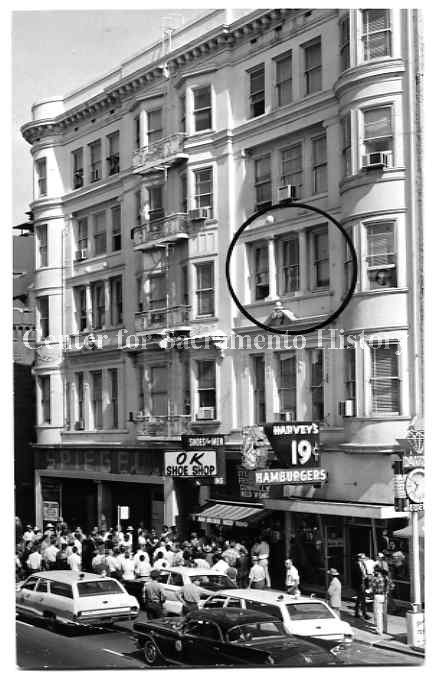
On 25th August in 1966, a Pakhtun Doctor, Aurang Shah, was shot dead by his patient in this building in Sacramento, California. The shooting occurred in the room encircled in the attached photo. So who was this doctor and what is his story?

Dr. Nafees Ur Rehman (Twitter @NafeesRehmanDr)

On 25th August in 1966, a Pakhtun Doctor, Aurang Shah, was shot dead by his patient in this building in Sacramento, California. The shooting occurred in the room encircled in the below photo.

So who was this doctor and what is his story?

Let's have a look at his life and his political activism for Pakhtunistan.

Photo Source: https://sacramento.pastperfectonline.com

Dr. Aurang Shah was born in the village of Manki in Swabi (present day in Khyber Pakhtunkhwa Pakistan) in the family of Rahim Shah Faqirkhel. There is, however, confusion around his Date of Birth. According to Mian Wakil Shah Faqirkhel, he was born in 1890, same year when Bacha Khan was born. But according to findgrave.com, he was born on August 5, 1896.

There is a reason for highlighting this inconsistency in his DOB. Acc. to Mian Wakil Shah's write-up published on the Afghan Express Blog (https://afghanexpress.wordpress.com/), Aurang Shah was offered job as a Tehsildar by the D.C Peshawar as soon as he did his matriculation in 1905. While according to the book The Joffrey Ballet: Robert Joffrey and the Making of an American Dance Company, Aurang Shah and his brother Daulat Khan both attended Bacha Khan's school. Please note that the first school that Bacha Khan had opened in 1910 was in a mosque and it was shut down by the British in 1915. So I wonder if British offered jobs to the graduates (if there were any graduates in the first place in the 5 years of school operation) of Bacha Khan's school.


On the other hand, the book The Joffrey Ballet: Robert Joffrey and the Making of an American Dance Company published 1997, contains interviews of Dr. Aurang shah's son, Naim Shah and his cousins, adding more credibility to the book's take on the subject of schooling.


But lets leave this topic here and discuss Dr. Aurang Shah's journey to the US, his education and his political struggles for Pashtunistan. Aurang Shah and his brother Daulat Khan were encouraged by their mother to go to the US for further education. Their father had earlier been murdered owing to a feud, possibly a family feud. 

So in 1916, they boarded a freighter to the US. Below is the account of their journey.


Both brothers had lived their american dream. They started off with selling food on pushcarts with their own original recipe of chili that earned them big bucks later. With that money, they parted ways and pursued different careers.


Daulat opened a restaurant in Seattle while Aurang Shah did his MA from Harvard and then obtained a medial degree from the Tufts - achieving the goals that he & his mother had setup for him. Even after success, the two brothers always carried the chili recipe in their wallets.


Aurang Shah was always politically active and founded Azad Pakhtunistan Association of America in 1928 in California and with this he also founded the idea of an independent Pashtunistan/Pakhtunistan. According to Mian Wakil Shah, Dr. Aurang would send funds to Bacha Khan to support his political agenda. Its worth-noting that Bacha Khan was against the partition of India meaning he wasn't for an independent Pakhtunistan, at least not until the partition was agreed upon.

According to a recent PhD study[1], Aurang Shah's political activism was sparked after creation of Pakistan when Bacha Khan got arrested. This contradicts the account presented by Mian Wakil Faqirkhel that Dr. Aurang Shah was actively pursuing the idea of Pashtunistan since 1928.


Mian Wakil Shah didn't provide any references and sources in support of this claim neither have I been able to find them. On the other hand, there is a lot of evidence that points to Dr. Aurang Shah political acivitism post Pakistan's creation.

For example, the pro-Pashtunistan protest in 1950 in California when Pakistani premier, Liaquat Ali Khan visited USA.

Kabul, Number 267, Volume 20, Issue 7, June 22, 1950; Kabul Afghanistan.


And the letters that he wrote to the editor in the Sacramento Bee [1] protesting the arrest of Bacha Khan in Pakistan, and US refusal to issue visa to Bacha khan in 1956 and 1965.


This shall give a better picture of Dr. Aurang Shah's activism for Pashtunistan supported by Afghanistan.

Afghanistan awarded him the 2nd highest civil award for his activism.


However, as we all know, the idea of Pashtunistan never materialized owing to the fact that there was not enough public and political support behind it.


On 25th of August, 1966 when he was in his clinic, a disgruntled patient named Lovato shot him dead with a pistol. According to his will, he was buried in Kabul and his funeral was also attended by king Zahir Shah of Afghanistan and Khan Abdul Ghaffar Khan aka Bacha Khan.


Bibliography:

1. Baden, J. (2018). Through Disconnection and Revival: Afghan American Relations with Afghanistan, 1890-2016. (Electronic Thesis or Dissertation). Retrieved from https://etd.ohiolink.edu/
2. Anawalt, S. (1998). The Joffrey Ballet: Robert Joffrey and the making of an American dance company. University of Chicago Press.
3. Kabul, Number 267, Volume 20, Issue 7, June 22, 1950; Kabul Afghanistan.
4. Sacramento Archives, URL https://sacramento.pastperfectonline.com/, accessed July 8, 2019.
5. FindAGrave.com, (URL: https://www.findagrave.com/memorial/128232028/aurang-shah), accessed July 8, 2019.
6. Article د پښتونستان د تصور ګمنام خالق, Mian Wakil Shah Faqirkhel (URL https://afghanexpress.wordpress.com/) accessed July 8, 2019.

Saturday, 6 July 2019

Ataullah Ozai-Durrani — An Afghan immigrant in the US who made name & a fortune with the invention of Minute-Rice recipe in the early 1940s, and left half a million dollars to Harvard university for translating poetic works of Mirza Ghaleb and Mir Taqi Mir.

Dr. Nafees Ur Rehman (@NafeesRehmanDr)


Photo of Ataullah Ozai-Durrani, source: Smithsonian Institution Archives, Accession 90-105, Science Service Records, Image #SIA2008-1489


Ataullah Ozai-Durrani was born in Herat, Afghanistan in 1897 and had immigrated to the US in 1923. Though his education was in Petro-Chemistry but he pursued researching in planting, preparing and cooking rice after one of his guests remarked that the chicken-rice, that they were served at dinner, were so good that it needed to be introduced to the public. Ozai-Durrani spent the next 10+ years reading, experimenting and researching on rice. It was around 1939 that he had established his method of preparing rice and it was time to share and sell it.

In 1941, he walked into the office of General Foods Corporation in New York, set up his portable stove and convincingly demonstrated cooking rice in minutes. General Foods were impressed with the significant reduction in cooking time and immediately bought his recipe.


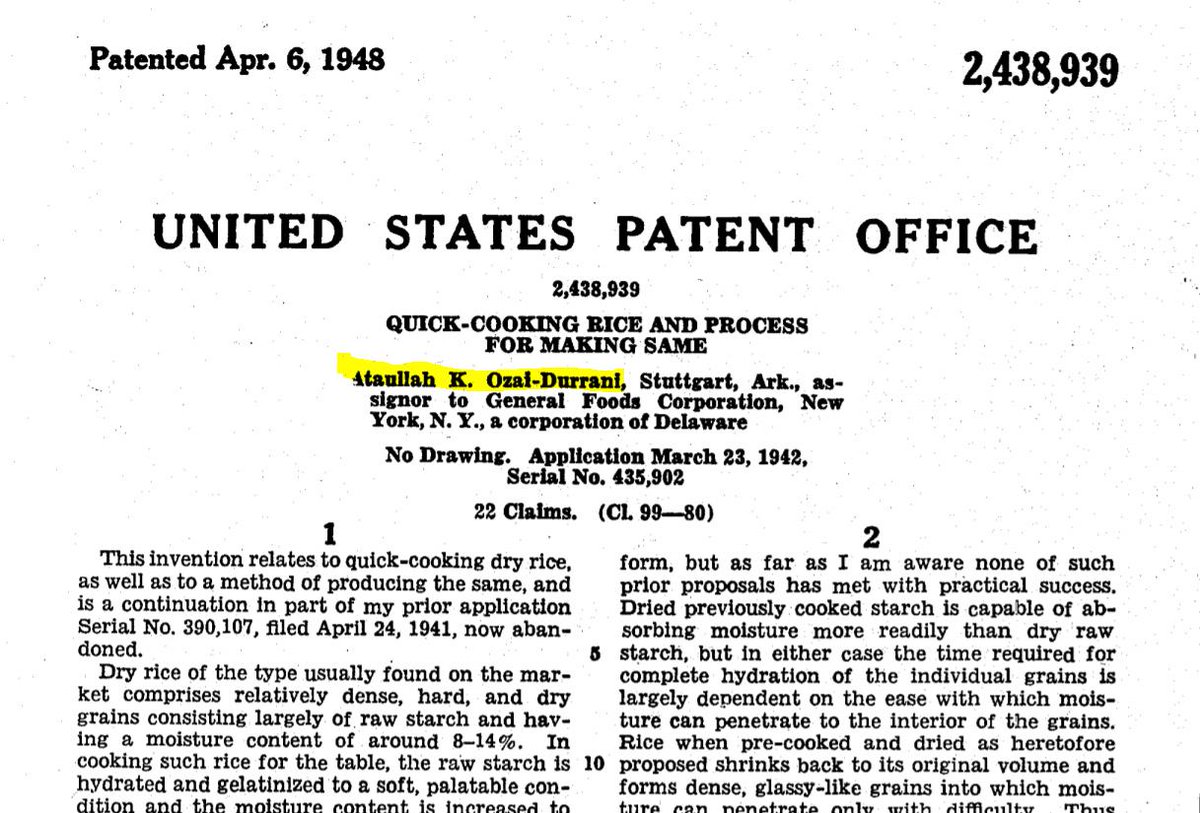
Copy of the Quick-Cooking-Rice Patent: Source https://patents.google.com/patent/US2438939


Thanks to the large-scale marketing of Minute Rice and later mass orders by the US army, the product achieved its success. Ozai-Durrani became a millionaire almost overnight.


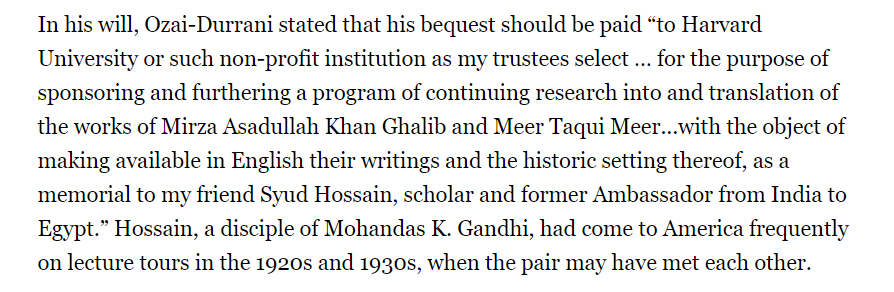
There is another interesting aspect to Ozai-Durrani's life, and that is his interest in the poetry of Mirza Asadullah Khan Ghaleb and Mir Taqi Mir, famous poets of the subcontinent. It is not clear how he developed interest in their poetry. Could it be during the times when he studied at Aligarh Muslim college in India or later when he befriended Syed Hussain, a disciple of Gandhi who had advocated for freedom of India in the US and delivered lectures in 1920s and 1930s.  Ozai-Durrani wanted to translate the works of Mirza Ghaleb and Mir Taqi Mir into English language. For this purpose, he donated about 100 thousand rupees to Aligarh Muslim University in 1950s. The VC of AMU, Dr. Zakir Hussain was also friend of Ozai-Durrani. However, nothing came out of this program and Ozai-Durrani eventually withdrew his support.

Ozai-Durrani died in May 1964 due to lung cancer and bequeathed half a million dollars to Harvard University for the same purpose of translation of Ghalib's Mir's works, and as memorial to Syed Hossain.


You may find it interesting that when more information was sought on the two poets, a librarian at the Indian consulate was contacted, who then suggested that it was really a matter for the Pakistanis as they are not known in India. A professor of Iranian studies at Columbia University also downplayed the value/significance of the 

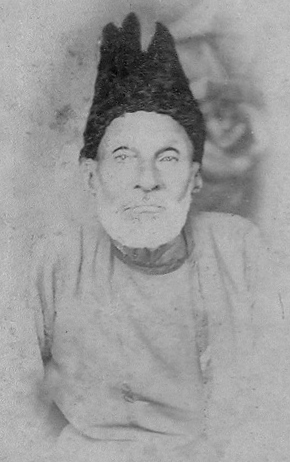
Mirza Asadullah Khan Ghaleb


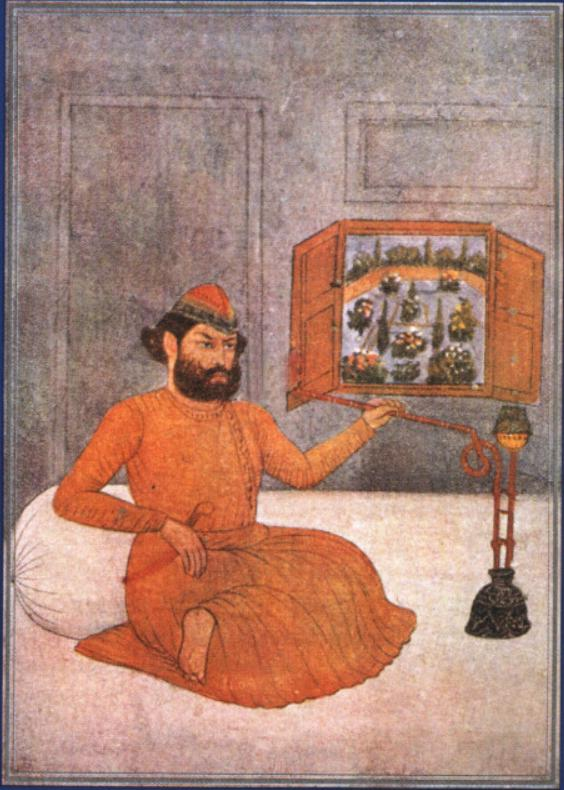
Mir Taqi Mir 

poets and said "they are not outstanding...in the vast panorama of Persian poetry, but they are very important to Pakistan." Harvard University then persuaded Dr. Annemarie Schimmel for the job and appointed her as Professor of Indo-Muslim Studies.


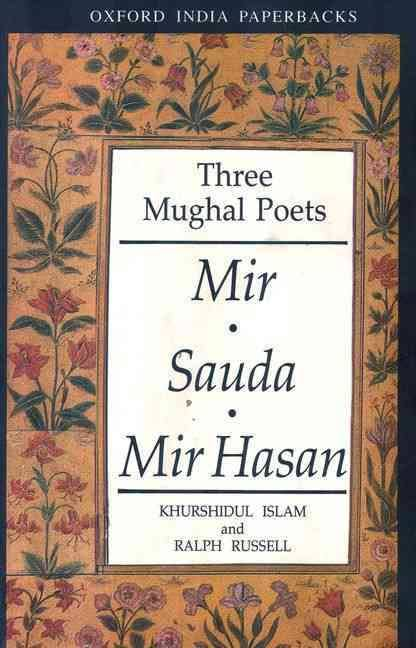
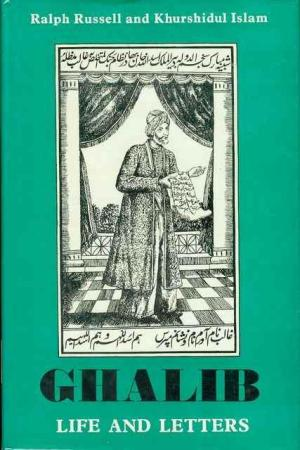
With Ozai-Durrani donation, the chair was able to publish two excellent books, Three Mughal Poets Mir, Sauda, Mir Hasan (Cambridge, 1968) and Ghalib: Life And Letters (Cambridge, 1969), both by Ralph Russell and Khurshidul Islam.


John K. Baden in his PhD thesis, made an interesting observation on why Ozai-Durrani chose two Urdu poets and not any Pashtun poets. He observes:

"Ozai-Durrani’s motives for picking the two poets are unknown. Notably, he did not feel constrained to sponsor a Pashtu or exclusively Dari (Persian) language “Afghan” poet to further the prestige of his native Afghanistan. Perhaps Ozai-Durrani assumed a broader regional or linguistic identity in the United States rather than one exclusive nationality, but he could have simply chosen the two poets because he associated them with the friend he sought to honor in his bequeathal."

Saturday, 29 June 2019

Ghor Khuttree: marking 2000 years of history

Gor Khuttree -- marking 2000 years of history
Qk archives published by the NEWS on Sunday in 2011
By Dr Ali Jan
Gor Khuttree literally means the 'Warriors Grave', although there are no traces of any grave here. It is perhaps the oldest citadel in the ancient city of Peshawar. A recent UNESCO sponsored archaeological excavation at the site has established the city's historic profile which dates back to pre-Christian period of more than two millennia making Peshawar one of the world's oldest living cities.
It remained an important place for travellers for thousands of years. Buddha's alms or begging bowl was displayed here at one time. After the decline of Buddhism in the region following the invasion by Huns and Sassanians, it became a bastion for Hindu worship. Mughal Emperor Babar in the beginning of his memoir, Babarnama, recorded: "On Friday, the 1st Sefer in the year 932, when the sun was in Sagitarius (1525 AD, November 17th), I set out on my march to invade Hindustan." On reaching Peshawar, Babar with his usual curiosity visited Gor Khuttree and wrote, "There are nowhere in the whole world such narrow and dark hermit's cells as at this place. After entering the doorway and descending one or two stairs, you must lie down, and proceed crawling along, stretched at full length. You cannot enter without a light. The quantities of hair (cut off by pilgrims as offerings), both of head and beard, that are lying scattered about, and in the vicinity of the place are immense."
The present buildings built at the site mostly date back to Mughal, Sikh and the British period. Lying at the crossroads of the old trade-route, Gor Khuttree became a major caravanserai in Mughal times and mainly served as a stopping place for travellers coming from other parts of the world. It was converted into a fortified compound and two grand entrances were built on its eastern and western ends. The gates were kept locked at night to provide safety and shelter to the camel caravans laden with merchandise. A mosque was also built here by Jahan Ara Begum, daughter of Emperor Shahjahan.
During the early Sikh rule, around 1823, the mosque was destroyed and replaced by a temple to Gorakhnath in the south of the courtyard. Later Gor Khuttree became the residence of their Italian mercenary general, Paolo de Avitabile who also built a pavilion over its western gate. A rare pen and ink sketch of him dated February 1844 (originally done by 'C.G' in Calcutta) has recently been discovered in the dusty store-godown of Peshawar museum.
Avitabile was from Agerola, on the famous Salentine peninsula between Naples and Amalfi in Italy. The town square of San Lazzaro in Naples is named after him. He was a mercenary in the true sense who had also served in Napoleon's army. He ruled Peshawar from 1838-1842 with an iron hand. The local inhabitants of Peshawar used to call him 'Abu Tabilah'. When the 31st (Huntingdonshire) Regiment passed through Peshawar on August 21, 1842 they were hosted by him. The service digest of the British regiment records: "The officers were entertained hospitably by the governor of the city, the Italian General Avitabile who had been recruited by Ranjit Singh to train his army and had stayed on to serve his son. They were impressed by the evidence of his methods of maintaining law and order. At each corner of the city there was a large gallows on which malefactors were hanging." (Service Record, the 31st Regt, 1842)
In 1842 Avitabile returned home to Italy laden with wealth and honours, and proceeded to procure for himself a large castle-like mansion, a magnificent funeral chapel in the local cathedral. People also credit him with having created a new breed of cattle by importing some Jersey cows from Britain, on his way home from Peshawar in 1842, and crossing them with the local variety; the result is supposed to produce a fine local cheese. He soon came to occupy the same funeral chapel that he had bought when he married his 12-year-old Italian niece who it is said poisoned him to death in 1850.
Yet long after his departure from Peshawar and this life some of his past subjects from this region were still searching for him. Sir Richard Francis Burton, the legendary explorer, linguist and translator of Arabian Nights etc (who also became the first Englishman to perform the ritual of Haj in the guise of a Pathan in 1853) records meeting a group of plain folks from the Punjab Frontier in Arabia "...who had walked from Meccah to Cairo in search of 'Abu Tabilah,' (Avitabile), whom report had led to the banks of the Nile." Burton noted: "Some were young, others had white beards -- all were weary and wayworn; but the saddest sight was an old woman, so decrepit that she could scarcely walk. The poor fellows were travelling on foot, carrying their wallets, with a few pence in their pockets, utterly ignorant of route and road, and actually determined in this plight to make Lahore by Baghdad, Bushir, and Karachi. Such -- so incredible -- is Indian improvidence!" (Personal Narrative of a Pilgrimage to Al-Madinah and Meccah -- 1855)
During the Anglo-Sikh wars (1849) George Lawrence, the British representative and his family took refuge here for sometime. In the following years its eastern end became the City Mission House. The Illustrated London News (ILN) in an 1860 issue printed an image entitled 'Illumination And Fireworks At Peshawar' depicting a grand Viceregal procession of elephants passing through the old city towards the western (tahsil) gate of Gor Khuttree. The illustration was done on the occasion of the grand durbar of February 29 1860 when the Governor General and Viceroy of India held a reception of the principal chiefs of the various Pathan hill tribes who had assembled to pay homage to the representative of Queen Victoria. According to the ILN: "...the occasion was celebrated by illuminations and a display of fireworks of both of which natives are exceedingly fond; and they produce the finest fireworks by the simplest means. A little earthen dish, like a flat cup, is used, filled with oil, and with a piece of cotton-wick is put in it. These lamps are provided in great numbers, and are placed in rows along the tops of houses, and upon the cornices of the shops, over and under windows, around arches, and, in fact, wherever one of these tiny lamps can be placed. The effect is picturesque in the extreme. Everywhere the natives are sitting, perfectly still and quiet, in long rows, behind the lights, waiting silently to see the Lord Sahib pass by." (Illustrated London News, 1860)
In March 1869 Amir Shere Ali, the King of Afghanistan resided in the house which stood on the south-eastern corner of Gor Khuttree at the invitation of the missionary clergy. In the latter half of the nineteenth century it became the residence of the lady missionaries connected with the Church of England Zenana (female) Missionary Society.
Dr. Arthur Lankester opened the medical mission work in Peshawar at this site. It began on January 12, 1898, when a man from Ghazni in Afghanistan, some two hundred miles beyond the frontier, walked into the courtyard and asked for treatment. The hospital carried on until 1904 when it was shifted to much larger premises outside the walled city at the Mission Hospital, Dabgari Gardens.
An English archaeologist Gertrude Bell, mostly renowned for her findings in Iraq, visited Gor Khuttree in 1903 and wrote in her diary: "22 Jan -- We went to the Tahsil where there is a suite of empty rooms where the Amir's envoys are lodged, with a zenana for their women. The Tahsildar is an agreeable Persian speaking man. From the roof we had a wonderful view over the rabbit warren of mud coloured Peshawar and away across a plain set with trees to the hills of the Forbidden Land." (Diary of Gertrude Bell, 1903)
In 1912 a Fire Brigade Station was built on the premises. Two red antique fire engines are parked under the former municipal shed at Gor Khuttree. They are well-preserved and the name of the Merry Weather London Company that manufactured them in the early 1900s is still visible. During the British-era, Gor Khuttree also functioned as a Tahsil or District Police Superintendent's headquarter.
Recently an archaeological museum has been built on the south-eastern side where the original grand residence known as 'Serai-du-dar' ('The Jun of the Two Gates') had perhaps once stood. Objects recovered from excavations at Gor Khuttree are displayed here. It has an interesting ethnological gallery upstairs as well. The curator, Ihsanullah Khan, is a knowledgeable young man who gave me a splendid guided tour of the place.
Peshawar has a rich history which is gradually disappearing brick by brick. In the north of the compound is an appalling new construction -- a 'Marriage Hall' -- built in 1980s despite much public opposition, which is unfortunately a big blot on the otherwise charming ancient heritage site of Gor Khuttree.


Tuesday, 18 June 2019

QK Archives: Rahmat Shah Sail


Rahmat Shah Sail
Written by Shamsur Rahman Shams
Saturday, 20 May 2006
Sweet are the uses of adversity, says William Shakespeare. It is a poisonous toad which contains in its head a precious jewel. It gives us more scope for the exercise of our faculties and there is no better school for man. What is learnt in the school of adversity cannot be learnt anywhere else, either from books or from schools and colleges.

The noble and sublime of the world are those who have risen from the ranks. The world has benefited more form these struggling souls than by men nursed in prosperity.

Mr. Rahmat Shah Sail has suffered his full share of adversities. Born among a family of laborers in 1943, he went through many trials and tribulations during his childhood. His father, Amin Gul, and grandfather, Syed Gul, are stated to be the poorest people of Warter (Dargai) in Malakand Agency.

Sail was admitted to a local primary school for formal education at the age of five, but it became difficult for his parents to bear the expenses and thus he was deprived of getting any education. According to his colleagues he was the most intelligent student but after passing class three, he was compelled to leave school and assist his parents in earning a livelihood. He worked from morn to dusk and brought a few coins home to buy corn. His spirit, meanwhile, was no dormant. He had a heart filled with emotions and thoughts, and after a hard days labor he used to compose poetry to lessen his fatigue.


This capacity later developed and he emerged as a poet and was given a prominent place among the other poets of the territory. Nobody guided him except in showing him how to labor harder and harder. It is astonishing to note here that the early life of Rahmat Shah Sail was arduous and full of difficulties, but his early poetry was concerned with nothing but his roaming about confounded by the teasing love of his beloved. His early poetry is an echo of his grieved heart, not due to hard work but to the faithlessness of his beloved.

On the one hand he used to help his parents while on the other he burnt midnight oil developing his emotional thoughts and expressing his feelings through his pen. As soon as his senses matured, his ideas and feelings ripened and his poetry took on new shape and color.

Emboldened also by a local poet, Rahmat Shah Sail won a position and became famous for his poetic and literary talent. Now, instead of composing only love poetry, he gave vent to many other subjects and made his poetry universal. He started studying the work of ancient and modern poets. He went through the works of Khushal Khan Khattak, Rahman Baba, Abdul Hamid, Ali Khan and other Pashto poets, as well as those of Sahir Lodhianvi, Faiz Ahmad Faiz and Josh Maleeh Abadi and Urdu. He was considerably influenced by their technique and sublime style.

Though uneducated, Sail is the author of three books, Da Weer Pa Chum Ka War Da Naghmu and Da Lumbu pa Soori. The former contains sonnets and the latter ghazals, plots, stanzas and tappas. His third book, Da Khaistoonu Da Sparly Badoona has come to the market recently. It is compiled from his latest ghazals written in modern Pakhtun society.

Saadullah Jan Burq, a renowned poet and a distinguished writer, writes about Sail that if a flower has color but no fragrance or fragrance but no color, it can not be called a rose. Only when it has both these features does a rose attain perfection and as every flower is not a rose, so every poet can not be compared with Rahmat Shah Sail. What makes Sail most highly regarded is his melodious poetry. There is a harmony between his poetry and voice. His poetry is more impressive when recited by himself.

His ghazal interprets various aspects of life. If he talks about the rosy cheeks of his beloved, he also feels light and darkness, happiness and sorrow. If he discusses flowers, he also refers to the thorns surrounding them. The salient characteristics of his ghazals are their separateness, mannerisms and similes. These make his ghazal completely different from that of other poets.

Sail writes poetry and prose and has full command on both. He is full of vigor, courage and capable to continue and spread his work:

He writes:


My wisdom is not to be perished or destroyed. Only hard times will paralyze it.

On analysis, two things emerge: his poetry is dominated first by delicacy and second naturalness. Every verse he says in such a natural and delicate manner as to touch the heart. He says:


O my beloved! Why does my presence so confuse you? I am like spring and will make blossom your youth.

He is a highly anxious lover ready to suffer every sort of agony to get the hand of his beloved:


Saqi! Give me wine of the rosy eyes today. No matter if I am anguished for it tomorrow.

Any poet or writer who, after observing certain facts, tries to hide them or produce in a different way does not fulfill his responsibility as a poet or writer and is said to be coarse and dishonest. Sail stands innocent of any such act.

He is a sensitive heart. Virtuousness and good feelings are overflowing in his personality. Being a true Pakhtun, he is greatly distressed to see the disloyalty of his Pakhtun brethren and says:


Owing to the disloyal nature of my Pakhtun brothers, I am compelled to make relationship with strangers.

Rahmat Shah Sail pays rich tributes to Baba-e-Pushto Khushal Khan Khattak and is greatly impressed by his poetry.

His own life is an imitation of Khushal Khan who endured forays, house arrests and imprisonment. Sail was also imprisoned and put to severe trails for nothing, besides voicing his opinions. Even in jail, he did not give up his line of action. It was the result of these tortures and torments that Sail's poetry contains many dreadful events and examples of human cruelty that took place in the past. In his sonnet Hiroshima, he depicts the destruction of nuclear disaster and criticizes the words-with-out-action approach of the global powers towards preventing the nuclear race. He reminds the two superpowers and other states of the world of the widespread devastation caused by the bomb in Hiroshima and urge them to work for the peaceful use of nuclear energy. He says that it is of no avail merely to show anger and resentment over the tragedy but the need is to take some practical measures to prevent such calamities. In another such poem "Vietnam War", Sail calls for the co-operation and unity of Muslims through out the world to foil the barbarism and evil designs of those treacherous nations who try to mar global peace.

At present, Rahmat Shah Sail runs a tailoring shop in Dargari Bazar to earn his livelihood but most of his time is spent in literary activities. He is a member of Pashto Adabi Jirga, Malakand Agency.

Khatir Afridi, Ikramullah Gran and Shamsul Qamar Andesh are his favorite poets among these colleagues. He holds Amir Hamza Shinwari in most high regard for his meritorious services to the cause of Pashto literature.

It is quite unjust an ugly spot on the Pashto language, that a man of such literary talent sews cloths to make his both ends meet. He has been denied his due place in society due to his great sin of not having passed examinations in any school or college, even though he has more ability than a well-educated person. If supported, he will be able to do more for the betterment of his mother tongue; otherwise it is feared that the may give up his struggle due to constant disappointment.


Thursday, 30 May 2019

QK Archives: Ajmal Khattak breaks with ANP

Khattak gains strength as ANP dissidents join his party
Amir Mir says Ajmal Khattak's ouster may prove costly to the ANP
Published May 2000 by the Friday times

The May 21 decision by the Awami National Party (ANP) high-command to
expel veteran ANP politician and the party's former president, Ajmal
Khattak, from the party is likely to prove extremely costly for Wali
Bagh. The 75-year old Khattak has launched his own party - National
Awami Party Pakistan (NAPP), which sounds the same as NAP, the old name
of ANP - and has already attracted a number of suspended and
disgruntled ANP parliamentarians.

ANP insiders told TFT Khattak's expulsion, orchestrated through the
party president Asfandyar Wali Khan by Asfandyar's stepmother, Begum
Nasim Wali Khan, has backfired for all practical purposes.

"The party is likely to face some more set-backs following the
defection of two Peshawar-based parliamentarians - Arbab Sa'adullah
Jan, a suspended MNA, and Arbab Mohammad Ayub Jan, a suspended MPA, to
the new party," says a source.

Interestingly, before announcing their decision to quit the ANP, the
two leaders had held a meeting with Mr Khattak at their residence. NAPP
sources said both of them had assured Khattak of their full support to
the new party, besides expressing hope that a majority of other ANP
leaders would follow suit shortly.

Ayub Jan was first elected as an MPA in the 1985 party-less elections.
He retained his seat in the 1988 elections. He also held portfolios in
the cabinets of Arbab Jehangir Khan, Aftab Sherpao and Mir Afzal Khan.
Arbab Sa'adullah is his nephew.

Similarly, two other ANP leaders, Jan Mohammad Khattak and Mian
Muzaffar Shah, also suspended MPAs from Nowshera district, have came
out in support of Ajmal Khattak. The ANP's provincial vice-president
and a suspended MPA from Mansehra district, Zarin Gul Khan, has also
tendered his resignation from the party and has joined Ajmal Khattak's
camp. Another suspended MPA from Swabi, Salim Khan Advocate, who had
resigned as the party's provincial general-secretary, has expressed his
inclination to join the NAPP. Interestingly, the ANP leadership had
warned Salim Khan against meeting with Khattak. "I will remain a humble
servant of the party leadership until they give me the marching
orders," Salim Khan was reported as saying sarcastically.

Although the ANP's central president, Asfandyar Wali, insists that
Khattak was expelled for violating party discipline, the supporters of
the veteran Pushtoon leader allege that he became the target of Begum
Nasim Wali Khan's wrath following his refusal to talk to Chief
Executive General Pervaiz Musharaf for the release of her "corrupt"
brother, Azam Hoti, who is being tried by the National Accountability
Bureau (NAB). Ajmal Khattak was, and remains, the first politician with
whom General Musharaf met on November 26. The meeting was described as
a well-considered and cautious attempt by the military to open its
channels of communication with the political leadership.

While Ajmal Khattak maintained that his meeting with Musharraf was
approved by the ANP leadership, the Khans of Wali Bagh vehemently
denied his claim, saying they were not informed about the meeting.
Sharp differences later surfaced between Khattak and the family members
of Wali Khan and on May 18 the party finally served a show-cause notice
on Khattak "for not toeing the policies drawn by the party's Central
Executive Committee". The senior Pushtoon leader was given three days
to explain his position "as to why action should not be taken against
him for issuing statements contrary to party's policies".

Making public the party's decision at a press conference, Asfandyar
Wali said: "He should simply resign since the party high-command cannot
accept the practice of issuing controversial press statements".

The ANP leadership, annoyed with the former president for the last
several months, actually acted against him when he (Ajmal Khattak)
proposed the setting up of a broad-based national council to decide
important national issues. Khattak had also opposed the restoration of
assemblies or holding of general elections in the country in the near
future while speaking to newsmen at the Peshawar Press Club. The
internal ANP rift actually compounded after party's provincial general-
secretary Salim Khan advocate handed over his resignation to the ANP
high command. Party circles linked Salim Khan's resignation to the
existence of a rebel group opposing the increasing domination of the
party by the Wali Khan family.

Most observers of NWFP politics agree that the political culture of the
ANP has steadily deteriorated. "Much of it has to do with the party's
almost decade-long alliance with the Pakistan Muslim League. The ANP
was always a democratic party and took principled stand on issues. In
the last ten years or so it developed a dictatorial culture, and the
power became concentrated in the hands of a few leaders," says an
analyst who has observed the ANP for a long time.

Some other insiders TFT spoke with blamed this transformation on Begum
Wali Khan and her brother Azam Hoti. "Hoti was closest to the PML
leadership and remained federal minister twice," says a source. Since
the military takeover, Hoti has been charged with corruption. Khattak
was reported to be unsympathetic to Hoti's "plight", which earned him
the ire of Begum Wali Khan.

However, interestingly, while Asfandyar was addressing the press
conference, Khattak was busy meeting with Maulana Fazalur Rehman, chief
of Jamiat-i-Ulema Islam, and Mr Asghar Khan, chief of Tehrik-i-
Istiqlal, floating the idea of a national government. He later held a
meeting with the Tehrik-e-Insaaf chief, Imran Khan, giving rise to
rumours that he has been given a go ahead for the top slot.

However, within a week of his expulsion, Khattak announced that NAP,
disbanded by the Supreme Court in 1973, was being revived in order to
work for the change but without resorting to extremism or violence and
by imbibing the spirit of service to the downtrodden people of the
country. On that occasion, Khattak admitted that he remained a
supporter of Pakhtoonistan in the past but it was never without
Pakistan and now he had decided to amend the party manifesto in the
light of new ground realities.

Khattak claimed that he had launched the party under pressure from the
country's leading like-minded, democratic elements and particularly
those old guards of the Khudai Khidmatgar movement whose families had
rendered supreme sacrifices for the creation of Pakistan.

He said that while the general manifesto of the party would remain that
of the defunct NAP, it would contain certain amendments keeping in view
the basic political, cultural and economic conditions and human rights.
Explaining the basic vision of the new party, Khattak said, "it will
work for a change and will not be a party of the status quo." To a
question, Mr Khattak admitted that NAP's re-incarnation in the past
under NDP or ANP had failed to deliver and the party could not regain
its national stature.

The NAPP leader has claimed that preliminary contacts with the like-
minded leaders in the country have been made and a large number of
prominent politicians will join the new party. This may not be an
exaggerated claim as is indicated by the June 11 merger announcement of
the Pakhtunkhawa Qaumi Party (PQP) with NAPP. The announcement was made
by Latif Khan Afridi Advocate, chief of the PQP. The popularity of the
veteran Pakhtoon leader can be gauged from the fact that his humble
abode, a little off the main Grand Trunk Road down a narrow ally,
continues to draw journalists and politicians, besides a large number
of veteran Khudai Khidmatgars and ANP workers.

A spokesman of Ajmal Khattak told TFT on telephone from his Akora
Khattak residence that a large number of delegations were still
arriving there to reassure the aging leader of their support. The
spokesman said: "Mr Khattak is in constant contact with various
national leaders on his idea of the national reconciliation
commission." However, he did not give details of the plan.

Tuesday, 16 April 2019

QK Archives: Handsome Pukhtun from Karak called Pareshan

Handsome Pukhtun from Karak called Pareshan
pubkisbed 20 April 2009
Pareshan Khattak died 16 April 2009

By Afzal Hussain Bokhari
The last I saw him, Professor Pareshan Khattak gave no signs of ill health. With well-combed jet-black hair, he wore the flamboyant air of a final-year university student. With a bracelet on his right and an expensive watch on left arm, he was in a jogging track suit.
Coming back from an evening stroll, he strayed into the residence of his friend Fazlullah Fazli in Phase-III of Hayatabad where local writers and art-lovers had assembled for the post-sunset monthly session of the literary organisation ‘Takhleeq International’.
Except for osteoarthritis, which was not unusual for a man at 77, he did not seem to carry any other visible physical disorder.
Ignoring the synthetic mat spread on the floor of Fazli’s basement, Pareshan Khattak settled into a soft, comfortable chair.
Turning the chair slightly towards ‘Qibla’ in the direction of Makkah to the west, he raised his arms to touch the lobes of his ears and saying ‘Allah-o-Akbar’ started offering the ‘Maghreb’ (evening) prayer.
The participants waited for Professor Khattak to finish the ‘Namaz-i-Maghreb’. I had not the faintest idea that these were the last glimpses I was having of the lovable Pukhtun intellectual. The sound of ‘Allah-o-Akbar’ that was heard in Fazli’s house was stimulating and inspiring whereas the one heard in the sprawling phase one graveyard saddened the ears on which it fell. Pareshan shocked his friends by breathing his last on April 16.
The red rose-petals that slipped from Pareshan’s shrouded dead body got stuck into the blades of lush green grass. Silently announcing the arrival of the spring, they seemed to mourn the sudden death of a God-fearing man who used to come to this graveyard off and on to mourn the similar deaths of near and dear ones.
Born on December 10, 1932 in village Ghundi Mira Khankhel, district Karak, into the home of Malik Muhammad Hassan, the real name of Pareshan Khattak was Gham-i-Jan. Conscious probably of his physically being a handsome man, he later liked to be called as ‘Pari-shan’ (carrying the resemblance of a fairy).
However, the non-Pukhtun friends, colleagues and acquaintances all through his 77-year-long life randomly confused the name with the Urdu adjective ‘pareshan’ which literally meant ‘the mentally disturbed person’.
The mentally disturbed person though he never was except for the brief spell of life some years back during which he learnt that in an allegedly domestic brawl his daughter reportedly got murdered while being with her otherwise influential parents-in-law.
As an intellectual, Pareshan had many facets to his personality. The holder of Master’s degrees in History and Pushto literature, the common reader, for instance, knew him as a romantic poet, research scholar, translator, manipulative academic, successful administrator and an untiring speaker.
The untiring speaker he certainly was though others of his qualities were overtly or covertly doubted, debated and even challenged by various shrewd critics of varying caliber.
At one time, his admirers turned him into a sitting duck for book launching ceremonies.
He usually spoke in a long-winded manner, blending History with Geography and fact with fiction that depending on the public mood variously pleased or displeased the audience.
The proud author of about 10 publications, Pareshan left behind the book lovers that reached out for their purse when they noticed the first collection of Pareshan’s poetry titled ‘Tarranake’ or the more intriguingly named prose work ‘Pushtun Kaun’.
Although he was generally a friendly person but Mir Mehdi Shah Mehdi and Hamesh Khalil got on well with him.
Amazing as the attitude of the friends and foes was, Pareshan was flattered or flayed by the measure of favours that he showered or withheld when working on key posts.
Apart from being the chairman of the former University Grants Commission, he remained the head of the Academy of Letters, Islamabad and the vice-chancellor first of the Gomal University, Dera Ismail Khan and then the Azad Kashmir University, Muzaffarabad.
During the days of General Ziaul Haq, he rubbed shoulders with the high and the mighty of the land.
At one time, he worked as the advisor to the prime minister of Azad Jammu and Kashmir. Immediately after that he founded the Al-Khair University in the private sector.
Due to rush for admissions to this university, there was a crisis of management at various levels.
Partly due to the management crisis but chiefly due to the machinations of the professional rivals in the field of education, the Higher Education Commission started receiving complaints against the Al-Khair University with the result that the HEC had to order the closure in some cities of a few of the Al-Khair branches for not having the required facilities.
It is a pity that Pareshan has faded into history with what appears to be indecent haste. One is left with very few people to show to the outer world that can be called the true representatives of the Frontier province.
Farigh Bokhari, Raza Hamadani, Khatir Ghazanavi and Ahmad Faraz were the kind of writers with whom the outside world associated the province.
One feels oddly awkward in bracketing them together but NWFP in general and Pushto literature in particular has been left poorer by the disappearance from the literary landscape of figures like Amir Hamza Khan Shinwari, Ghani Khan, Qalandar Momand and now Pareshan Khattak.
One prays for the health and a long life of men like Ajmal Khattak, Senator Afrasiab Khattak, Saleem Raz, Rehmat Shah Sail and many others who are still around and serving the cause of literature as well as revolution in the manner they think is pragmatic or expedient.
The admirers of Pareshan rightly expect that his sons Dr Javed Khattak, Major Khushal Khattak, Professor Shahbaz Khattak and Behlul Khattak will probably join hands and will piece together the unpublished works of their late father and bring them out in book form.
More humble and down to earth brother of Pareshan’s, Purdil Khan Khattak can help and guide four of his otherwise capable nephews in doing this work.