Showing posts with label Afghanistan. Show all posts

Sunday, 14 July 2019

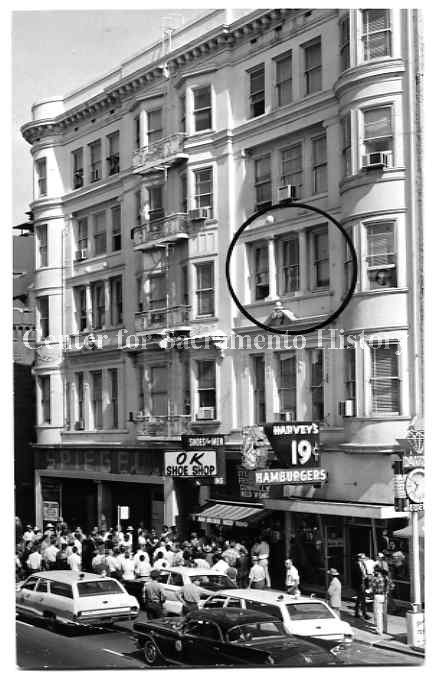
On 25th August in 1966, a Pakhtun Doctor, Aurang Shah, was shot dead by his patient in this building in Sacramento, California. The shooting occurred in the room encircled in the attached photo. So who was this doctor and what is his story?

Dr. Nafees Ur Rehman (Twitter @NafeesRehmanDr)

On 25th August in 1966, a Pakhtun Doctor, Aurang Shah, was shot dead by his patient in this building in Sacramento, California. The shooting occurred in the room encircled in the below photo.

So who was this doctor and what is his story?

Let's have a look at his life and his political activism for Pakhtunistan.

Photo Source: https://sacramento.pastperfectonline.com

Dr. Aurang Shah was born in the village of Manki in Swabi (present day in Khyber Pakhtunkhwa Pakistan) in the family of Rahim Shah Faqirkhel. There is, however, confusion around his Date of Birth. According to Mian Wakil Shah Faqirkhel, he was born in 1890, same year when Bacha Khan was born. But according to findgrave.com, he was born on August 5, 1896.

There is a reason for highlighting this inconsistency in his DOB. Acc. to Mian Wakil Shah's write-up published on the Afghan Express Blog (https://afghanexpress.wordpress.com/), Aurang Shah was offered job as a Tehsildar by the D.C Peshawar as soon as he did his matriculation in 1905. While according to the book The Joffrey Ballet: Robert Joffrey and the Making of an American Dance Company, Aurang Shah and his brother Daulat Khan both attended Bacha Khan's school. Please note that the first school that Bacha Khan had opened in 1910 was in a mosque and it was shut down by the British in 1915. So I wonder if British offered jobs to the graduates (if there were any graduates in the first place in the 5 years of school operation) of Bacha Khan's school.


On the other hand, the book The Joffrey Ballet: Robert Joffrey and the Making of an American Dance Company published 1997, contains interviews of Dr. Aurang shah's son, Naim Shah and his cousins, adding more credibility to the book's take on the subject of schooling.


But lets leave this topic here and discuss Dr. Aurang Shah's journey to the US, his education and his political struggles for Pashtunistan. Aurang Shah and his brother Daulat Khan were encouraged by their mother to go to the US for further education. Their father had earlier been murdered owing to a feud, possibly a family feud. 

So in 1916, they boarded a freighter to the US. Below is the account of their journey.


Both brothers had lived their american dream. They started off with selling food on pushcarts with their own original recipe of chili that earned them big bucks later. With that money, they parted ways and pursued different careers.


Daulat opened a restaurant in Seattle while Aurang Shah did his MA from Harvard and then obtained a medial degree from the Tufts - achieving the goals that he & his mother had setup for him. Even after success, the two brothers always carried the chili recipe in their wallets.


Aurang Shah was always politically active and founded Azad Pakhtunistan Association of America in 1928 in California and with this he also founded the idea of an independent Pashtunistan/Pakhtunistan. According to Mian Wakil Shah, Dr. Aurang would send funds to Bacha Khan to support his political agenda. Its worth-noting that Bacha Khan was against the partition of India meaning he wasn't for an independent Pakhtunistan, at least not until the partition was agreed upon.

According to a recent PhD study[1], Aurang Shah's political activism was sparked after creation of Pakistan when Bacha Khan got arrested. This contradicts the account presented by Mian Wakil Faqirkhel that Dr. Aurang Shah was actively pursuing the idea of Pashtunistan since 1928.


Mian Wakil Shah didn't provide any references and sources in support of this claim neither have I been able to find them. On the other hand, there is a lot of evidence that points to Dr. Aurang Shah political acivitism post Pakistan's creation.

For example, the pro-Pashtunistan protest in 1950 in California when Pakistani premier, Liaquat Ali Khan visited USA.

Kabul, Number 267, Volume 20, Issue 7, June 22, 1950; Kabul Afghanistan.


And the letters that he wrote to the editor in the Sacramento Bee [1] protesting the arrest of Bacha Khan in Pakistan, and US refusal to issue visa to Bacha khan in 1956 and 1965.


This shall give a better picture of Dr. Aurang Shah's activism for Pashtunistan supported by Afghanistan.

Afghanistan awarded him the 2nd highest civil award for his activism.


However, as we all know, the idea of Pashtunistan never materialized owing to the fact that there was not enough public and political support behind it.


On 25th of August, 1966 when he was in his clinic, a disgruntled patient named Lovato shot him dead with a pistol. According to his will, he was buried in Kabul and his funeral was also attended by king Zahir Shah of Afghanistan and Khan Abdul Ghaffar Khan aka Bacha Khan.


Bibliography:

1. Baden, J. (2018). Through Disconnection and Revival: Afghan American Relations with Afghanistan, 1890-2016. (Electronic Thesis or Dissertation). Retrieved from https://etd.ohiolink.edu/
2. Anawalt, S. (1998). The Joffrey Ballet: Robert Joffrey and the making of an American dance company. University of Chicago Press.
3. Kabul, Number 267, Volume 20, Issue 7, June 22, 1950; Kabul Afghanistan.
4. Sacramento Archives, URL https://sacramento.pastperfectonline.com/, accessed July 8, 2019.
5. FindAGrave.com, (URL: https://www.findagrave.com/memorial/128232028/aurang-shah), accessed July 8, 2019.
6. Article د پښتونستان د تصور ګمنام خالق, Mian Wakil Shah Faqirkhel (URL https://afghanexpress.wordpress.com/) accessed July 8, 2019.

Saturday, 6 July 2019

Ataullah Ozai-Durrani — An Afghan immigrant in the US who made name & a fortune with the invention of Minute-Rice recipe in the early 1940s, and left half a million dollars to Harvard university for translating poetic works of Mirza Ghaleb and Mir Taqi Mir.

Dr. Nafees Ur Rehman (@NafeesRehmanDr)


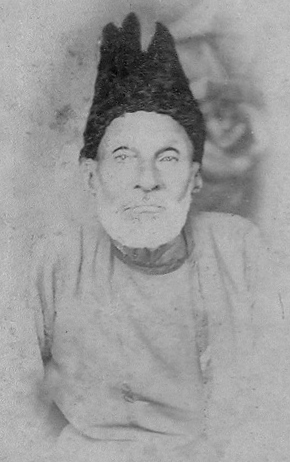
Photo of Ataullah Ozai-Durrani, source: Smithsonian Institution Archives, Accession 90-105, Science Service Records, Image #SIA2008-1489


Ataullah Ozai-Durrani was born in Herat, Afghanistan in 1897 and had immigrated to the US in 1923. Though his education was in Petro-Chemistry but he pursued researching in planting, preparing and cooking rice after one of his guests remarked that the chicken-rice, that they were served at dinner, were so good that it needed to be introduced to the public. Ozai-Durrani spent the next 10+ years reading, experimenting and researching on rice. It was around 1939 that he had established his method of preparing rice and it was time to share and sell it.

In 1941, he walked into the office of General Foods Corporation in New York, set up his portable stove and convincingly demonstrated cooking rice in minutes. General Foods were impressed with the significant reduction in cooking time and immediately bought his recipe.


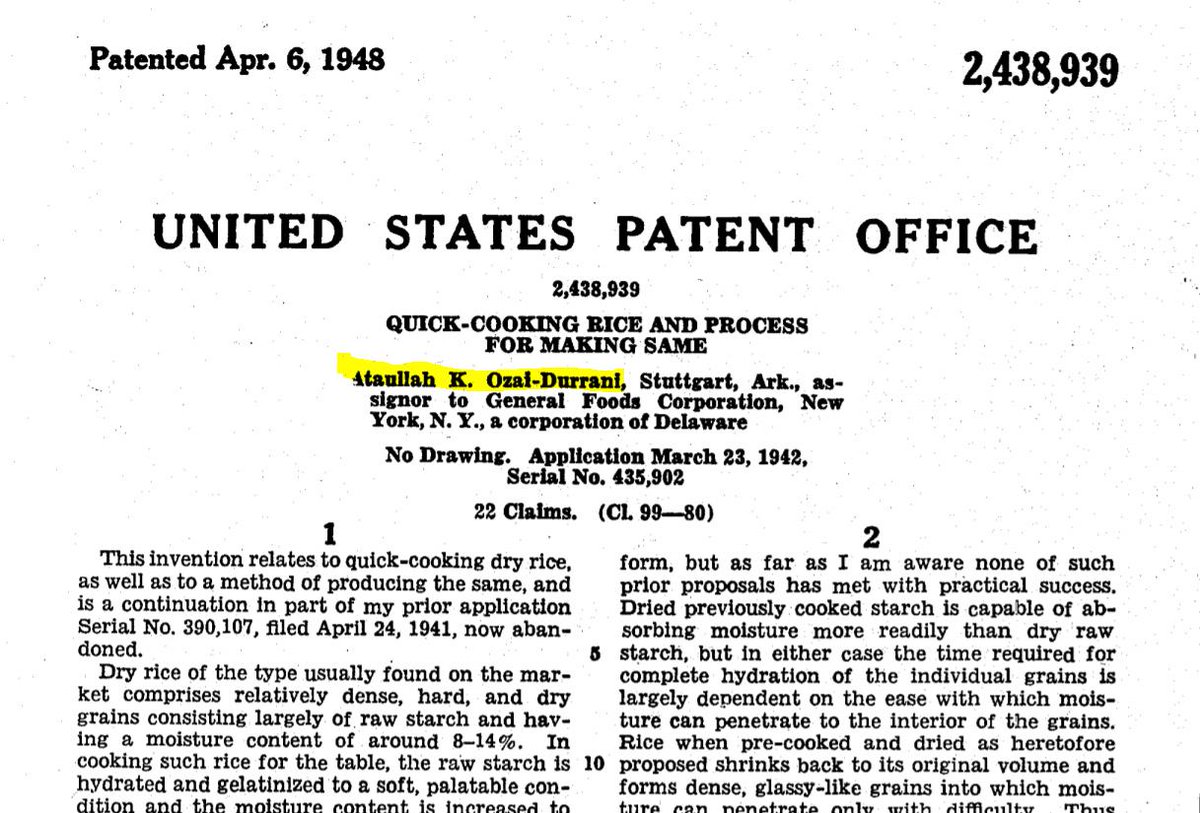
Copy of the Quick-Cooking-Rice Patent: Source https://patents.google.com/patent/US2438939


Thanks to the large-scale marketing of Minute Rice and later mass orders by the US army, the product achieved its success. Ozai-Durrani became a millionaire almost overnight.


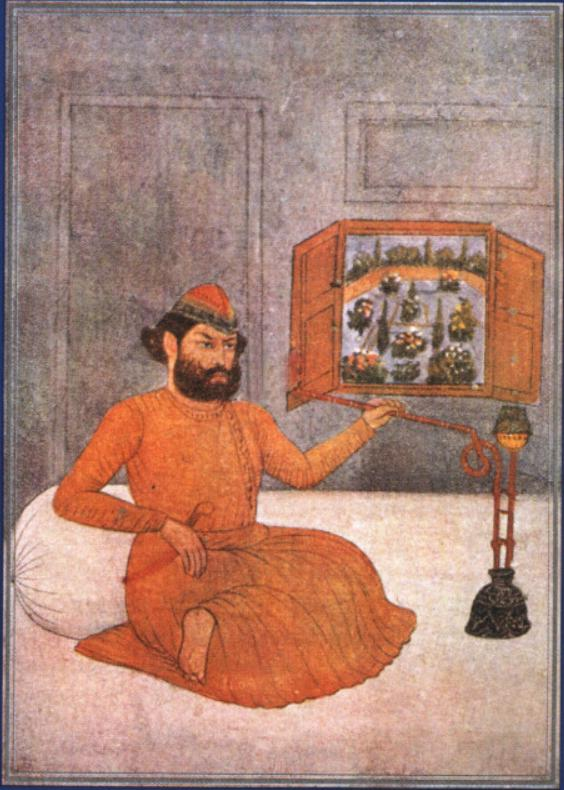
There is another interesting aspect to Ozai-Durrani's life, and that is his interest in the poetry of Mirza Asadullah Khan Ghaleb and Mir Taqi Mir, famous poets of the subcontinent. It is not clear how he developed interest in their poetry. Could it be during the times when he studied at Aligarh Muslim college in India or later when he befriended Syed Hussain, a disciple of Gandhi who had advocated for freedom of India in the US and delivered lectures in 1920s and 1930s.  Ozai-Durrani wanted to translate the works of Mirza Ghaleb and Mir Taqi Mir into English language. For this purpose, he donated about 100 thousand rupees to Aligarh Muslim University in 1950s. The VC of AMU, Dr. Zakir Hussain was also friend of Ozai-Durrani. However, nothing came out of this program and Ozai-Durrani eventually withdrew his support.

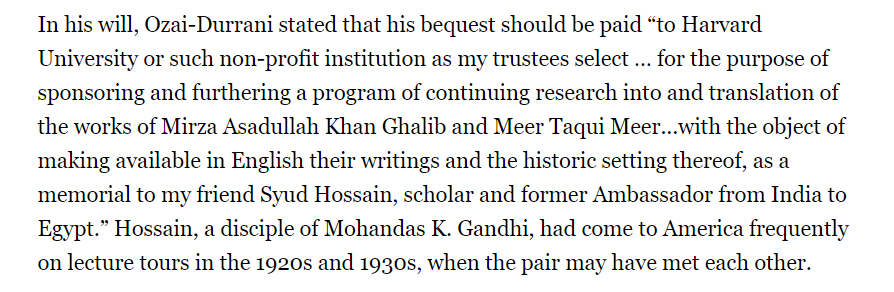
Ozai-Durrani died in May 1964 due to lung cancer and bequeathed half a million dollars to Harvard University for the same purpose of translation of Ghalib's Mir's works, and as memorial to Syed Hossain.


You may find it interesting that when more information was sought on the two poets, a librarian at the Indian consulate was contacted, who then suggested that it was really a matter for the Pakistanis as they are not known in India. A professor of Iranian studies at Columbia University also downplayed the value/significance of the 

Mirza Asadullah Khan Ghaleb


Mir Taqi Mir 

poets and said "they are not outstanding...in the vast panorama of Persian poetry, but they are very important to Pakistan." Harvard University then persuaded Dr. Annemarie Schimmel for the job and appointed her as Professor of Indo-Muslim Studies.


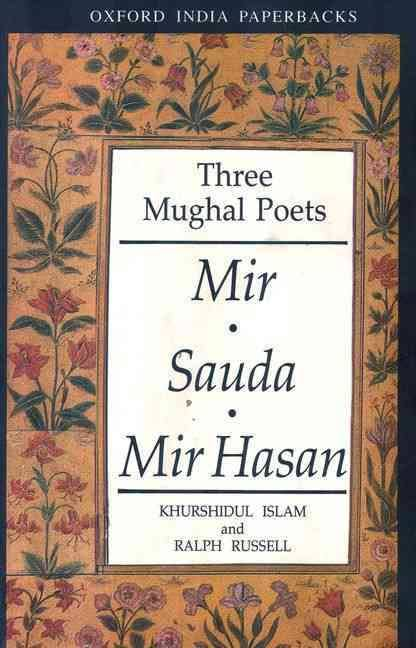
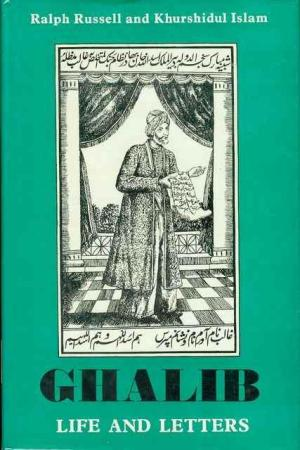
With Ozai-Durrani donation, the chair was able to publish two excellent books, Three Mughal Poets Mir, Sauda, Mir Hasan (Cambridge, 1968) and Ghalib: Life And Letters (Cambridge, 1969), both by Ralph Russell and Khurshidul Islam.


John K. Baden in his PhD thesis, made an interesting observation on why Ozai-Durrani chose two Urdu poets and not any Pashtun poets. He observes:

"Ozai-Durrani’s motives for picking the two poets are unknown. Notably, he did not feel constrained to sponsor a Pashtu or exclusively Dari (Persian) language “Afghan” poet to further the prestige of his native Afghanistan. Perhaps Ozai-Durrani assumed a broader regional or linguistic identity in the United States rather than one exclusive nationality, but he could have simply chosen the two poets because he associated them with the friend he sought to honor in his bequeathal."

Monday, 3 October 2016

QK Archives: Da Kabul Naukari...

The Frontier Post, July 1989

By Shahid Orakzai

“Hey buddy, how about a job at Kabul?”, the bandarwala would ask the monkey in the course of his public interview. The rhesus would shriek and jerk his head in strong disapproval and audience would burst into laughter. By the late 1920s, even monkeys roaming the dusty streets of Peshawar had picked up that much common sense. “Da Kabaul naukari na kawam,” (“employment in Kabul-Oh never”) had become a popular Pashto expression that echoed in the hills of the Khyber and rang through the valleys of the Pathan country. A job at Kabul, most probably recruitment in the ill-clad Afghan infantry, was not worth a monkey who happened to live east of Durand Line.

That was the time when the times actually started changing for the Pukhtoons on the two sides of the British drawn demarcation. Apparently, they had only two options. Either stay loyal to an impotent and bankrupt monarchy in Kabul or do business with flourishing British imperialism in India. There were very few floor crossings and people generally settled for whatever was available on their side of the Line. On average, it appears that Pukhtoons were sold out on a “As is where is” basis.

Some may now cite the hatred for monarchy as one of the reasons but the reason that worked and outweighed all others was the silver coin of the British India. The rupee, today the most authentic and popular measure of a Pukhtoon’s life and achievement, was to be found east of Durand Line. Military service in the Indian Army, earthwork labor, firewood, shoe-shine, transportation, smuggling and narcotics helped the Pukhtoons to discover the new frontiers of the worldly success beyond the banks of ‘Abaasin’ (the Indus). Like a typical watchman, Pukhtoons have watched everyone’s interest but their own.

The British initiated the phenomenon and did everything possible to make sure that the original Pukhtoon culture and values get drained out as fast as possible. The leftover residue of Pukhtoon nation, the way it lies before us today, could then be easily managed. For that objective, the British cultivated two classes in particular, i.e. the Maliks among the hill tribes and feudal politicians in the Charsadda and Mardan. The raj used them like the knife and fork to tear the Pukhtoon nation into pieces. North of the Khyber, Pukhtoons were fast asleep for decades and south of Torkham they were awake only to pocket economic gains. Today, on both sides of the Durand Line, they are a people without a vision of nationhood, sovereignty and even individual honor that once turned clay into a Pukhtoon.

The departure of the British did not prove to be a departure from colonial approach and policies. The knife and fork just changed hands. In fact, they went into hands that could mishandle the tools. Pakistan’s colonial establishment inherited the British visions and outlook and viewed the geo-political realities no differently. The reunion of the divided Pukhtoons could never fit in its scheme or frame of mind. That possibility could be perceived only as a threat. Consequently, Pakistan’s political and military leadership moved to counter that threat instead of capitalizing the idea.

After 1947, the Pukhtoons secured a reasonable share in the economic fortunes. Their lower and middle classes began to move around freely in the agriculturally rich plains of Punjab and Sindh in a variety of economic pursuits. Consequently, their social and economic bonds with Punjabis grew stronger with time while their blood bond with the people northwest of the Khyber began to liquidate. A bit of economic prosperity and political freedom injected a strange superiority complex among Pakistani Pukhtoons. They began looking at their own Afghan brethren as inferiors- in every sense of the world. During the last few decades, the economic pace at the two ends of the Khyber Pass drew another Durand Line. That’s what anyone seeking to divide a nation could eventually desire. The Establishment had always worked in that direction, patting the Pukhtoons and telling them, “you are much better off with us than you could be with Kabul.” Allow me to recall the comments of a Sindhi Prime Minister, as he addressed an audience of Maliks at my hilltop village. The most enlightened premier Pakistan ever had ordered his minister for power and resources to fix big tungsten bulbs on the Afghan border “so that they (the Afghans) can see the light on our side and feel the darkness on their’s.” If electric bulb is all the light that nations need to get enlightened, one wonders who is the dark?

As an Islamic Republic, Pakistan had always turned its back to the miserable state of Iranian and Afghan people. The champions of the freedom and liberty never challenged the policy that consolidated despotism in our western neighborhood. While the Muslims of the Pakistan wanted freedom and civil rights for themselves, they preferred to see others in chains. Turning a deaf ear to the advice of Prophet Muhammad-“Do not prefer for your brother, what you don’t like for yourself,” they set a new standard for Islamic brotherhood. The new motto is, “Support the kings, wherever you find them.”

The indifference towards the Persians and Afghans had a penalty. The penalty is being paid in the capitalist havens of the Karachi. And that’s quite natural and well deserved. If you don’t accept the blood bond between the Pukhtoons on the two sides of the Durand Line, how valid is the bond between the Pukhtoons and the Punjabis or Punjabis and Sindhis, the Sindhis and Muhajirs, Muhajirs and Punjabis. Name a single one of these relationships that is stronger than the bond between the divided Pukhtoons. What does a Pukhtoon share with a Sindhi that he does not share with his own tribesmen across Torkham?  Religion?  Language? Philosophy? Or separatism?


Employment in Kabul is still out of question for a Pukhtoon east of Khyber but his rejection this time shouldn’t be based on poor salary, provident fund and pension. A job at Kabul is still worth a monkey and Moscow has found the monkeys it needs. Informatively for the Pukhtoons, it is willing to pay them more than the British once offered.

Friday, 27 July 2012

Rajesh Khanna: The Prince of Romance


originally published by Outlook India and Daily Times Pakistan
Beyond Borders
picture copyright Hindu 


Many say Jitin Arora was born in Amritsar, India while some others claim he may have been born in Burewala in what is now Pakistan but most agree that as Rajesh Khanna he lived in the hearts of millions from Kabul to Kolkata, and beyond. I say most, as even when the prince of romance is mourned everywhere Hindi and Urdu are understood, some like a Pakistani television anchor Talat Hussain opted to deride him quite viciously. In his show dated July 19, 2012, which can be found at http://bit.ly/MuFrV3, Mr. Hussain disparages the media coverage of Rajesh Khanna’s demise on the pretext of evaluating its news value. The anchor’s barely concealed xenophobia is most unfortunate but let it not take away from what Kaka, as Rajesh was affectionately called, meant to literally hundreds of thousands of Pakistanis.

Pakistani governments had opted to first levy heavy taxes on the Indian films to curb import and then banned them initially in the western wing in 1952 and eventually even in East Pakistan by 1962. But it is still hard to erect barriers to popular culture, especially where the historical and linguistic bonds unite people despite the state ideology or political dispensation. When Doordarshan India started its telecast to Lahore it attracted not just the locals but also many others who could manage to travel to Lahore. On the other hand, Peshawar’s lifeline to the Indian cinema turned out to be the metropolitan Kabul of 1960s and 1970s. Theaters like the Temurshahi, Kabul Nandareh, Zainab Nandareh and Behzad screened new Bombay movies in Kabul. And as one Peshawari elder put it, they “descended upon Kabul to watch Aradhana in hordes”. Indeed one need not look beyond that 1969 release to grasp the magic of Rajesh Khanna.

The chemistry between Rajesh and his leading lady Sharmila Tagore in Aradhana, and thereafter, was almost palpable. Add to it Kishore Kumar and Lata Mangeshkar’s playback rendition to Sachin Dev ‘SD’ Burman’s music and there was no looking back for Rajesh. The beat, rhythm and use of orchestra to produce an exceedingly contemporary melody – as against SD’s semi-classical and folk-based tunes - in one song at least, also had the unmistakable fingerprint of SD’s son Rahul Dev Burman, whose name appeared as the assistant music director. Kishore Kumar and RD Burman became to Rajesh what Mukesh and Shankar-Jai Kishan were to the great Raj Kapoor. The trio did some 32 movies together. Rajesh was to later say to the documentary filmmaker Jack Pizzey about Kishore: “This is one of those playback singers … I mean … you hear the playback singer and you feel it is me who is singing …more or less … lots of similarity between his voice and my voice … only thing is that he can sing, I can’t!”

About that song Nilanjana Bhattacharjya notes in a 2009 study on the Hindi film song sequence in the periodical Asian Music: “Roop Tera Mastana (Your Beauty Intoxicates Me) from Aradhana, for example, unfolds in a secluded log cabin in Kashmir. The lyrics to the song annotate the rising level of passion between the couple amidst their awareness that despite having eloped, they approach dangerous territory. The lyrics effectively rule out any need for dialogue as the song sequence depicts a young man and young woman drawn increasingly closer before cutting to an unrelated scene the next morning.”

The Hindi film music and lip-syncing are virtually synonymous but this song sequence perhaps is unique in that Rajesh matched the range of Kishore’s voice only through the panoply of his expression without moving his lips. And did the male protagonist Arun’s body language and gaze fixed on Vandana, the female lead, delivered - and evoked - every emotion it could or what! Perhaps inspired by this and similar song sequences, Jack Pizzey had to say: “Kissing may be forbidden on the Indian screen but Rajesh has found more ways of implying love than the Kama Sutra has of making it!”

Little wonder that the movie, which on the face of it was a maternal melodrama, practically broke every taboo on sensuality in the Indian cinema and established Rajesh Khanna as the unmistakable prince of passion. He essayed the double role of a father and son, both dapper air force officers, in a movie that condemns a woman’s victimization at one level and at another more sublime one punishes her for a ‘lapse of judgment’. Unlike majority of Hindi movies the real protagonist of the movie is Vandana and no surprise that Sharmila Tagore’s powerful performance landed her the Filmfare award for best actress that year. Rajesh, however, came out of Aradhana as the heartthrob, whose mention forever would entail anecdotes about how girls would slap kisses on his car, write letters to him in their blood or marry his picture.

The Rajesh Khanna phenomenon was actually the sub-continental middleclass finding its first original celebrity post-1947. Dilip Kumar, Raj Kapoor and Dev Anand were past their prime in more ways than one. The Nehruvian ethos of the former two especially was ready to be replaced by something more compatible with the increasingly urbanizing masses that were craving, yet not willing, to let go of the tradition. In Pakistan Rajesh was not quite the idol of the Anglicized upper crust and obviously not of the ideologically anchored-types. That is in fact true for whole commercial Hindi cinema. But Rajesh’s appeal was in the mohallahs and streets of the large and small towns where the arrival of the videocassette recorder (VCR) in 1980s provided the young and old an opportunity to cram through his entire filmography. There was hardly a neighborhood in any town where the local “music center” would not have at least his first 13 blockbusters. In a way, arrival in the Pakistani market via the VCR gave Rajesh certain immunity against the box-office as the barometer of success and forever archived his image as the quintessential flamboyant romantic.

Rajesh Khanna was a Bollywood icon when there was no Bollywood, Bombay had not become the puritanical Mumbai yet, and Pakistan, of course had not produced its own version of Bal Thackerays. The news value of anything and how it should be slotted is certainly debatable but let there be no doubt that to Pakistanis too Rajesh Khanna’s death means the passing of an era. He will always be remembered as The Superstar – the one for whom the term was coined. RIP Kaka!
_________________________________________________________________________________

Dr. Mohammad Taqi is a regular columnist for Daily Times, Pakistan. He can be reached at mazdaki@me.com or via Twitter @mazdaki

Sunday, 15 July 2012

Love Crimes Of Kabul: A Review


please note this review of love crimes of Kabul contains spoilers with some adult themes

 by S. Esapzai

I watched this documentary recently called Love Crimes of Kabul (if any of my readers are interested in watching it – and I strongly recommend that they do). Anyway, as I was watching this film, I could not help thinking just how utterly obsessed everyone was when it came to sex, but most importantly of all, girls keeping their hymens intact to ensure purity and inviolability. Now, before my readers jump to any conclusions, I want to make it very clear here that I am not, in anyway, condoning pre-marital sex. Not at all, actually. However, in Afghanistan, premarital sex is not only religiously forbidden, as per the country’s Islamic beliefs (Shar’ia Law), but it is also illegal. Young women and men who do happen to engage in sexual relations before marriage are punished severely. So, while some are simply thrown into prison — given sentences that go up to ten years — others, on the other hand, especially when they commit adultery, are blatantly stoned to death.

Love Crimes of Kabul follows the stories/lives of three young women in the Badum Bagh Women’s Prison in Kabul, Afghanistan. And I have to say that while I was expecting to watch yet another extremely depressing documentary about the ways in which women are oppressed, especially behind bars; this documentary, however, pleasantly surprised me! It was nothing like what I’d expected; the stories that were shared were sad, distressing, and troublesome. Yet, at the same time, they were very fascinating and sort of sexy in a way. And their life in prison did not seem so bad either. They ate amazing food; were allowed to have their children live/stay with them; and they were always gossiping, laughing, and just having a lot of fun, even with the guards (who were also women, mind you)! But then things always seem peachy on the surface, don’t they? And it would be unfair of me to simply judge “prison life” on what I see in a documentary, which could also be staged, for all I know.

The first woman we are introduced to, in the documentary, is Kareema – a pretty dimpled, bold and outspoken 20-year-old Hazara woman whose crime was that she hadd fallen in love with a man, had pre-marital sex with him, and was now carrying his child. During her interview in the film, she did mention that they were engaged to get married, that she loved him very much, and that she hoped to marry him soon. I personally thought that the most interesting part about her story was that she was not caught and turned in by outsiders/relatives; but rather, she, herself, went to the authorities and turned herself in! Brave much? And her reasoning: well, her fiancé had refused to marry her partly due to her “loose” character, but mostly due to pressures from his parents, who disapproved of their relationship all along, simply because they did not want their son marrying a Hazara. Her fiancé was a Pashtun and it appears that in Afghanistan, if a Pashtun marries a Hazara, it is looked down upon (not all the time, but most of the time). It’s a sad reality but it’s the truth, it seems. So, as a result of her fiancé’s family disapproving of her (as well as her fiancé admitting in an interview that he’d wished that he’d never met her and that he didn’t love her), Kareema retaliated by turning herself in to the authorities (for having had premarital sex), which also lead to her fiancé’s arrest. And the only way he was to be released was if he married her. Her wish to marry her fiancé, of course, does come true eventually, as the film progresses. But I thought that the way she went about getting what she wanted was extremely brave, especially for a woman living in a country like Afghanistan; albeit she practically forced the man to marry her (which I am against, of course, for no one should be forced into doing something they don’t want/desire). She also admitted that she was not afraid to get divorced, yet she also made sure that she demanded enough money so that in case they did get divorced, she would be able to fend for herself. Here, I admit, I was pretty impressed with the way she handled the whole situation.

Anyway, the thing I fail to comprehend is why has peoples’ personal lives become such a concern of public authority? It’s almost like a Big Brother kind of scenario, where peoples’ every move and every action is monitored, especially when it comes to their sexual relations. There seems to be so much obsession with sex – and the control of it – that when stories of pre-marital relations and conceiving children out of wedlock arise, people become utterly barbaric and do not know how to deal with such situations. And, again, I am not saying that I condone such behaviours nor am I saying that I support/encourage them, but I just feel that there is no need to throw young couples into prison on account of it, nor even murder (not kill) them, just because society believes it to be wrong. We are all humans at the end of the day. We all have desires. We are not perfect beings. And mistakes happen. But punishment and death is not the answer! It’s never the answer. The fact of the matter is that, no matter how much we try to suppress such behaviours and scream that it’s wrong, it’s immoral, and that it is forbidden, the more young people will be lured towards it and will do it, in hiding; thus throwing all caution to the wind. Force and suppression is never the way to go about these things. Rather, it’s better to educate young people about sex and about the consequences of it, instead of brushing the whole issue under the carpet because any talk of sex and what happens between men and women in the bedroom is forbidden, for it is not something to be discussed with kids (that are old enough to understand) so openly and freely.

Further, I’ve come to realize, both through personal experience (especially on my recent trip to Khyber-Pakhtunkhwa) and also through other peoples’ experiences, that our women more often like to gossip, joke, and tease other women when it comes to sex (and would do so for hours on end), but they will never discuss it with their children – especially those who are old enough to comprehend it. Sex is so taboo; so wrong; yet the desire to engage in it is de rigueur. Men marry more than one woman, and while they claim that it is for other reasons besides satisfying their sexual appetites, I somehow never buy that claim. No man is saintly enough to take on a virgin wife, who happens to be 25 years younger than he, just so that he can care for her. While “care”may be one of the reasons, it is never the only reason!

Oh, and speaking of virginity, there also appears to be this whole other obsession with virginity and chastity. And absolute deep importance is often given to it, for to be a virgin is to be “holy”; and the longer a woman, especially, preserves it, the better she is off: personally, socially, morally, psychologically, and most importantly of all, maritally. This obsession with virginity is depicted in the documentary through the second young female: 18-year-old Sabereh, who also belongs to the Hazara tribe. She is a pretty little petite young woman, whose crime was that she, too, like Kareema, had fallen in love with a boy and was caught kissing him at her house. However, it is emphasized repeatedly that she is a virgin (yes, they do medical tests on her in order to prove that!), so her case seems to be a little uncertain. For according to the law, since Sabereh was still a virgin, she did not really commit any “moral” crimes.

Nevertheless, the outcome of her so-called crime did not turn out to be too positive, as compared to Kareema’s, despite the fact that it was proven that she was “pure” and all. Instead, they start to accuse her of engaging in sodomy, which according to Islamic law is far worse than anything imaginable. I do not want to spoil it for my readers, who do intend to watch the film, so I won’t delve any more into her story. But, I just find it troubling that medical tests were done on Sabereh in order to determine whether she was a virgin or not. And even that wasn’t enough; it’s like if a man and a woman remotely meet, then that must mean that they’ve had sex or at least engaged in some form of sexual activity. Everything is always assumed, and hardly proven (unless it is deemed absolutely necessary; otherwise, it’s all solely based on assumptions). What if her hymen had broken without sexual penetration, but through other inexplicable means? Of course, in our society, a broken hymen automatically means that the girl is not a virgin, regardless if she has had sex or not. 

The hymen, hence, is the sole determinant of a young woman’s chastity and virtue.   
 Whatever she does, whomever she speaks to, and wherever she goes, her hymen is the first thing she has to protect and put into consideration before anything else. She has to guard her hymen with her life; and if she doesn’t (for example, if she gets raped), then that simply means that she failed to protect it, hence making it all her fault. So, yes, her whole world basically revolves around her hymen; as a matter of fact, her life is her hymen!

Anyhow, the last woman we are introduced to in the documentary is 23-year-old Aleema – a divorced woman who lives at home again with her parents. But because she had a curfew and found her living conditions to be rather abusive and controlling, she decided to run away from home and sought refuge with a woman (as old as her mother) named Zia. However, when she gets caught, not only is she sent to jail but Zia is also blamed and sent to jail with her. And one of the reasons that Zia is sent to jail is because it was claimed that she tried to sell Aleema, hence exploiting her for sexual favours. Of course, they (the authorities) have no proof whatsoever to make such a blatant claim against her. Further, they also blame Aleema for having had some sort of a sexual relationship with Zia’s son – who’s married already and has a wife. And it is proclaimed that the only way that they both (Aleema and Zia) would be released from prison was if Aleema married Zia’s son, hence becoming his second wife. I guess the fact that Aleema was living with Zia, knowing very well that her son lived with her too and the possibility of sexual relations could develop is, in my opinion, the main reason for her arrest. The people who arrested them were probably wondering why Zia would allow a young, un-married (divorced, in this case) woman to live with her, knowing  very well that she had run away from home (and possibly with her son?). The funny thing is that the person who turned in Aleema to the authorities was actually Zia’s son’s first wife, which hence makes it even more flagrant that something must have been going on between Aleema and Zia’s son. Yet, again, there is never any concrete proof provided; it’s all based on assumptions and assumptions alone.

Hence, in the film, we see how Zia tries her very best to convince Aleema to marry her son, so that she could be released. But, Aleema, bold and outspoken, like Kareema, refuses to budge for she knows very well that Zia can’t afford the dowry she feels she deserves. She also knows her son can’t provide the lifestyle she yearns. Aleema further thinks Zia wants her for her son only because she can get her cheap because she’s a divorcee and hence not pure (a virgin) any more. (Virgins, when getting married, are granted much more expensive and lavish weddings that cost around $7,000 to $8,000!) As a result, Aleema feels insignificant and refuses to partake in anything that will make her feel even more cheap and worthless, than what society already thought of her.

Here, I must say just how incredibly sickening I find the way divorced women are perceived in our society – making it seem like being divorced is some sort of a disease; a pestilence! And that those women who walk away from marriages, for being abused (either physically or emotionally), are worse off, as this one woman worker told Aleema, in one scene: “A bad husband is better than no husband.” And as much as I do not agree with this statement at all, this is what most, if not all, women believe and strongly abide by. Anyway, there is much to say on this and I am currently working on a piece dedicated to this “issue” of divorce among Pashtuns. It's an important topic and much light needs to be shed on it.

I realize this post contains lots of spoilers, but I am sure I must have missed out some parts from the film; so again, I would strongly urge my readers to check out this documentary and form their own opinions and conclusions from it. There is indeed much to learn from this, and while it was entertaining and not as depressing as I expected it to be, it definitely depicts a side of Afghanistan that we don’t often see; if ever. I commend these three extremely brave women for coming forth and sharing their fascinating, yet distressing, stories – stories of passion, love, desire, lust, and deception.  And yet, despite the hardships, the pain, and the loss each and every woman endured, they managed to brighten up the cameras with their colourful laughter and beautiful bright smiles. And while the Love Crimes of Kabul comes off as entertaining, simply because the stakes don’t seem as high, and the situations come off as light-hearted and rather humorous instead of distressing, it might just not be the worst kind of oppression.

Yet, it is still oppression. And that we cannot deny.

The author is a Doctoral candidate in Development Studies and Rural Planning, focusing on gender and development (GAD) of rural Pashtun women. She is also a visual artist and the co-founder of Heela Foundation. Her personal blog can be read at sesapzai.wordpress.com. Follow her on Twitter @sesapzai

Sunday, 1 July 2012

The King, the picture & the water carrier

Prologue:


In a recent documentary called Afghanistan The Great Game by Rory Stewart, he wrote about how the British Raj wanted to keep Afghanistan a backward state so as to serve as a buffer against possible incursions. He also touched upon the short but momentous reign of the reformist King Amanullah. This documentray led to a discussion about events surrounding his ouster which in turn led to Noreen Naseer and Peymana Walizai sharing some personal accounts of their family members regarding the role of British in toppling King Amanullah Khan's government.


Did the British Raj topple Afghanistan's first reformer King?


Accounts of the fall of King Amanullah of Afghanistan's government, taken from historical and personal accounts


 In 1924 amidst the rapid changes in reforms, the Mangal Pashtun tribesmen of Khost were stirred to revolt by a fanatical cleric called Mullah Lawang. The rebellion was crushed a year later but it was an ominous sign for those in government, especially for Mahmud Tarzi the foreign minister. He resigned in 1925 due to his advice on the need to proceed slowly and cautiously in the reform programme having been repeatedly ignored by Amanullah.
http://upload.wikimedia.org/wikipedia/commons/e/e5/Atat%C3%BCrk_ve_Amanullah_Han.jpg
Amanullah (R) with Mustafa Kamal Attaturk

In 1927 Amanullah Khan with his wife Queen Soraya embarked on a grand tour of European capitals where he was dazzled by the achievements of the west. He visited all the European capitals and also visited Turkey and Persia on his return journey, and was the first foreign ruler to visit the Soviet Union. It was during Amanullah Khans grand tour of Europe that word had reached the royal family in Kabul, my grandfathers family being one, that photographs of Queen Soraya, unveiled, wearing evening dress at European state receptions, having her hand kissed by foreign prime ministers and some even naked. Messages were sent to the Royal family that “The King has turned against Allah and Islam”. He was also reported to be bringing back from Europe ‘machines to make soap out of corpses’.No one really knew what to believe as these messages had been conveyed to them by British ministers staying in Kabul and so all thought best to wait until the King returned.

Return, revolt and Exile After his return to Kabul in July 1928 Amanullah announced a series of reforms before a Loya Jirga composed of the country’s leading tribal and religious leaders. He called for
 1) The establishment of a western style constitutional monarchy, a cabinet of ministers, an elected lower house, and a nominated upper house
2) The separation of religious and state power
3) The emancipation of women, enforced monogamy, compulsory education for all and coeducation schools.

The Loya Jirga (an ancient version of direct democracy similar to the traditional landesgemeinde of the older Swiss-German cantons) rejected most of Amanullahs proposals. So the King simply put together a Loya Jirga that was filled with loyalists to approve the proposals that had been rejected, especially the abolition of the chadari (veil) and the wearing of western clothes by the men. The wife of a British Minister in Kabul who was present on the occasion wrote in her diary, “The most dramatic moment of all was when Amanullah wound up an impassioned appeal to his people to free their women with a wave of his hand towards his Queen, saying “Anyway, you may, see my wife”, and she pulled down her veil before the assembled multitude”. Afghanistan’s conservative society was not ready for such changes, especially the Pashtun tribes in the rural areas.

Peymana Walizai writes:
'The hot summer of 1928 the King had returned from his grand tour and he had decided to visit his uncle Shaghasi Shaswar Khan Barakzai (my great grandfather) whilst on his regular trips around Kabul. During tea and talking about the grand trip, his uncle told him that he had heard news of the British arming Pashtun tribesmen near the border provinces. He said his workers from the south had come to convey a situation to him, and they had told him that after the photos of the Queen had been distributed the Mullahs had gone to pray, and there dug into in the ground were huge supplies of guns. The King told his uncle there was nothing to worry about and these were just rumours. He bid farewell to his uncle and got up to leave. As he was walking towards the gates of the house, my great grandfather suddenly remembered something he had not told him; barefoot he ran towards the gates, so as to not miss the king and stopped Amanullah. He called over his son, my grandfather and asked him to take his son with him and register him into a good school of the Kings choice. At that time my grandfather, Shaghasi Abdul Ghaffar Khan was a young boy and King Amanullah chose Habibya school in Kabul as the perfect choice for his cousin. The education my grandfather received allowed him to become a part of the Royal government of Nadir Shah. But like the rest of his family he too witnessed the downfall of one of the most modern thinking Afghan kings. '

The message that had been conveyed to my family in the presence of my grandfather turned out to be true as Habibullah Kalakani (Bach-e Saqqao (Son of a water carrier) marched on Kabul with a force consisting of the Mangal, Khostwal and Shinwari tribesman, to remove the King in the defence of Islam forcing Amanullah Khan to abdicate to Italy.

Habibullah Kalakani (Bacha-e-Saqqao) had in 1919 joined the Afghan Army but later due to low pay and poor facilities  left the army and did other jobs to sustain himself. His life after this is described by Noreen Naseer
'He travelled to Khost and came to Kurram (the tribal area under the protection of the British attracted him) and he was soon caught for stealing a goat. He was sentenced by a British Agent for theft and imprisoned him in Parachinar jail (narrated by Dr. Naseer Hussein as his father Malik Naad Ali Khan was in that durbar). According to Dr. Naseer Hussein, his punishment was a conspiracy to get him in contact with the British agents, as there is record of Bach-e-Saqqao’s offence. Trained as a soldier and supported by the British, he carried out propaganda against King Amanullah and his family, distributed Queen Suryaya’s pictures dressed up in western clothes.'


All this propaganda was so effective that the already aggrieved clergy, tribes and Maliks found these pictures and the lifestyle of the Queen so offensive to Islam that they supported Bacha-e-Saqqao against the King. Amanullah Khan fled to Italy with his family, and the existing Royal family were put under house arrest. Bacha Saqqao and his ragged followers arrived in Kabul and subjected the city and its hapless inhabitants to a nine-month reign of terror. The looting, pillaging and arson, and the rapes perpetrated by the wild invaders, alienated even those religious leaders who had opposed Amanullah, such as the influential Hazrat of Shor Bazar, the head of the Mujaddidi family and of the ancient Naqashbandiya Sufi order, who had first acclaimed the bandit as ‘The Holy warrior. Habibullah, Servant of the faith’.

General Nadir Khan, the hero of the Third Afghan Anglo war and a powerful member of the Musahiban family, also a Royal clan, with the help of his four brother assembled a force from both sides of the Durand Line and defeated the bandit force and took Kabul in October 1929. He publicly hanged Habibullah Kalakani with his leading followers a month later on the 3rd of November and Nadir Khan became the new King of Afghanistan.  

Epilogue:

So did the Britsh Raj fuel the ouster of Amanullah? How did Habibullah go from being a petty Army deserter imprisoned in British India's tribal areas to someone who could rally various tribes and oust an Afghan King? While their support for Nadir Khan is well known, historical references showing any overt support for Amanullahs ouster are mostly anecodatal. Perhaps someone needs to do a bit of research through the British Indian papers and answer this once and for all ?

References: 

  • Dupree, Louis (2002), Afghanistan,(USA: Oxford University Press)
  • Arney, George (1989),  Afghanistan, (London: Mandarin)
  • Rasanayagam, Angelo (2005), Afghanistan: A modern history, (London:I.B Tauris) 
  • Personal accounts on Amanullah Khan from Peymana Walizai whose Grandfather is Abdul Ghaffar Shaghasi Barakzai, the cousin of Amanullah Khan through his uncle Shaghasi Shaswar Khan Barakzai 
  • Personal accounts on Bacha Saqqao from excerpts taken from the diary of her father, Dr Nasser Hussein , by Noreen Naseer, as recounted by her grandfather, Late Malik Naad Ali Khan