Showing posts with label Pashtun. Show all posts

Saturday, 6 July 2019

Ataullah Ozai-Durrani — An Afghan immigrant in the US who made name & a fortune with the invention of Minute-Rice recipe in the early 1940s, and left half a million dollars to Harvard university for translating poetic works of Mirza Ghaleb and Mir Taqi Mir.

Dr. Nafees Ur Rehman (@NafeesRehmanDr)


Photo of Ataullah Ozai-Durrani, source: Smithsonian Institution Archives, Accession 90-105, Science Service Records, Image #SIA2008-1489


Ataullah Ozai-Durrani was born in Herat, Afghanistan in 1897 and had immigrated to the US in 1923. Though his education was in Petro-Chemistry but he pursued researching in planting, preparing and cooking rice after one of his guests remarked that the chicken-rice, that they were served at dinner, were so good that it needed to be introduced to the public. Ozai-Durrani spent the next 10+ years reading, experimenting and researching on rice. It was around 1939 that he had established his method of preparing rice and it was time to share and sell it.

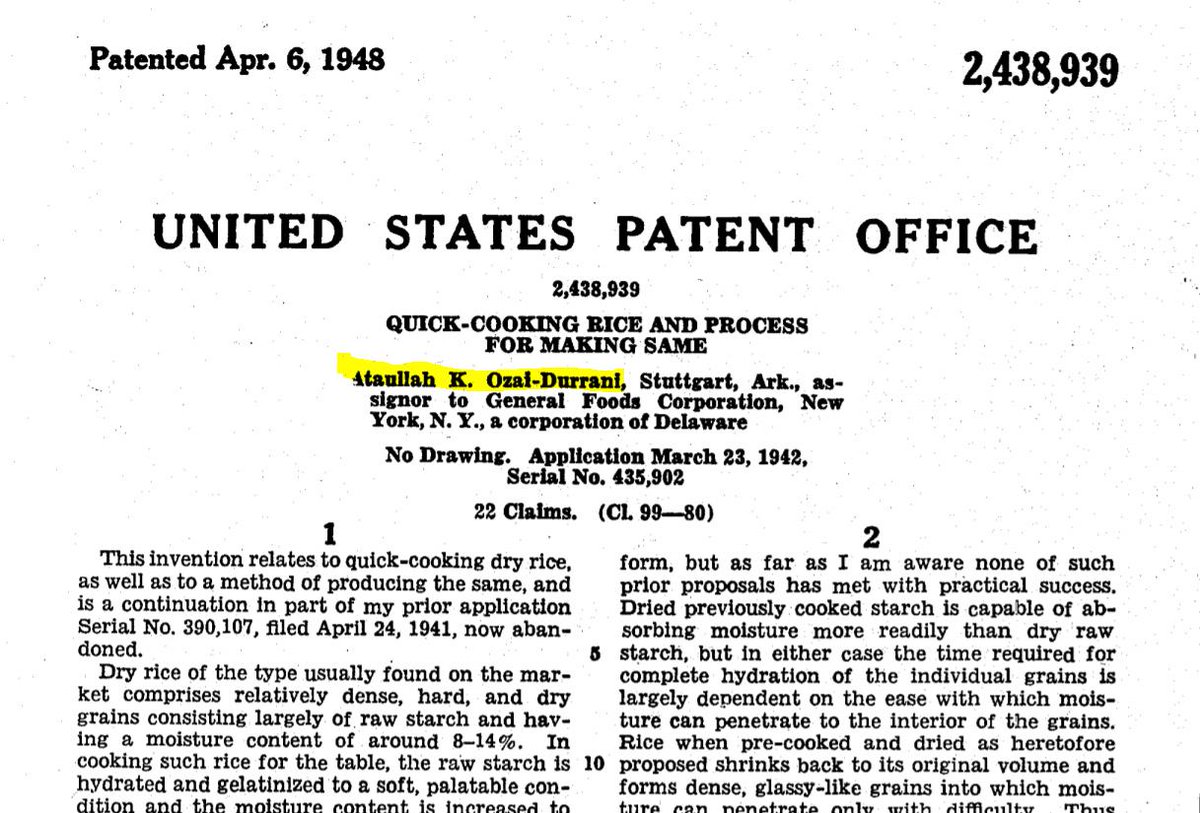
In 1941, he walked into the office of General Foods Corporation in New York, set up his portable stove and convincingly demonstrated cooking rice in minutes. General Foods were impressed with the significant reduction in cooking time and immediately bought his recipe.


Copy of the Quick-Cooking-Rice Patent: Source https://patents.google.com/patent/US2438939


Thanks to the large-scale marketing of Minute Rice and later mass orders by the US army, the product achieved its success. Ozai-Durrani became a millionaire almost overnight.
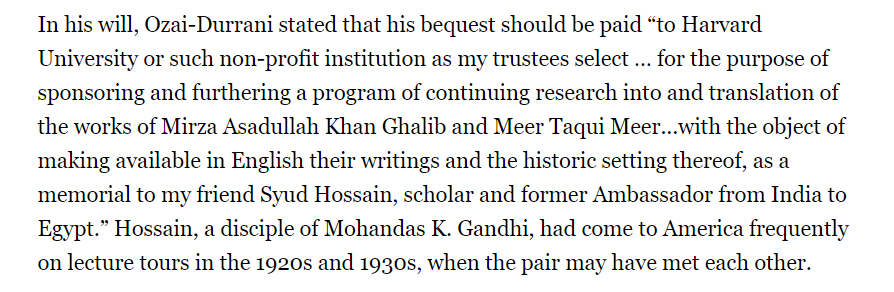
There is another interesting aspect to Ozai-Durrani's life, and that is his interest in the poetry of Mirza Asadullah Khan Ghaleb and Mir Taqi Mir, famous poets of the subcontinent. It is not clear how he developed interest in their poetry. Could it be during the times when he studied at Aligarh Muslim college in India or later when he befriended Syed Hussain, a disciple of Gandhi who had advocated for freedom of India in the US and delivered lectures in 1920s and 1930s.  Ozai-Durrani wanted to translate the works of Mirza Ghaleb and Mir Taqi Mir into English language. For this purpose, he donated about 100 thousand rupees to Aligarh Muslim University in 1950s. The VC of AMU, Dr. Zakir Hussain was also friend of Ozai-Durrani. However, nothing came out of this program and Ozai-Durrani eventually withdrew his support.

Ozai-Durrani died in May 1964 due to lung cancer and bequeathed half a million dollars to Harvard University for the same purpose of translation of Ghalib's Mir's works, and as memorial to Syed Hossain.


You may find it interesting that when more information was sought on the two poets, a librarian at the Indian consulate was contacted, who then suggested that it was really a matter for the Pakistanis as they are not known in India. A professor of Iranian studies at Columbia University also downplayed the value/significance of the 
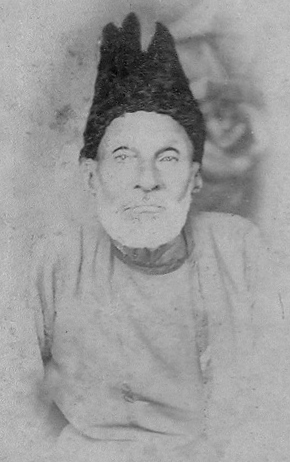
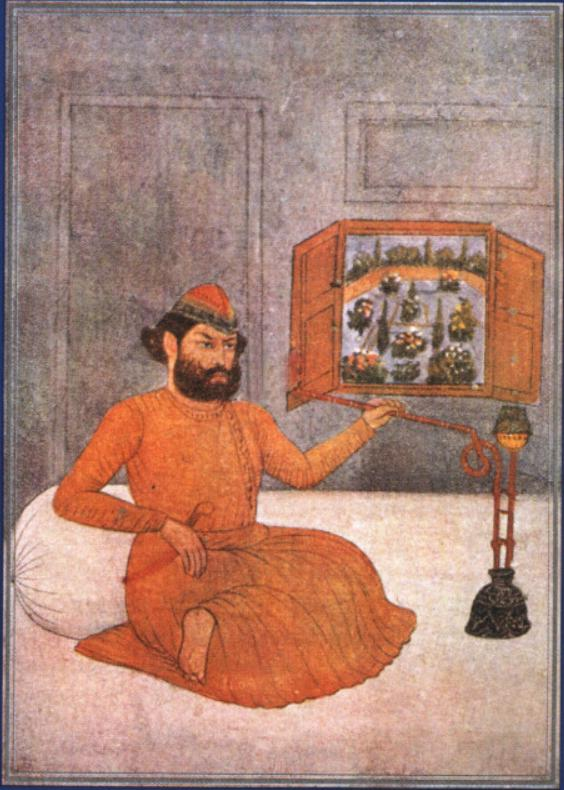
Mirza Asadullah Khan Ghaleb


Mir Taqi Mir 

poets and said "they are not outstanding...in the vast panorama of Persian poetry, but they are very important to Pakistan." Harvard University then persuaded Dr. Annemarie Schimmel for the job and appointed her as Professor of Indo-Muslim Studies.


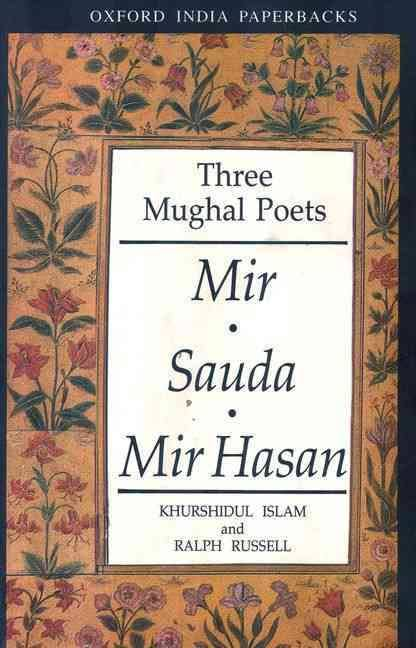
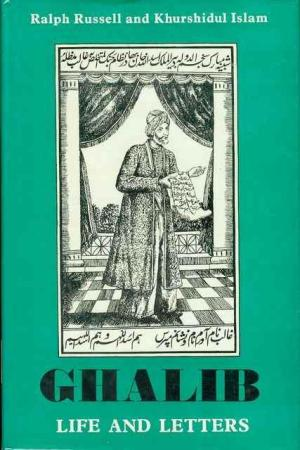
With Ozai-Durrani donation, the chair was able to publish two excellent books, Three Mughal Poets Mir, Sauda, Mir Hasan (Cambridge, 1968) and Ghalib: Life And Letters (Cambridge, 1969), both by Ralph Russell and Khurshidul Islam.


John K. Baden in his PhD thesis, made an interesting observation on why Ozai-Durrani chose two Urdu poets and not any Pashtun poets. He observes:

"Ozai-Durrani’s motives for picking the two poets are unknown. Notably, he did not feel constrained to sponsor a Pashtu or exclusively Dari (Persian) language “Afghan” poet to further the prestige of his native Afghanistan. Perhaps Ozai-Durrani assumed a broader regional or linguistic identity in the United States rather than one exclusive nationality, but he could have simply chosen the two poets because he associated them with the friend he sought to honor in his bequeathal."

Monday, 3 October 2016

QK Archives: Da Kabul Naukari...

The Frontier Post, July 1989

By Shahid Orakzai

“Hey buddy, how about a job at Kabul?”, the bandarwala would ask the monkey in the course of his public interview. The rhesus would shriek and jerk his head in strong disapproval and audience would burst into laughter. By the late 1920s, even monkeys roaming the dusty streets of Peshawar had picked up that much common sense. “Da Kabaul naukari na kawam,” (“employment in Kabul-Oh never”) had become a popular Pashto expression that echoed in the hills of the Khyber and rang through the valleys of the Pathan country. A job at Kabul, most probably recruitment in the ill-clad Afghan infantry, was not worth a monkey who happened to live east of Durand Line.

That was the time when the times actually started changing for the Pukhtoons on the two sides of the British drawn demarcation. Apparently, they had only two options. Either stay loyal to an impotent and bankrupt monarchy in Kabul or do business with flourishing British imperialism in India. There were very few floor crossings and people generally settled for whatever was available on their side of the Line. On average, it appears that Pukhtoons were sold out on a “As is where is” basis.

Some may now cite the hatred for monarchy as one of the reasons but the reason that worked and outweighed all others was the silver coin of the British India. The rupee, today the most authentic and popular measure of a Pukhtoon’s life and achievement, was to be found east of Durand Line. Military service in the Indian Army, earthwork labor, firewood, shoe-shine, transportation, smuggling and narcotics helped the Pukhtoons to discover the new frontiers of the worldly success beyond the banks of ‘Abaasin’ (the Indus). Like a typical watchman, Pukhtoons have watched everyone’s interest but their own.

The British initiated the phenomenon and did everything possible to make sure that the original Pukhtoon culture and values get drained out as fast as possible. The leftover residue of Pukhtoon nation, the way it lies before us today, could then be easily managed. For that objective, the British cultivated two classes in particular, i.e. the Maliks among the hill tribes and feudal politicians in the Charsadda and Mardan. The raj used them like the knife and fork to tear the Pukhtoon nation into pieces. North of the Khyber, Pukhtoons were fast asleep for decades and south of Torkham they were awake only to pocket economic gains. Today, on both sides of the Durand Line, they are a people without a vision of nationhood, sovereignty and even individual honor that once turned clay into a Pukhtoon.

The departure of the British did not prove to be a departure from colonial approach and policies. The knife and fork just changed hands. In fact, they went into hands that could mishandle the tools. Pakistan’s colonial establishment inherited the British visions and outlook and viewed the geo-political realities no differently. The reunion of the divided Pukhtoons could never fit in its scheme or frame of mind. That possibility could be perceived only as a threat. Consequently, Pakistan’s political and military leadership moved to counter that threat instead of capitalizing the idea.

After 1947, the Pukhtoons secured a reasonable share in the economic fortunes. Their lower and middle classes began to move around freely in the agriculturally rich plains of Punjab and Sindh in a variety of economic pursuits. Consequently, their social and economic bonds with Punjabis grew stronger with time while their blood bond with the people northwest of the Khyber began to liquidate. A bit of economic prosperity and political freedom injected a strange superiority complex among Pakistani Pukhtoons. They began looking at their own Afghan brethren as inferiors- in every sense of the world. During the last few decades, the economic pace at the two ends of the Khyber Pass drew another Durand Line. That’s what anyone seeking to divide a nation could eventually desire. The Establishment had always worked in that direction, patting the Pukhtoons and telling them, “you are much better off with us than you could be with Kabul.” Allow me to recall the comments of a Sindhi Prime Minister, as he addressed an audience of Maliks at my hilltop village. The most enlightened premier Pakistan ever had ordered his minister for power and resources to fix big tungsten bulbs on the Afghan border “so that they (the Afghans) can see the light on our side and feel the darkness on their’s.” If electric bulb is all the light that nations need to get enlightened, one wonders who is the dark?

As an Islamic Republic, Pakistan had always turned its back to the miserable state of Iranian and Afghan people. The champions of the freedom and liberty never challenged the policy that consolidated despotism in our western neighborhood. While the Muslims of the Pakistan wanted freedom and civil rights for themselves, they preferred to see others in chains. Turning a deaf ear to the advice of Prophet Muhammad-“Do not prefer for your brother, what you don’t like for yourself,” they set a new standard for Islamic brotherhood. The new motto is, “Support the kings, wherever you find them.”

The indifference towards the Persians and Afghans had a penalty. The penalty is being paid in the capitalist havens of the Karachi. And that’s quite natural and well deserved. If you don’t accept the blood bond between the Pukhtoons on the two sides of the Durand Line, how valid is the bond between the Pukhtoons and the Punjabis or Punjabis and Sindhis, the Sindhis and Muhajirs, Muhajirs and Punjabis. Name a single one of these relationships that is stronger than the bond between the divided Pukhtoons. What does a Pukhtoon share with a Sindhi that he does not share with his own tribesmen across Torkham?  Religion?  Language? Philosophy? Or separatism?


Employment in Kabul is still out of question for a Pukhtoon east of Khyber but his rejection this time shouldn’t be based on poor salary, provident fund and pension. A job at Kabul is still worth a monkey and Moscow has found the monkeys it needs. Informatively for the Pukhtoons, it is willing to pay them more than the British once offered.

Wednesday, 8 August 2012

Amir Hamza Shinwari: The unfinished story


Editors note: this article was written following the attack on the tomb of Amir Hamza Shinwari 

Baheer: three currents of Hamza Shinwari’s poetry —
                                                                                            by  M Taqi

picture via wikipedia


“Insaan yem, da fitrat pa taqazo ke na raazam,                  

Shaheen yem, da karghano pa panjo ke na raazam,

Yaw sind yem da sehba, da perzonay waham josh,

Laikin za da kam-zarfo pa kaaso ke na raazam” 
                                  — Amir Hamza Khan Shinwari.

(I am a human whom even the nature cannot restrain,

Like a falcon I am; the paws of crows cannot reach me,

I am an ocean of wine (of love and knowledge), in high tide of passion,

Of which, a drop cannot the goblets of these upstarts hold.)

Though in vain this time, the crows did try to desecrate the mausoleum of one of the finest Pashtuns that ever lived. Last week, terrorists carried out an attack — fourth in two years — on the final resting place of the greatest Pashto ghazal poet, Amir Hamza Khan Shinwari — known affectionately as Hamza Baba — in Landi Kotal, Khyber Agency. Hats off to the shrine’s caretaker Muhammad Ikram and the khasadar militiamen who refused to vacate the shrine and put up resistance, forcing the militants to flee.

Adherents of the ideology of pure hate have attacked an apostle of pure love yet again, as they have done at the shrines of Sufis like Haji Sahib Turangzai, Rehman Baba, Pir Baba, Baba Farid Ganj-e-Shakar, Abdullah Shah Ghazi and Data Ganj Bakhsh, all over Pakistan. However, there are many who still insist on a dialogue with the peddlers of absolute poison that al Qaeda and its local affiliates are. There is a lot to be said about this dialogue. But today I only wish to remember Hamza Baba for the poised, peaceful, passionate, Pashtun Sufi that he was.

I wondered how the Persians would respond if Hafiz Shirazi’s tomb was vandalised or how the Turks would react to sacrilege of Jalaluddin Rumi’s grave, while reading Hamza Baba’s verses — a work at par with the greats of Persian Sufi poetry. The Persian language, especially its ghazal (love sonnet) form and Sufism have a unique kinship but conceptualising the mystical worldview from a native perspective and formulating it in chaste Pashto had perhaps not been attempted before Hamza Baba.

Sufi orders and indeed Sufi poets like Mirza Khan Ansari of the Roshaniyya order, Kazim Khan Shaida and, of course, Rahman Baba had existed in Pashtun society long before Hamza Baba. In fact, Hamza Baba recognised Ansari and Rahman Baba as his poetic antecedents. However, as Professor Yar Muhammad Maghmoom, has noted in his monograph ‘Hamza’s ghazal and Pashtun mysticism’, Ansari and Shaida had heavy Persian influence on their work. Contrarily, Hamza Baba’s mystic motifs as well as his poetic devices and tools are rooted deeply, yet effortlessly, in the Pashtun lands and Pashtunwali (the Pashtun culture and code of conduct).

Hamza Baba had not made a conscious effort to de-Persianise his work but his thought and creative output are so indigenous that even the use of short poetic meter prevalent in Persian and an occasional Arabic or Persian phrase does not appear to be a transplant. Hamza Baba’s metaphor, allegory and diction are nuanced pointers towards his Pashtun nationalism. Just like his mysticism was not imported, his nationalism too has arisen from the mountains of Khyber and the plains of Peshawar. Unlike the progressive poetry of Pashtun nationalists like Ghani Khan and Ajmal Khattak, and even Allama Iqbal and Faiz, Hamza Baba’s verse is free of Marxist or other European influences. It is perhaps this originality of thought and language that puts him in the league of Hafiz, Saadi, Rumi and Jami.

Three intertwined key currents — or ‘Baheer’, as he has titled one of his books — stand out in Hamza Baba’s poetry, i.e. devotion to ghazal, Pashtunwali and mysticism. He developed his dialectic around the romanticism, figures, forms and norms of Pashtun society, which he deploys to resolve the dichotomy faced by a mystic in pursuit of wahdat-al-wajud (Unity of Being). He says:

“Ta ka kha Pashtun shuay no insan ba shay,

Biya ka kha insaan shuay, Musalman ba shay.”


(First be a good Pashtun and you shall become a good human being,

And only when you become a good human being, will you become a good Muslim.)

Interestingly, these currents flow from and merge back into the person of his Chishti Sufi master, Syed Sattar Shah, known in Peshawar as Badshah Jan. Syed Sattar Shah was the son of Syed Burhan Shah and had moved to Peshawar from Hazara and lived inside the Dabgari Gate of the old walled-city. Hamza Baba was born and raised in Lawargi (Landi Kotal) but his family owned a house in Mohallah Sakhi Shah-e-Mardan (named after a shrine dedicated to Hazrat Ali Murtaza RA) inside Barizqan (popularly but inaccurately called Bayriskay) Gate, a short walk away from Badshah Jan’s residence.

Hamza Baba used to write poetry in Urdu but Badshah Jan, who himself composed poetry under pen-name ‘bay-nawa’ (voiceless), instructed him to write his verse in Pashto and ordered another of his disciples, Rafiq Shinwari — a musician — to compose and sing this verse. Hamza Baba was not really happy with the marching orders but complied and there was no looking back for him. He came to be known as the father of the Pashto ghazal (baba-e-ghazal) a title in which he took great pride and his verses to this effect are well known. Perhaps less known is his humility as a Chishti who was devoted to his Sheikh and attributed this success to Badshah Jan. In a ghazal written at the shrine of his master, he says:

“Pardah-pokh wo cheh “Sattar” wo da aiboono,

Cheh da zarroono Badshah Jan wo, haghah da wo,

Da Hamza da gado-wado wainagano

Pa rishtia cheh qadardan wo, hagha da wo.”

(Sattar — he who covers up one’s lapses — was he,

If there was a Badshah (king) of hearts — it was he,

Who could understand my gibberish?

But one who appreciated it, was he.)

Hamza Baba was a polymath: a poet, writer, dramatist, humorist, lyricist, musician, film-writer, broadcaster, translator but above all a humanist. If Khushal Khan Khattak was the warrior poet (sahib-e-saif-o-qalam), Hamza Baba carried pen in one hand and the candle of love in the other, and that too in a manner befitting of an unassuming Chishti saint with prowess over both knowledge and modesty (sahib-e-ilm-o-hilm).

A column cannot begin to define even one facet of this multidimensional Pashtun prodigy and in Hamza Baba’s words:

“Maa Hamza neemah ke khabarah prekhwa,

Neema ba biya sta pa ratlah wayamah.”

(I will leave my talk unfinished; we shall conclude upon your return.)


The writer can be reached at mazdaki@me.com. He tweets at http://twitter.com/mazdaki
The original version of this article was published by the Daily Times of Pakistan on Thursday, July 28, 2011

Tuesday, 31 July 2012

Wali Khan : The Frontier Liberal


by  M. Taqi

part 1 of a five part profile series written over the last two years by the writer


گریزد از صف ما ہر کہ مرد غوغا نیست
کسے کہ کشتہ نہ شد از قبیلہ ما نیست
guraizad az saf e ma har keh mard e ghaugha neest
kasay keh kushtah na shud az qabeela e ma neest


He who lacks the will to protest, should step away from my fold. Anyone not willing to sacrifice does not belong to my clan -  Nazeeri Nishaburi.

Throughout the second half of the twentieth century Wali Khan indeed remained the voice of protest and democratic opposition in Pakistan.
One is tempted to compare Wali Khan's legacy to the mystical story in Rumi's Mathnawi, of the elephant surrounded by several men in a dark room trying to figure it out. He certainly was different things to different people.
For his adversaries like the right-wing Muslim Leaguers a la Qayyum Khan or the populist ZA Bhutto he was the arch-enemy - an absolute traitor - who should have been physically eliminated. And to this end they tried their best - at times using the services of a certain leftist group in the NWFP.
His adversaries at least concurred on him being a constant thorn in their side. However, his admirers faced a bigger dilemma - how to classify Wali Khan and which aspects of his thought and politics to choose,subscribe to and admire.
Was a he a Pashtun nationalist, out to undo the wrongs of history and colonialism and reunite the Pashtun irredentas of Afghanistan,FATA, NWFP and Baluchistan and recreate a greater Pashtunistan - something that had not been achieved since Ahmed Shah Durrani.
The others argued that he was a socialist in the Nehruvian mould, who relished his role in the Afro-Asian Solidarity movement. And yet others believed that the Solidarity was a front for a complete implementation of the Soviet agenda and Wali Khan was somehow keen on carrying the latter out.
Like the people around the elephant in that dark room, in Rumi's parable, most of us - supporters and detractors alike - only felt parts of Wali Khan's political being and mistook that part for the whole. Such differences in vantage points and observations made therefrom , make Wali Khan's legacy infinitely negotiable.
For example, the late Jauhar Mir - a PPP intellectual and poet- writing about Wali Khan had stated that Wali Khan really had no political creed of his own and he borrowed and adopted the leftist ideology from his fellow travelers.
On the other hand, his comrade-in-arms Habib Jalib opened his poem about Wali Khan with :
مرے کارواں میں شامل کوئی کم نظر نہیں ہے
جو نہ مٹ سکے وطن پر میرا ہمسفر نہیں ہے
meray karwaaN meiN shamil koee kamnazar naheeN hai
jo na mit sakay watan per mera hamsafar naheeN hai
There is no one in my entourage whose creed is pettiness. No such person travels with me who can't make a sacrifice for the motherland
Jalib was visiting Peshawar in 1990 to address election rallies when I asked him about his inspiration for this particular poem about Wali Khan. He acknowledged that indeed it was the Nazeeri Nishaburi's verse quoted in the opening which he had paraphrased.
While the contemporary historians and his biographers - of whom there is a dire need - would certainly keep negotiating and determining Wali Khan's political legacy, one thing is clear that he was a pioneer in the center-left electoral politics in the undivided Pakistan.
Wali Khan's most underestimated contribution perhaps is that he made a clean break with the politics of street agitation espoused by Maulana Hameed Bhashani and the militant adventurism championed by Major (R) Ishaq and Muhammad Afzal Bangash.
The Peshawar declaration of July 1, 1968 announcing the formation of Pakistan National Awami Party (NAP) with a clear electoral program and a socialist economic manifesto was a watershed event in the history of the leftist electoral politics in Pakistan. Along with Professor Muzzafar Ahmed , Mahmud ul Haq Usmani, Arbab Sikander Khalil and G B Bizenjo, Wali Khan had brought the leftists and nationalists not just together but at the verge of political power through ballot.
Another landmark achievement of Wali Khan was using the anti-Ayub campaigns of the 1960s to help the Pashtun polity metamorphose into the twentieth century political party organization. While Baacha Khan's anti-British struggle had trickled down to the town and village level, the organization of the Red Shirts had remained arrested at a pre-independence stage. Wali Khan was acutely aware of this shortcoming and deployed the anti-Ayub campaign's scaffolding to build the NAP's organizational structure along modern lines.
Wali Khan's campaign in support of Ms.Fatima Jinnah against Ayub Khan, not only reflected his anti-tyranny character but in doing so resonated well with the Pashtun youth by then entering the universities and getting exposed to the modern thought. Some of these students like Latif Afridi and Afrasiab Khattak were to later inherit Wali Khan's political mantle at different levels.
Yusuf Lodhi cartoon 
Wali Khan's foremost acknowledged contribution remains his role in the post-1971 constitution making. It was at this juncture that he shone as a polished Westminster style democrat and negotiated and delivered with Z A Bhutto the unanimously approved 1973 Constitution of Pakistan.    
While the PPP's tactics of political intrigue and personal and political persecution threatened to derail the process every step of the way, Wali Khan and other NAP leaders remained above personal fray and pettiness. Former PPP Law Minister Rafi Raza and Sardar Sherbaz Khan Mazari's written accounts are succinct portraits of the magnanimity displayed by the opposition leaders in bringing the constitution-making to fruition.
I am not sure if he would have liked to be called one, but in his words and actions Wali Khan was the liberal in the western sense of the word.
Without subscribing to any textbook ideology, Wali Khan groomed the diversity of political visions he had managed to rally around him. He was bridge between the anti-British struggle and the needs of conducting politics in a modern nation-state. While keeping his values and historical inheritance intact he looked forward to a changing world.In a country teeming with overt religiosity, he had remained a torchbearer of secular ethos till the very end.
I believe that Wali Khan's politics will continue to be studied,admired and criticized from various ideological,political and personal perspectives but I hope that due attention would also be paid to Wali Khan the man. The man who once acted on the stage as a child-star, who was a repertoire of poetry -whether Pashto tapay or Faiz's Urdu ghazals, who loved Yousuf Lodhi's political cartoons and Gulzar Alam's music.
Like Rumi himself, Wali Khan's creed was not the moral certitude but an acknowledgment that an alternative view existed too. This, to me, was the hallmark of the Frontier Liberal that Wali Khan was.
The writer can be reached at mazdaki@me.com. He tweets at http://twitter.com/mazdaki
  • The article originally appeared in "The Statesman" on January 25, 2010.
  •  copyright Statesman, Peshawar republished for information purposes

Wednesday, 11 July 2012

Rest in Peace: Farida Afridi

On Pashtun Women's Activism: RIP, Farida Afridi!

by  Qrratugai

Farida Afridi, a Pashtun women's rights leader and activist in Khyber Pashtunkhwa (Pakistan), was killed last Friday, July 6th 2012. It hurts to say out loud, "Another Pukhtana killed because of her work." How is one not to feel angry knowing that our society has yet to figure out how to utilize women's voice and skills because, for the past several millennia, few if any societies viewed women as anything more than child-bearing sex machines? 


Farida Afridi
She was the 25-year-old founder of a women-led organization, SAWERA, the Society for Appraisal and Women Empowerment in Rural Areas; according to their website, their vision is: "To develop a just society based on equality, indiscrimination, honor and dignity, peace and security for all and where individual are respected without status, tribe, ethnicity or religion." While the organization works to empower women, it hasn't limited its efforts and activism to women alone and is in fact working for the betterment of our society as a whole. It has given equal focus to the youth as well.


Another commendable fact about the organization:
SAWERA is a voluntary, not-for-profit organization dedicated to social and economic development, with due regard for ecological conservation, gender mainstreaming, and social protection – partcularly focusing on the backward areas and marginalized sectors of the communities, especially women and children. The founding members have rich experiences in social engineering, participatory development, disaster management, gender mainstreaming and poverty alleviation initiatives through resource management in a systematic approach.
The worst part is this: neither Farida nor her sister, Noorzia (who co-founded the organization with Farida), ever did anything that could insult their honor or their family's honor. As her sister says, "We told our parents that we would work in accordance with our religious and cultural traditions, assuring them that we would never let the family honour suffer because of our line of work. Finally, they agreed [to let us found this organization]." Shame on the killer(s). May justice be served, if not in this world then in the next. Aameen.


And when we talk about these things openly and bring up our Pashtun society into it (i.e., suggest it's a social problem and our being Pukhtun has something to do with it), many Pashtuns try to silence us. Perhaps it's because of that same effort to smother the truth that we are witnessing the murder of a courageous young woman whose purpose in life was to help improve the lives of our people. So shut up and don't lecture me about how it's not like it's all women! Or how the Pashtun society isn't the only one where things like this happen. Just shut up. I'm sick of these excuses. What do they do for me and for you and for other women and for our children and for our future and for our people and for our society? Nothing. Nothing other than just shoving these crimes under the carpet until another woman's life is taken. Who wants to count the number of women we have murdered in under one year because they were publicly/socially involved in promoting peace and stability, or otherwise being known publicly for some important achievement? It is the unfortunate reality of our society that sometimes, to work for peace, you have to do things your society is not accustomed to, such as making your presence known--not because you want attention but because it's necessary for what you're doing. And so you become a "public" figure, and, well, what to say other than that our society isn't ready for women's "publicity"! It's an insult to the superficiality we call family honor. To hell with honor when we have to kill someone in order to protect it! Could a human life be worth any less?

Apparently, our society isn't ready for those kinds of women, or for women activism in general. But hear me out: our society doesn't have to be ready for it for us to do it anyway. Our society will never be ready for it if we keep thinking, "For now, I'll keep myself on the low because my people just aren't ready for what I do. I'll make sure my daughters do it or my granddaughters or my great-great granddaughters." Stop lying to yourself. Stop fooling yourself. If you can't/don't do it but you sincerely want to, then your great-great granddaughters will not be able to do it either. They won't be able to do anything you're not able to do as long as we keep killing women like Farida Afridi.


As Pashtuns--and especially as Pashtun women--incidents like this pose a major challenge for us, who sincerely hate and often disagree with the popular image that is painted of our people. On the one hand, we don't want to be portrayed as victims and we don't want to victimize ourselves; it's like, "You think Pashtun women are in danger? You think we're all oppressed? Look at me - I'm not! Do I not count as a Pashtun woman? I'm living proof that we're not all in a bad situation." And we don't realize that by assuming that people are oppressed individually rather than collectively, we are in fact supporting this injustice against women. No. Just because you and I are fine individually does not mean we are safe as a group--or that other women are safe individually, too. But on the other hand, when our women are assassinated and harassed, our own people tell us, "It's not like it happens every day," as though that's supposed to make us think all's well and dandy. And we keep telling ourselves and to other people, "No, no this really isn't us! We are much better than this, and the media just only shows you our negative side." But these are excuses! It is excusing and dismissing the reality as "not representative of our people." It's like saying, "Look, ignore the killings of these innocent women; focus instead on our good side, like how hospitable we are. Women are killed all over the world, why just highlight the issue when Pashtuns do it? Besides, we're not oppressed as long as I'm not oppressed as an individual." Oh please - hospitable? Who are we hospitable to when we can't be hospitable to our own people, when our women are at risk because of men (and in many cases women, too) who are walking happily and proudly among us and will never be punished for their crimes because the concept of justice simply does not exist where we come from? Yes, women are victims everywhere in every society. We're not safe anywhere: men rarely get raped (they do--but rarely), men never, ever get killed for the sake of the family's "honor," men don't get killed because of a certain profession or choice. In other words, there don't seem to be any crimes that are traditionally committed against men only. Certain crimes are committed only against women. But who says no one highlights the killing of women in other societies? Or do we see it only as a highlight when our race is the one on trial? Besides, even admitting that this happens in our society isn't enough. We have to talk about what's going on and why; we have to understand the problem in order to figure out how to prevent it in the future. Telling me and others and yourself that "this happens in all societies; crimes against women have no race and no religion" is pointless. So what? What are we trying to establish with these kinds of affirmations? To prove to the world that those who're doing this aren't real Muslims, real Pashtuns? Good luck! To divert people's attention from the actual problem? But why? At the stake of ignoring justice?


We really are NOT safe, especially in our own society when our people are killing us off because we're doing something they don't have the balls, the guts, the mind to tolerate, let alone appreciate. And what is it that women who are constantly being killed do? Oh, I can't think of anything important ... other than making their presence known to the world and to their society, refusing to be pushed back into the backward thinking that the woman's only role is to remain inside her home cooking, cleaning, having kids, and submitting to her husband's sexual needs with a smile. Or else.

In a weird way, it's not just  "women" who are in danger in our society. It's a particular type of women: those who are actually working for peace, not just desiring it and hoping someone else will bring it. Because we have been leaving this responsibility to others for too long, and it has only exacerbated things.


In short, in our society, you (woman) are safe only and only if you submit to the degradation you are put through by your own people; as an individual, you become a danger to society only when you  realize your potential and want to do more than just be sexually available for your husband, obey your mother-in-law, and have children. (Note: I'm not against having kids! But that's not ALL women are capable of doing.) But this still doesn't mean you're completely safe if you submit to society: as long as one of us is unsafe, we are all unsafe. If the life of one us is taken, we should all be mourning and condemning the act and striving to prevent further such attacks. In fact, in such a society, it's not just the women that are unsafe, then; it's everyone, including men! How can any of us think this is not a problem? Can we really afford to turn a blind eye on crimes against women for any longer? Yesterday, it was Malalai Kakar; today, it's Farida Afridi ... who's next? There is a pattern, and trying to avoid being similar to these women won't help. Silence isn't the answer; not pursuing your dreams, not pursuing peace will not solve the problem.  In fact, the only thing more deplorable than the crime itself is our silence.

It's so disheartening. It almost makes you lose hope, but you can't afford to lose hope. No, it's not because people look up to you; it's not because you are the "light" of your people (don't ever fool yourself into thinking you are THE light of your people!); but it's because your society needs more OF you. You as an individual can't do much, but your society needs you collectively.

I know dismissing Farida's murder as a misogynistic act is almost shallow... but it is just that, isn't it? When will we stop hating women? When will we understand religion from a viewpoint that highly respects and appreciates individuals, including women, who work for peace, for a stable society--for people! In fact, doesn't Islam prioritize the safety and the well-being of others? In many cases, your own dealings with God come AFTER your dealings with other people! God tells us He can't forgive us until those whom we have wronged forgive us. How do--rather, how can--we justify the killing of others in the name of religion or culture? What kind of a God do we believe in that we think will forgive us--or that He doesn't see it as a sin? When will we stop selectively plucking off those among us who only want the best for us, even if their idea of what is "best" for us isn't identical to our own, even if the paths they take in trying to reach that goal isn't the same as ours? Ultimately, don't we all want peace? Don't we all want justice for everyone in our society regardless of gender, religion, origin, and other differences? Don't we all want to be respected and recognized as full human beings without being limited to just one role that our society has designated for us when we can be so much more, when we can be a part of the solution to the problems we're facing?


Also, note Farida's age--she was 25 years old. (Ghazala Javed was 24.) We often tell ourselves, "I haven't even lived!" when, really, we're all living. Do events like these have to happen for us to remember that we're all here for a reason, that we all have certain skills that enable us to do things a certain way that others may not be able to do for whatever reason? 


But let's ask ourselves why it is usually the young that are targeted in crimes like these. 25 years old. What all was she capable of doing? Everything. Anything. What all had she accomplished in such a short life? An unbelievable amount. The younger people are, the better targets they make because of the reason for which they are killed: the killer(s) cannot bear to see them continue their work, which they will continue to do as long as they have the stamina, the power, the skills, the time, the opportunity to do. And the younger people are, the more energetic, the more passionate they are. They are easily motivated, and they're constantly seeking inspiration and inspiring others. They are more bold, more adventurous--if something isn't made available to them, they'll make it available for themselves. And this is why they pose a greater "danger" to society (read: the killers of peace) than do older people.
 
Farida Afridi
Rest in peace, dear Farida Afridi. You may have passed away, but your spirit will continue to linger over our heads, reminding us that you are still alive. Thank you for helping to improve the lives of many, many girls and women, and thank you even more for inspiring those of us who need inspiration from people like you. May you be granted the eternal peace that you were working so hard for, that you gave up your life for. May your family be granted the patience to deal with your loss without letting it break them. May your fans and others who looked up to you, as well as those whom you have serviced, be blessed with resources to be inspired by your work and follow your lead. May our society give birth to millions of you. Aameen. I won't send curses upon the killer(s) because that won't do anyone any good; but I do pray for justice, both in this world and in the next. They may kill one of us, they may kill 50, they may kill thousands-- but they can't kill all. They'll have to quit one day, they'll have to one day realize that the fault lies in them and not in the women, they'll have to one day acknowledge their weakness, and that day will not arrive until more and more of us follow your lead. This is the only way we can help put an end to the madness of killing women who leave their houses, even if in a burqa/pardah/hijab, to ensure a stronger, more stable future for our society's children. 

One last point, directly especially to Pashtun girls and women: Farida Afridi was killed today because there aren't enough Pashtun women like her. As long as this is the case, women like her will never be safe--and as long as women like her are not safe, neither are you and me and other "ordinary" women nor men, with all of us wanting justice and love and peace but only few of us working to achieve it. The murders of such women should inspire and empower us, not serve as a reminder that we are unsafe so must not stand up, or that our society is just not ready for women activists.

The writer is PhD student in Islamic Studies with emphasis on Gender and Sexuality in Islamic law and blogs at 
http://orbala.blogspot.co.uk/