Showing posts with label culture. Show all posts

Thursday, 6 February 2014

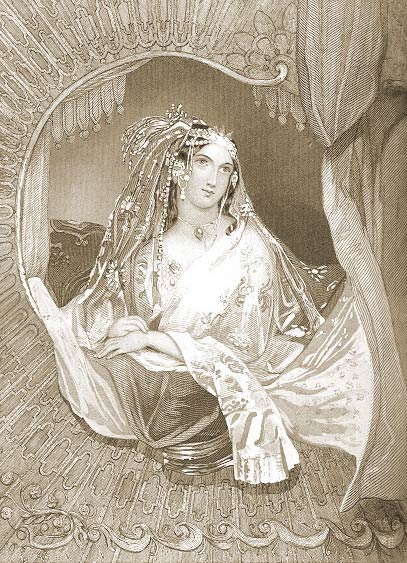
Lalarukh: Where two lovers rest

by Zeenath Jahan

I really cannot remember how many years it has taken me to visit Lalarukh's tomb. Many years ago I had heard an intriguing though vague story about her. It is very similar to Saima Waheed's story; except, her end was much more brutal.

In 1817 Thomas Moore had immortalized `Lallarookh' in his poem of the same name Before writing `Lallarookh', Moore had shut himself away for two years, reading oriental literature translated into English or French.

Moore's `Lallarookh' was Emperor Aurangzaib's daughter, engaged to the Prince of Bukhara. Since the marriage was to be celebrated in Kashmir, the Princess set out from Delhi in a magnificent cavalcade. During the journey, `Feramorz', a young Kashmiri poet, entertained the ladies with his ballads. By the time the Royal procession reached `Hussun Abdaul' the Princess was deeply in love with him.

In Kashmir a golden carpet was laid out for the Princess who, dragging her feet, went to meet her fiance. Her joy knew no bounds when she discovered that the Prince was none other than her Feramorz.

The real Lalarukh was not as fortunate. The lovers' nameless graves bear mute testimony to their tragedy. The story I pieced together was of a Royal Mughal Princess who committed the cardinal sin of falling in love with a common soldier. Leaping social boundaries, their love flourished. They met in secret until, unable to bear a moment's separation, they decided to elope.

I tried to imagine the turmoil in the Royal House-hold when it was discovered that the Princess had eloped with a common soldier. Some of the courtiers must have known about the affaire; others may even have helped the star-crossed lovers escape. Trackers must have been set on Lalarukh's trail, searching high and low, day and night; until the lovers were finally tracked down.

We know that retribution was swift and severe. The anonymous soldier was beheaded for his temerity. The Princess was bricked into a nameless grave in the middle of the compound, alive. A wall was built around the site, with sentry boxes at the four corners. The graves had to be guarded round the clock, to keep the curious and the sympathetic away; while the Princess slowly choked to death.

Today, only the stump remains of a tree that had witnessed the tragedy. It is dead, but for the rampant creepers covering it, which give it a semblance of life. Lalarukh too is dead, but her story lives on in a culture that continues to deny women their rights.

The guide at the tomb told us that before she had been bricked in, no one had dared to divest the Princess of her jewels. In 1902, archaeologists uncovered the Princess's corpse, still in all its finery and they built a grave over the hole they had made in the large square tomb, to make up for the desecration. The story of Lalarukh and her soldier was eventually pieced together from local folk-lore.
picture

To arrive at Lalarukh's tomb, we had followed a well marked route from main Hassanabdal Bazaar, off the G.T Road. The guide, Sajjid Mehmood was already unlocking the gates, even before my three-year old grandson and I had stepped out of the car. Although he said groups of tourists frequently visited the tomb, the locals do not seem to be used to having strangers amongst them. They dropped everything they were doing to get a good eyeful of us!

Before reaching Lalarukh's tomb we crossed another tomb facing an artificial fish pool. In 1589, Khwaja Shamsuddin Khwani, the Governor of Punjab, had built it for himself. He could not be buried in it when he died in 1599; because, by orders of Emperor Akbar, Hakim Abdul Fateh Gilani (d. 1589) and later his brother Hakim Humayun (1595), known as Hakim Hamam, were buried there.I wondered whether the change of plans had anything to do with Lalarukh's capture, but the guide could not say. He did tell us though, that the 1902 Archaeological team had discovered a vast treasure in the Hakim Brothers' tomb;which they removed to their own country.

Descendants of the original Goldfish and Rahu (fish) still inhabit the pool, which is fed by fresh spring waters from the bowels of the hill beside it. The original fish had worn golden rings. Their descendants are desperately trying to exist in a pool that the local populace treats like a trash can. Sajjid Mehmood was most apologetic, earnestly declaring that he had cleaned the pool that very morning!

A board near the tomb gives 1589 as the date when the fish pool and the Hakim brothers' tomb were built. The only information about Lalarukh's tomb is a board stating that it belongs to the seventeenth century.

No matter when she died, no matter how she died; today Lalarukh and her soldier rest in peace in a quiet garden. Who can tell who won in the end, the Emperor or the Lovers? They are together for eternity.

Friday, 1 March 2013

Peshawar, Pekhawar and Pishor

By Sayed Amjad Hussain

Recently an interesting book about the old walled city of Peshawar by Dr. Raj Wali Shah Khattak, a well-known Pashto writer and poet and currently the director of Pashto Academy, was published. (An Intangible Heritage: The Walled City of Peshawar, InterLit Foundation, Peshawar, 2005). The book discusses history and linguistic and cultural traditions of the old walled city. It is a well-written and handsomely produced book but suffers from one glaring omission. The book is not about the walled city of Peshawar. The city that Khattak Sahib describes in his book is some mythical city that exists only in his fertile imagination.

Friday, 8 February 2013

Not so lost in translation

As medical students, our basic interaction with patients begins in Year III, where we commence our clinical years. Essentially, we are taught the basics of communications – mostly pertaining to history-taking from the patient. A lot of emphasis is put on avoiding the excessive use of medical jargon. Communicating in Pashto, not riddled with Urdu and/or English words, was a linguistic shock for me even though I am a Pashtun. In the first week, I realized I spoke terrible Pashto that most patients didn’t even understand. Further, until now, I have never been able to read or write it either; all the more reason to be ashamed about not having a perfect grip over my mother tongue. It has been almost four years and I have yet to speak my language with the comfortable fluency that most locals do, but I am getting there.

Like me, the younger Pashtun generation, or most of it, has trouble reading and writing Pashto. Yet, have you noticed when two Pashtuns speak to each other, they only speak Pashto and no other language irrespective of where or who they are with, much to the chagrin of people who do not understand Pashto? While we take Pashto very seriously, ergo the unavoidable need to converse in it; however, if we analyze it from an evolutionary perspective, Pashto has nothing to offer when it comes to vibrant modern literature.

One very important aspect of the diminishing trend in reading and writing Pashto is that our generation, and the one before us, failed to realize the legacy of eminent Pashto authors and poets like Khushal Khan Khattak, Rahman Baba and Ghani Khan. Khushal Khan Khattak is mostly misrepresented as a warrior while in reality he was a physician, a philosopher, and an educationist. Rahman Baba was a Sufi poet and a philosopher and Ghani Khan, in his own league, a revolutionist. Unfortunately, their larger than life philosophy seems to be lost and forgotten under piles of dust at Qissa Khwani Bazaar.
While I was growing up, I was introduced to Jane Austen, Virginia Woolf, Oscar Wilde, Patras Bukhari, and bits and pieces of Allama Iqbal but nothing in Pashto. I believe if our elders had made the effort to recognize the relevancy and concept behind their poetry and made it accessible to us, it would have made a considerable difference in our attitude towards Pashto literature. While Pashto used to be part of the syllabus in most schools in Khyber-Pakhtunkhwa, that is not the case anymore; this evidently is an important factor to consider.

Since the last 40 years, Khyber Pakhtunkhwa has seen an obvious dearth of contemporary literature which could entice the youngsters into reading and writing in their native language. Literature seems to pass from generation to generation, largely through oral medium, subject to the whims of popular musicians. Many great stories and verses get lost or otherwise forgotten. There are only a handful of modern publications in native languages, and reading a language is such an essential part of learning it.
It's no coincidence that our language classes in English and Urdu put much emphasis on reading stories and answering comprehension questions. Literature is both the offshoot and vanguard of a language. Pashto speakers, or any language that is largely divorced from text, now find it incredibly hard to reconcile the dialects and eccentricities that creep into an informal system of language preservation. Literature codifies these things. In many ways, we are the unfortunate generation that are estranged from the language we speak, by virtue of the fact that its literature has been kept away from us. With all the idioms, proverbs, phrases, connotations, literature acts as a linguistic compendium. Moreover, the interesting narratives motivate the reader to exert some effort in learning these things.
Indeed, there is no greater teacher of language than a good story.

- 13 is a practicing Doctor at a major teaching hospital in Peshawar

Friday, 14 December 2012

The Cultural balance

-originally written 9th Decemeber 2012

by Peymana Assad

Many Afghans living in the west would class themselves as political refugees, forced to leave their homeland because of continuous war. We came here in the hope of finding peace, education and the freedom to practice our religion without being persecuted. That is exactly what we found but there have been a few things that we have had to fight harder to keep, our culture. Culture is not just confined to speaking an Afghan language or following the customs set by it, according to Afghan tradition it is also marrying an Afghan. Marriage in the Afghan community in the west is slowly starting to bring up different problems, though some may see this topic as controversial , let us not deny there are underlying issues here that is our duty as Afghans to uncover.

A continuing number of Afghan girls and boys are returning to Afghanistan and choosing a life partner from there, bringing the problems of their partners finding it difficult to assimilate into British Afghan culture. Whilst others choose to marry a non Afghan putting into question the importance of culture as a whole. Whether you see these two occurrences as problematic or not, I want to ask why is this happening?

Speaking to the parents of these children and the children themselves they claim there are no well educated and cultured Afghans left in the west. The boys claim the girls living in the west have lost their culture and become too westernised, whilst the girls claim the same problem in the men. However this is not true. Afghans are not behind other ethnic communities living here, we are just as educated and cultured as them, if not more. Then why are those claims so difficult to ignore and who is to blame?

The blame falls on us, the Afghan community as a whole.

The problem is not that we are losing our culture living in western countries. It is because we are failing in moderating between our culture and western culture. Parents don’t know how to find the balance. They are either extremely demanding of their children or not at all. Those parents who are strict, have high demands in education and social conduct from their children, risking pushing them away from embracing Afghan culture and pursuing successful professions of their own choice. In comparison to those who are very relaxed with their rules, who fail to teach their children the importance of holding onto culture and its significance for the future of their community.

Living in Britain, Afghan children have the opportunity to be something other than a doctor, engineer or teacher, leading a comfortable lifestyle is no longer confined to a certain profession. They also want the opportunity to use social networking sites, go out to the cinema with friends and interact with classmates, which are of the opposite sex, without being punished for it. You cannot expect your child to pursue the career choice you want nor can you expect them not to want the same freedoms as other children their age.

It is these social pressures that confine Afghan youth to seeing Afghan culture as suffocating and western culture as liberating. Leading to a wave of youth that dislike their culture, only pursue education to a satisfactory level rather than the ability they could have and push for more social freedom by causing friction with their parents. And this adds up. In the future it is these children that are sent to Afghanistan to find a life partner or end up themselves choosing to marry a non Afghan, bringing a wave of other problems.

If we want the next generation to admire Afghan culture then we must find moderation between ourselves and the western society that we face. Balance is essential, not only for the health of a community but for the mind of the community.

A Chinese proverb says that if you hold a fish too tight it will fall out of your grasp and if you hold it too loose it will also fall out of your grasp. The Afghan child is the fish we are holding. We need to grasp it in such a way that it stays with us but is also content being there. For if we fail in this test, any hopes of future generations one day returning to their homeland will also fade.

- The writer recently completed my MA at Kings College London and tweets at @PeymanaAssad
- Original BBC Pashto Column

- Translated BBC Urdu Column

Thursday, 21 June 2012

The Life and times of Peshawar's Kaka Ram

By Naeem Safi

Gorak Nath Temple, at the Gor Khutree Archaeological Complex Peshawar, is now open for Hindu worshippers who regularly visit the site to pray.

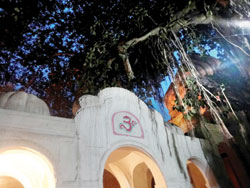
The sun has just disappeared behind the mountains. Beneath the long hanging branches of the old banyan tree, a devotee is sweeping leaves to clean the floor for worshippers who are expected to arrive in a while.

Hundreds of birds above are chirping before settling down for the night. The fenced lawns outside are full, with noisy children running around and playing, the adolescent sauntering on the paved walkways, and their mothers gossiping.

These late evening visitors are usually from the nearby mohallahs who come here to escape power outages — and take refuge in the Gor Khutree Complex.

The colour palette for the sky is rapidly changing and the light tones of gold are turning into crimson, and violets merging with dark greys. Calls for evening prayers over loudspeakers lure males of all age groups to the mosque at the north-western corner of the Complex.

Gorak Nath Temple, at the Gor Khutree Archaeological Complex Peshawar, was built during the Sikh period around 1834 to 1849. Their Italian General, Paolo Avitabile, used the Complex as his residence. The temple is now open for Hindu worshippers who regularly visit the site to pray to their gods.
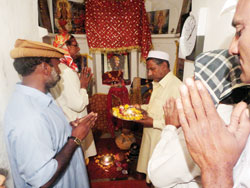
Just a few yards south, Kaka Ram, the seyvek, is giving final touches to the preparations in the Gorak Nath temple. Unlike the marbled floors and numerous fans at the mosque, his temple has earthen floor and a couple of helpers are connecting a power cable to the central building to light a few bulbs. Kaka Ram is waiting for the prayers at the mosque to finish, as some of his guests are Muslim, colleagues from his office at the secretariat, who will also attend Sheranwali Mata’s parshad tonight.

Six decades back, he was born in a humble little house adjacent to the temple. Many generations of his ancestors have served this temple before. His father died when he was seven. They were expelled from their ancestral house; his mother had fought back through courts. She won the temple back, in the year 2011, but their home at the compound is lost, almost forever, and she parted with life on the first day of last May.
According to Kaka Ram, more than 2000 people attended her funeral, the majority of who were Muslims. He recalls his childhood times, when the huge well under the banyan tree used to be frequented by parents with ailing children, both Hindu and Muslim,to receive ashnans, a sacrament that is believed to cleanse and protect its receivers from evil spells. His dealings and relationships with Muslim friends and neighbours are not tainted with biases or discriminations. They all celebrate Holis and Eids together and there is no purdah among their families, something reserved only for very close relatives in a traditional Peshawari society.

The Muslim guests have finished their prayers and are now waiting near the well for the ceremony to begin. Pundit Gokal has arrived from another temple to lead the prayers, and the number of worshippers is gradually increasing. The pundit is preparing a huge platter of fresh fruits at Mata’s mandir while the attendees are gathering in the arched aisle in the front. Following a few rituals, the congregation, with equal number of women, and quite a few children, started chanting the parshad.

The sky has turned deep blue and the banyan tree looks more imposing against it. The birds have gone almost silent. The visitors outside, in the lawns, are gradually thinning out and the peace of the night is gradually engulfing the compound, and the streets around it.

Originally published by The News on Sunday, 17 June 2012

Sunday, 3 June 2012

Passage to India: A Pashtun in Guwahati

By Aneela Z. Babar

Guwahati is characteristic of small town India caught in the struggle of coping with rapid globalization and still not able to successfully shrug off the time warp it has been living in for the past few decades. For years it has existed as the ‘gateway to India’s North East’ and tried to live down its reputation of being a violent little dot on India’s map suffering from insurgency in the 1980s and the all too famous Assam bandhs. However today it exhibits what Pankaj Mishra in Butter Chicken in Ludhiana: Travels in Small Town India discovered of similar former ‘unremarkable places’. These small towns ‘have shed their sleepy, half apologetic air’ and ‘modest’ is not an adjective that one can use for it’s inhabitants as they pursue their ambitions, appropriate brand names and ‘create a whole new pan-Indian culture’ (Mishra, 1995). So the city is caught in the chaos of gawking men from nearby villages trying to make sense of the Van Heusens and Tag Heuers on display in the shiny new malls, a constant influx of brand new cars jostling for space on dusty broken down roads and the traffic police bewildered by motorists who leave their cars parked on fly-overs. The expansive wetlands near the airport soon give space to the concrete jungle the city is turning into.

My second day in Guwahati finds me in the midst of the notorious Assam bandh. My host family is not sure the evening before whether it will be a ‘complete’ bandh or not and a flurry of telephone calls are exchanged across the apartment building. The barometer of a ‘complete’ read successful bandh is if the buses don’t ply early morning or the maid doesn’t turn up for work. The residents of the city are reconciled to bandh culture and take it in their stride. Though the city loses millions of rupees in revenue every month, no one seems overly concerned. It has long been a feature of their relaxed existence and it is only the burgeoning business class that is making polite noises now. The day goes by peacefully and in the late afternoon I decide to visit a local monument that gives a birds-eye view of the surrounding valley. Billed as Gandhi mandap, though everyone is unsure whether Gandhi ever visited the city, it is a research centre set up by a Congress government trying to build a profile in Assam’s heartland. The state had earlier been cool towards the Congress party post a rueful Nehru who apologized that mainland India could not do much to protect the region.

This was as China threatened to march through during the 1961 Indo-China war. An Amitabh Bachan who came garnering votes for his best friend Rajiv Gandhi was sent away garlanded with shoes by an incensed city that was still harboring its hurt. However, today the Congress sits comfortably in power. The Gandhi mandap has a surly Gandhi with his back to the city as he gruffly views the city’s young who find it a convenient place to escape the moral police in the valley.  

The Kabuli Wallah

I am eager to explore the city’s Pashtun population, they are the progeny of former money-lenders and fruit sellers who traveled frequently to the region. Many of them still carry on their ancestral profession of lending money and what is politely called ‘debt collection’ (Truant children are still cautioned of the Pashtun who will carry them off). Guwahati Pashtun form a fascinating microcosm of an immigrant population that has kept its ways in a city that is so different from their earlier homes. Saleem Khan who welcomes me to his home is in his late twenties and he says his family moved here from Ghazni. Saleem is one of the ‘settled’ families of the city, there is also a sub-class of transient single men who travel through the region. His living room seems out of a baithak in Quetta , though he says he was born here and has never been home. Afghanistan is a mysterious land which he tries to fathom through B-grade films and his parent’s tales. As I settle down on the floor cushions, he takes a mock interview of the intermediary who has introduced us. He explains it is ‘close to election season’ so these times make it necessary to be sure of who I am. His concerns allayed, he is quite the eager host, calling up assorted uncles and aunts on his mobile to make them speak to the visiting Pashtun. One uncle is quite sure that he has visited relatives of mine in my village. Saleem attempts to brief me about his life here, where we are sitting now are rooms attached to his ‘public life’, it is here that he conducts his work and entertains guests. His family lives in a separate Afghan colony some two hours away. He jokes that people in Guwahati claim that their community is very ‘cruel’ towards their women. Though women in his generation remain uneducated and live in seclusion, he assures me that the younger generation of women has started going to school. His parent’s generation stay in touch with family back home in Afghanistan through exchanging audio cassettes, I picture his mother recording our conversation today in an audio-letter home. Saleem speaks in the classic Pushto, unlike me he doesn’t speak a hybrid dialect. Perhaps over years it will be only the ‘first generation’ of Pathan diaspora like his that will speak the uncontaminated Pushto of earlier years. I am curious about Saleem’s money lending business and whether it has been effected by the budding finance companies in the region. Saleem says that he works with the low end of the market, with those who cannot afford the collateral that the organized financial sector requires. However, his services come with a hefty interest. Don’t borrowers default? He says he has a ‘scientific assesment’ process, the ‘applicant’s’ home is first surveyed for items of equivalent value which can be easily hauled away if anyone defaults on payments. And he says he can judge people in a manner the anonymous financial companies don’t. I inquire whether he gets into trouble with the police due to his high-handed tactics. It’s the first time in the afternoon that I see the arrogance that comes with his genes expressed in his conversation. ‘They know me, and no one messes with us. Everyone knows who we are’. Our interview done, Saleem struggles with being a good Pashtun host. I had come on short notice and he fears that he has not accorded me the welcome that demands my ethnicity. There must be something that I would like to take with me, he gestures towards his house. Could he arrange a loan for me he inquires after he has exhausted ideas.

Outside the Assamese Muslim families that neighbor his house are eager to invite me for a cup of tea. Like others in the city they ask me to make a list of ‘Pathan’ (read Muslim) sounding names for their children. Similar to diligent city officials and their love to ‘rename’ roads, schools and buildings I take a perverse pleasure on meeting the Wahdanas, Palwashas and Zaraks of the city ten years on.

Originally published in 2006

Aneela Z. Babar (Pindi/Delhi/Melbourne). When she is not busy being the bane of her three year old's existence, Babar works on gender, culture, religion and militarism (with a heady dose of Bollywood trivia).